
Folklore in Film is reader-supported. When you buy through links on our site, we may earn a small affiliate commission.
The real secret to the nine gates can be found not in some fictional book from 1666, but in an actual book on magic written by an Italian philosopher whom the Inquisition burned at the stake in 1600.
We’ll get into it.
I’m I. E. Kneverday and at the end of this essay I will be grading 1999’s The Ninth Gate on its folklorical accuracy.
Along the way, we’ll uncover how the movie’s illustrations connect to tarot, how Dante’s Nine Circles of Hell may have influenced the proceedings, and, of course, we’ll get to the bottom of the stairs.
I mean, to the bottom of how Green Eyes hovered down those stairs.
Let’s take a look.
Pssst. You can watch a video adaptation of this essay right here. Text continues below.
The Ninth Gate vs. The Club Dumas: The Book vs. the Movie
I probably saw The Ninth Gate three or four times before realizing it was based on a book:
1993’s El Club Dumas by Spanish novelist Arturo Pérez-Reverte.
And don’t get me wrong, the book is excellent.
There’s a lot more going on plotwise and, in particular, for all you Three Musketeers fans out there, the serialized works of French author Alexandre Dumas are front and center.
But, and this is a big but, and also a spoiler for the novel:
That rare grimoire, or book of magic, De Umbrarum Regni Novem Portis, which translates to Of the Nine Gates/Doors of the Kingdom of Shadows…
You know, the book that the fictional Italian author Aristide Torchia co-wrote with the devil and printed in Venice in the year 1666 before being burned at the stake in 1667…
The book with the nine woodcut engravings that were copied from an older book, the Delomelanicon (Greek for “Invocation of Darkness”), which was allegedly written by the devil himself…
Yeah, that’s the plotline that fizzles out in the novel, El Club Dumas.
The novel ends with Corso discovering…the Club Dumas, a bunch of wealthy book nerds who like to hang out in French castles and talk about Alexandre Dumas.
There is no supernatural stuff going on, at all.
At least not overtly.
Whereas in the movie…
It’s all about the supernatural stuff.
Which makes sense, given when this film was made.
We are in the era of End of Days and Stigmata and the Sixth Sense and The Green Mile and The Mummy and another Johnny Depp-starrer, Sleepy Hollow.
Was 1999 the best year for movies ever?
Yes.
We’ll disregard the fact that The Ninth Gate didn’t get a wide release in North America until March of 2000.
Now, I am legally obligated to do the following two things.
Who Wrote The Ninth Gate?
First, I need to acknowledge that director Roman Polanski, who co-wrote the script for The Ninth Gate alongside Enrique Urbizu and John Brownjohn, is a problematic figure, to say the least.
Polanski is really the Woody Allen of thrillers, in more ways than one.
Second, we need to look at the engravings from the movie, compare the different versions of them, we need to spot the differences, then we need to identify the tarot cards that may have inspired them, and finally we need to explore how that imagery manifests in the film, because as you likely already know, many of the engravings correspond to specific scenes.
Comparing the Different Versions of the Nine Gates Illustrations: Aristide Torchia (AT) vs. Lucifer (LCF)
The First Gate
Engraving number one is of a fella on horseback shushing us. He’s giving…Death.
Just look at how this horse’s front right leg is positioned in the Rider-Waite-Smith tarot deck.
But considering he’s not a skeleton, this rider is also giving… Knight of Pentacles.
Incidentally Sir Gawain, protagonist of The Green Knight, which I looked at in my previous video, is the OG Knight of Pentacles.
Anyway, the Latin inscription here translates to “Silence is golden.”
In the faux version signed by Aristide Torchia, or A.T., there are four castle towers in the background.
In the authentic version of the engraving signed by Lucifer, or LCF, there are only three.
The movie parallel is kinda broad here; the imagery perhaps represents Dean Corso starting his secretive journey.
The knight could be a nod to Don Quixote, the first work we see Corso acquire.
The three towers in the LCF version could represent the three editions of the Nine Gates of the Kingdom of Shadows.
But I’d argue the towers actually mimic the modern skyscrapers that form the backdrop to Boris Balkan’s office.
Because this, of course, is where Corso makes his secret arrangement with Frank Langella’s character.
The Second Gate
The second engraving gives us a dude holding some keys while a dog watches. There’s also a lantern in the foreground, evoking The Hermit tarot card.
The Latin inscription: They open that which is closed.
In the A.T. version, the keys are in the dude’s right hand, in the LCF version, they’re in his left.
I think The Hermit here is actually Balkan, who in the movie unlocks the door to his special devil book collection room using the passkey 666.
Balkan is also metaphorically initiating Corso into the mystery, and he presumes Corso will be loyal to him (like a dog) provided he’s well-fed…with money.
The Third Gate
The third engraving shows a bro with a bindle approaching a bridge while an archer in the clouds readies an arrow.
The Latin inscription: The lost word keeps the secret or the wasted breath keeps a secret.
This is a reimagining of the Fool tarot card. But perhaps with a Lovers twist.
In the Italian Tarocco Piemontese system, there’s a little cherub or cupid with a bow and arrow in the sky on the Lovers card.
In the A.T. version, the archer’s quiver is empty. In the LCF version, there’s an arrow in it.
In their bookshop, the Ceniza brothers explain to Corso how this image could be interpreted as a warning:
“Venture too far and danger will descend on you from above.”
Flash forward to Corso is in Paris walking along the Seine, and that’s exactly what happens.
The Fourth Gate
The fourth engraving shows a court jester with a cane standing before a stone maze with three dice next to him on the ground.
And while the jester has been conflated with the aforementioned fool over the centuries in tarot, they are distinct figures in medieval folklore.
And there is no dedicated jester tarot card.
But if we hop over to the Medieval Scapini tarot deck, there does seem to be a bit of connective tissue here between the Page of Wands and the jester in the engraving.
The engraving’s Latin inscription is “Chance is not the same for all.”
In the A.T. version, the maze’s exit is bricked up. In the LCF version, it’s open.
I think this one is less about a particular scene in the movie, and more about hinting at the solution to the riddle:
Which is that the only way out of this maze Corso has entered is to bring Lucifer’s versions of the engravings together.
A point that is underscored by the dice showing the numbers 1, 2, 3, which add up to six.
Bring the three versions of this engraving together and we’ve got three sixes….666.
Granted, that doesn’t really work because the number of the beast isn’t three sixes:
Properly, it is six hundred and sixty six, corresponding to the numerical value of the letters in Nero Caesar.
I mean, depending on how you spell it.
Because going by some manuscripts the number of the beast is actually six hundred and sixteen.
But I digress.
The Fifth Gate
Engraving number five depicts death holding a pitchfork in one hand and an hourglass in the other while a guy counts a big bag of coins on a checkered floor.
Obviously, the death tarot card comes to mind. But if we look in the Medieval Scapini tarot deck, we do find a similar coin-counting figure in the King of Coins.
The engraving’s Latin inscription translates to “in vain.”
In the A.T. version, the sand is about to start flowing from the top of the hourglass to the bottom. In the LCF version, the sand is all at the bottom.
On rewatch, I noticed a connection between this imagery and the scene in wihich Barbara Jefford’s Baroness Kessler says:
“You don’t know what you’re getting yourself into, Mr. Corso. Get out, before it’s too late.”
To which Croso replies:
“Im afraid it already is.”
The takeaway being:
For all the money Corso stands to make in these devilish dealings—it’s in vain. His fate is already sealed.
The Sixth Gate
The sixth engraving is the easiest one to decipher. We’ve got a hanged man, which is very reminiscent of the tarot card known as…the Hanged Man.
That flaming sword is a curious detail, until you remember Genesis 3:24:
“He drove out the humans, and at the east of the garden of Eden he placed the cherubim and a sword flaming and turning to guard the way to the tree of life.”
James Russo’s Bernie, Corso’s bookseller buddy, ends up as the hanged man in the movie.
The Latin inscription on the engraving means “I enrich myself with death.”
In the A.T. version, the man hangs from his right foot, in the LCF version, his left.
Based on this engraving and engraving number two, Lucifer clearly shows a preference for left over right.
Which makes sense for the prince of darkness.
In Classical and Medieval superstition, left-handedness was considered, at best, unnatural, and at worst, evil.
Case in point: The word “sinister” evolved directly from the Latin word for left.
The Seventh Gate
The seventh engraving shows someone playing chess against a king while a black dog and a white dog, or perhaps a dog and a wolf, fight in the corner.
And with that moon hanging in the window, we’re looking at a rough recreation of the Moon tarot card, which features a howling dog and wolf.
But then I look at the king’s crown and flowing robes and the way those canines are positioned, and the King of Wands comes to mind.
The Latin inscription for this engraving is “The disciple outshines the Master.”
In the A.T. version, the chessboard squares are all black. Whereas in the LCF version, they’re white.
This feels like a Balkan vs. Corso showdown, with Balkan as the king.
Then again, Baroness Kessler calls Corso a wolf.
And when the dark-haired Corso leaves her place, who is waiting outside?
The henchman with the platinum blond hair, with whom Corso eventually tussles.
The Eighth Gate
And here we are, at the bottom of the eighth.
An armored individual steps up to the praying man and gets ready to swing a mace.
In the background, a wheel of fortune.
No, not that kind.
The medieval torture and execution device.
And would you look at that, the Wheel of Fortune has its own Tarot card.
The Latin inscription here translates to “Virtue is conquered.”
In the LCF version, our knight at bat has a halo, whereas in the A.T. version, this holy headgear is absent.
The movie brings this scene to life, in a sense. It’s very meta.
Corso is looking at this very engraving when he gets bonked on the head in Baroness Kessler’s library.
But the roles are reversed near the climax of the film when Corso gets up to the plate and is about to whack or stab Balkan with a big ole candlestick, thereby saving the life of a kneeling Liana Telfer, née St. Matin, played Lena Olin.
Buuut Emmanuelle Seigner’s Green Eyes does her second magic flying angel descent of the film and stops him.
The Ninth Gate
Finally, the ninth engraving.
Which shows a woman sitting on a seven-headed dragon in front of a castle.
Tarot-wise, the castle in the background is reminiscent of The Tower card (especially in the A.T. version where it’s on fire).
Whereas the combination of woman and beast is similar in theme to what we see on the Strength/Force cards.
Of course, for those of you who know your 1st century apocalyptic literature, the woman sitting on that many-headed beast is also an obvious play on the Whore of Babylon.
To quote the Book of Revelation:
“I saw a woman sitting on a scarlet beast that was full of blasphemous names, and it had seven heads and ten horns.”
And in case you were curious what those ten horns are for:
“[T]he ten horns that you saw, they and the beast will hate the whore; they will make her desolate and naked; they will devour her flesh and burn her up with fire.”
Lovely.
The Latin inscription here is typically translated as “Now I know that darkness comes from light” or “I know now that the shadows come from light.”
Buuuut can someone please confirm that when we look at the latin, NUNC SCIO TENEBRIS LUX, a more literal translation would be:
Now I know from the shadows, light.
Which is a little different. And maybe more ambiguous.
Does it mean: now I know the difference between dark and light?
Or does it mean: now I know that light comes from darkness? (which is the opposite of the traditional translation).
Or does it mean: now I am able to discern from all this darkness, that yes there is light. A silver lining, if you will?
What do you think?
Who Is Green Eyes (The Blonde Woman) in The Ninth Gate?
Precise meaning aside, the film cleverly portrays Corso as the beast that Green Eyes takes for a ride.
Then again, she also drives a red Dodge viper. And in Revelation the beast is explicitly described as being crimson.
And note that the filmmakers really leaned hard into the tarot’s Tower imagery during that scene when Balkan pulls a reverse Billy Joel and starts the fire.
Corso does ultimately solve the riddle—with a lot of help from Green Eyes.
In addition to serving as Corso’s guardian angel and taking jobs away from escalators, Green Eyes tips Corso off that the Ceniza brothers forged the ninth LCF engraving.
Thus, Corso goes back to their shop, finds the final piece of the puzzle, brings all nine authentic Luciferian engravings together.
And badabing badaboom, he’s on the highway to hell.
So who is Green Eyes, folklorically speaking, in this equation?
I think it’s safe to say, going by imagery alone, that she is a Whore of Babylon-esque figure.
Where Is Satan?
In Revelation, this Babylonian baddie, known for deceiving the world with her magic, is present during the end times, or rather, at the beginning of the end.
Because she herself gets tossed into the flames before it’s all over.
Which some interpret as meaning that evil will ultimately consume itself.
Of course, in the movie, Balkan is the evil figure who consumes himself…with fire.
But with that castle fire raging behind Green Eyes while she’s enjoying her main Corso, there does seem to be a symbolic fiery purification of sorts happening here.
Granted, the Babylonian harlot getting toasted can also be interpreted as the destruction of corruption, so her doing the Humpty Dance with Corso here doesn’t really fit that theme.
Another popular interpretation of the film’s Green Eyes character is that she is a literal angel.
Who’s helping someone meet the devil?
So a fallen angel, let’s say.
And just to clear something up:
It’s only in later tradition that the devil, Satan, the fallen angel Lucifer, and the serpent in the Garden of Eden all get conflated into one super bad guy who rules over hell with a pitchfork in hand.
In The Book of Revelation, it’s made clear that this figure with many names doesn’t hold any power over hell.
He’s going to be condemned to the lake of fire just like the rest of us sinners.
In the meantime, he’s still on earth.
And according to Paul’s Epistle to the Ephesians, written in the latter half of the first century, Satan rules not as the prince of darkness, but as the “prince of the power of the air.”
FYI: the first reference to Satan as the “prince of darkness” or princeps tenebrarum wouldn’t occur until the 4th century in the Apocryphal Gospel of Nicodemus a.k.a. the Acts of Pilate.
Green Eyes, with her supernatural hovering abilities, does seem to be able to harness the power of the air.
But if she’s Satan, then what’s the point of opening the Ninth Gate?
According to the film’s own lore, the engravings in the three books form a satanic riddle, and if correctly interpreted, they’re “reputed to conjure up the Prince of Darkness in person.”
So, ultimately, I don’t think Green Eyes is Satan.
She can hover because she’s got magical Whore of Babylon powers.
And her role here is to usher in this momentous occasion of a mortal human meeting the devil, face to face (And perhaps, as Balkan suggested, that human then becoming like a god).
How Do Dante’s Nine Circles of Hell Factor into the Movie The Ninth Gate (1999)?
All of this points to the movie taking a Dantean approach to Satan’s mythos.
Because in Dante’s Inferno, the first part of his 14th-century Divine Comedy, Satan is already in hell.
Buuut notably, it’s not too fiery.
That’s because Dante’s Satan is perpetually stuck at the waist in the frozen lake Cocytus, which forms the lowest circle of hell—something I briefly talk about in my video on 2004’s King Arthur.
And what number circle is the lowest circle of hell, the circle where Satan…lives?
Say it with me now:
The Ninth Circle.
Ninth Gate. Ninth Circle.
Coincidence?
No, I think that’s one of the reasons why Pérez-Reverte chose the number nine, and why the filmmakers leaned into it in their adaptation.
Naturally (supernaturally?), the next question is:
Do Dante’s Nine Circles of Hell correspond to the movie’s Nine Gates, i.e., the nine true engravings?
And the answer is:
Apart from the ninth gate leading to Satan, not really.
A few sort of seem to line up, like the Sixth Gate’s Hanged Man and Hell’s Sixth Circle being reserved for heretics.
Then again, heretics were traditionally burned, not hung—even in the afterlife, apparently.
In Dante’s Inferno, The Sixth Circle is a desolate cemetery filled with burning-hot tombs.
And in places where connecting the nine gates to the nine circles would have been relatively easy, Pérez-Reverte didn’t do it.
For example, that imagery of the dude counting coins with death could have been the fourth engraving (rather than the fifth) to correspond with the Greedy inhabitants of Hell’s Fourth Circle.
But it isn’t.
This story goes in a different direction.
Its focus is on the journey, not the destination.
The question being addressed is…
How does one use arcane literature and black magic to summon the devil?
History and Folklore’s Most Famous Satan-Summoner: Faust
Now, the most famous example of a Satan-summoning protagonist is a one mister Johann Georg Faust.
Sorry, Doctor Faust.
It would be hard if not impossible to separate the legendary figure of Faust from the historical itinerant German magician on whom he was based.
There actually might have been two historical Fausts, a Johann and a Georg, with one born in 1466 and the other in 1480.
Regardless, we know that many a grimoire have been posthumously attributed to Faust over the centuries, most notably the Magia Naturalis et Innaturalis (Natural and Unnatural Magic), first printed in 1612, and the Höllenzwang (Hell’s Compulsion) first printed 1609.
No, it’s not quite 1666, when the Nine Gates is said to have been printed.
And there’s no record of the German Faust having been burnt at the stake by the Inquisition, which was the fate of the film’s fictional Italian black magic connoisseur, Aristide Torchia.
Actually, the historical Faust, or one of them anyway, likely died in an explosion, the result of an alchemy sesh gone awry.
For my bag of coins, I think Club Dumas author Arturo Pérez-Reverte, and artist Francisco Solé, who created the original engraving illustrations for the novel, may have gotten some visual inspiration from Faust.
Albeit indirectly.
Johann Scheible’s famed compilation of occult texts attributed to Faust, published in 1849, has a similar feel to the Nine Gates.
The Historical Italian Philosopher (and Magician) Who Inspired The Ninth Gate’s Aristide Torchia
That being said, the primary inspiration for Aristide Torchia and his Nine Gates wasn’t Faust.
It was the 16th-century Italian philosopher Giordano Bruno and his book, De Magia or On Magic.
Apart from dying sixty-seven years too early (in the year 1600), Giordano Bruno is a dead ringer (sorry) for Aristide Torchia, who in the film is said to have died in 1667.
Incidentally, in the script, Kessler dates Torchia’s death to 1623.
But I digress.
Both Bruno and Torchia are Italian.
Both share esoteric knowledge and hold unorthodox religious beliefs.
Both get burned at the stake by the Inquisition as a result.
But let’s back up a bit.
We know that after applying to be Padua’s mathematics chair, but losing out to some nobody, Galileo something, Giordano Bruno went to Venice at the behest of an aristocrat who wanted to learn the art of memory.
See, Bruno had become famous for his memory tricks, performing seemingly supernatural acts of recall in front of some of Europe’s biggest VIPs.
Such as in 1579, when he recited an entire psalm from the Bible, backwards, i.e., in reverse order, for Pope Pius the Fifth.
Was this the work of the devil?
Or had the highly intelligent Bruno developed an advanced mnemonic technique, his so-called memory wheel, which could outperform even the most lavishly appointed memory palace?
I’ll let you be the judge.
Anyway, while tutoring this fella, Giovanni Mocenigo, in Venice, Bruno may have accidently let slip that he didn’t think the earth was at the center of the solar system, and that there were probably a bunch of other populated worlds out in space, and that the concept of the Trinity was pretty silly when you thought about it, ditto the virginity of Mary and transubstantiation and the deity of Christ.
Nor, apparently, did Bruno believe in eternal damnation, which would mean hell, if it even existed in Bruno’s worldview, wouldn’t be a place of fire.
But perhaps, as Balkan alludes, it would be a place where one could attain equality with God?
Hmmm.
Mocenigo turned Bruno over to the Venetian Inquisition, which passed him on to the Roman Inquisition, which, after a quick seven-year trial, found him guilty of heresy, blasphemy, and immoral conduct.
Italian historian Luigi Firpo argues that Bruno was also found guilty of dealing in magic and divination, as well as believing in the transmigration of the human soul; and specifically the notion that humans can be reincarnated into different physical bodies after death.
For his crimes, the Inquisition stripped Giordano Bruno naked, clamped an iron plate onto his tongue, and burned him alive in front of an audience in the Campo de’ Fiori.
The Church then put all of Bruno’s works on its Index Librorum Prohibitorum, which is exactly what it sounds like.
Bruno was only the third author to get all of his works on this holy banned books list, joining the likes of Machiavelli and, would you look at that, our boy Dante.
The Nine Types of Magic (According to Giordano Bruno)
Included in those blacklisted works would have been Bruno’s De Magia or On Magic, which he wrote circa 1590.
And in that work, Bruno outlines the nine types of magic:
1. Divine wisdom
2. So-called “natural magic,” including medicine and chemistry
3. Illusions and sleight of hand
4. The REAL natural magic, including magnetism
5. Math…
This one requires a little more attention.
To quote Bruno:
“[This] magic occurs when words, incantations, numerical and temporal calculations, images, figures, seals, characters, or letters are added to these elements; this constitutes a form of magic intermediate between the natural and the supernatural (or supranatural)—properly designated as mathematical magic.”
The magic underlying the Nine Gates seems to fall into this category.
And just for toots and giggles, mathematical magic is number five on Bruno’s list.
And when we look at the book/movie’s fifth engraving, the one with the inscription “In Vain”…
Oh, right: There’s a guy counting coins while Death stands behind him doing temporal calculations with an hourglass.
I mean come on. Is this an homage? Or is it me, cherrypicking?
Yes.
The sixth type of magic on Bruno’s list is theurgy, or invoking spirits or divine beings to intervene in some way.
I guess Balkan is banking on this type of magic as well, as he expects Satan to reward him with divine power.
Or another way to think about it is that Balkan’s using mathematical magic to unlock this next level of magic, theurgy.
The seventh type of magic is necromancy: summoning and communicating with the spirits of the dead.
Number eight is sorcery, which Bruno defines as using incantations in combination with an object or objects connected to a particular person, the goal being to influence that person in some way. Binding spells fall under this category, for example.
And when we consider that the movie’s nine authentic engravings were created by Lucifer himself, it could be argued that Balkan is also attempting to engage in sorcery when he lays out those pages and starts yappin’.
The ninth and final type of magic on Bruno’s list is divination, which includes astrology.
Tarot card readings, a form of cartomancy, fit into this category as well.
The History of Tarot: From Parlor Game to Occult Curiosity
Granted, Bruno didn’t mention tarot directly in his writings, despite the fact that tarot cards were developed in Italy, Bruno’s home turf, in the 15th century.
And there’s actually a good reason for this:
In Bruno’s day, people weren’t using tarot cards to predict the future, they were using them to play Tarocchi, a trick-taking card game akin to Pinochle or Euchre.
Wait a minute. Tarocchi, Aristide Torchia. Tarocchi, Torchia. Probably nothing.
It was only in the late 18th century that the Italian parlor game became associated with the occult.
We can actually trace this development to a single dude, Antoine Court de Gébelin, a Freemason and pastor who, in 1781, claimed that hidden within the designs of tarot cards was esoteric wisdom that the Romani people had brought to Europe from ancient Egypt.
His evidence for this?
He just…knew.
Dude looked at some tarot cards one day and was like: there’s Egyptian magic stuff in there.
And then he set out to find evidence to retroactively prove his foregone conclusion but, surprise, surprise, he never could.
This being the world we live in, de Gébelin’s ideas took off nonetheless.
Sensing a business opportunity, the French occultist and tarot influencer Etteilla, born Jean-Baptiste Alliette, published the first tarot card deck specifically designed for cartomancy shortly thereafter in 1789.
Gonna go out on a limb here and say that this notion of tarot card illustrations containing arcane knowledge definitely inspired El Club Dumas/The Ninth Gate.
But I still think Giordano Bruno’s On Magic was consulted.
Especially when crafting the movie version of Balkan’s character, and the disdain he has for other would-be devil-summoners.
The Boris Balkan—Giordano Bruno Connection
Remember this scene?
“Mumbo-jumbo-mumbo-jumbo-mumbo-jumbo. Look around you…What do you see? I’ll tell you: a bunch of buffoons in fancy dress. What are you expecting, an apparition? I’m the only apparition you’ll see tonight. You really think the Prince of Darkness would deign to manifest himself to the likes of you?”
Which leads us to one final definition of magic.
A definition Bruno keeps separate from his nine primary varieties.
Just listen to his language here, and how he refers to the people who, in his mind, lack a proper understanding of this material.
“Finally, the terms “magus” and “magic” are used in a pejorative sense—distinct from the aforementioned categories—to denote a malevolent and foolish sorcerer who, through dealings and a pact with an evil spirit, has acquired the power to harm or to help. It is in this latter sense—not among the wise or even among grammarians, but rather among certain ignorant, hood-wearing zealots (like the author of the *Malleus Maleficarum*)—that the term “magus” is employed; and this usage persists today among writers of that ilk, as one finds in the commentaries and catechisms of ignorant and deluded priests.”
Whoa, shots fired.
For the record, the author of the Malleus Maleficarum, or Hammer of Witches, published in 1487, was the Inquisitor Heinrich Kramer.
His work formed a blueprint for the witch trials that would come to plague Europe, and later, the New World.
Bruno, like Balkan, refused to be intimidated by those who would tell him what he could and couldn’t believe, what he could and couldn’t study.
And ultimately, both men would pay the price for their unrelenting pursuit of knowledge.
As for its folklorical accuracy grade…
I’m giving 1999’s The Ninth Gate…a 9.99 out of 10.
It’s an A+.
And if you enjoyed this video, please subscribe, leave a like, and comment what your one wish would be…if you dare.
Thanks for reading.
Fan of folk horror?
You might be interested in my short film Samhain, available over on the Irish Myths channel.
More the reading type?
Check out…
Neon Druid: An Anthology of Urban Celtic Fantasy
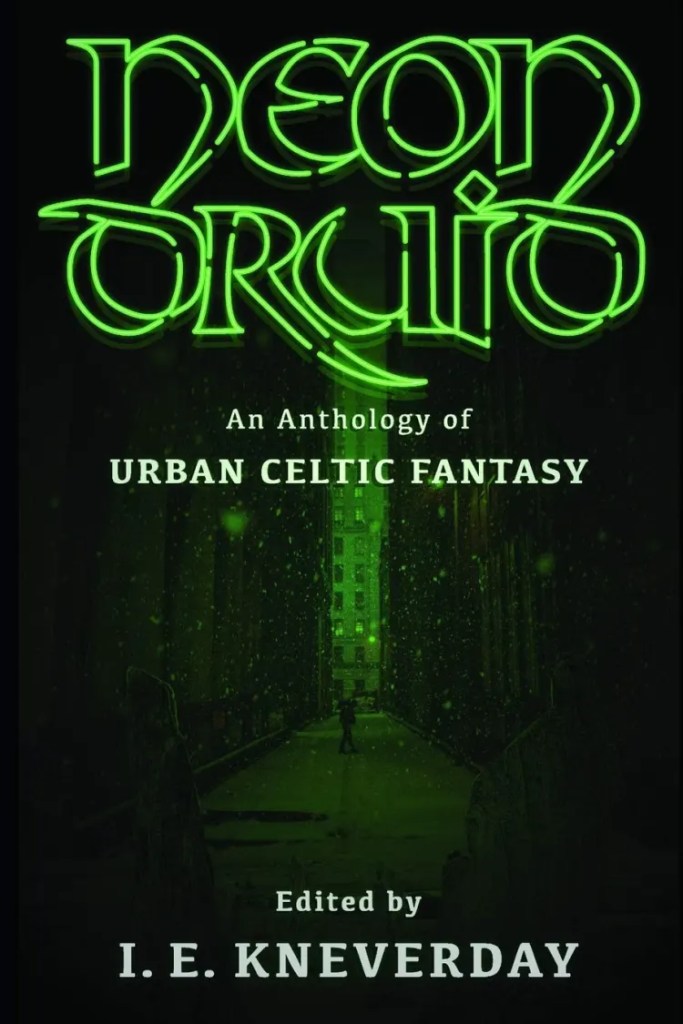
“A thrilling romp through pubs, mythology, and alleyways. NEON DRUID is such a fun, pulpy anthology of stories that embody Celtic fantasy and myth,” (Pyles of Books). Cross over into a world where the mischievous gods, goddesses, monsters, and heroes of Celtic mythology live among us, intermingling with unsuspecting mortals and stirring up mayhem in cities and towns on both sides of the Atlantic, from Limerick and Edinburgh to Montreal and Boston. Learn more…
Samhain in Your Pocket

Perhaps the most important holiday on the ancient Celtic calendar, Samhain marks the end of summer and the beginning of a new pastoral year. It is a liminal time—a time when the forces of light and darkness, warmth and cold, growth and blight, are in conflict. A time when the barrier between the land of the living and the land of the dead is at its thinnest. A time when all manner of spirits and demons are wont to cross over from the Celtic Otherworld. Learn more…
Irish Monsters in Your Pocket

In the Ireland of myth and legend, “spooky season” is every season. Spirits roam the countryside, hovering above the bogs. Werewolves lope through forests under full moons. Dragons lurk beneath the waves. Granted, there’s no denying that Samhain (Halloween’s Celtic predecessor) tends to bring out some of the island’s biggest, baddest monsters. Prepare yourself for (educational) encounters with Irish cryptids, demons, ghouls, goblins, and other supernatural beings. Learn more…


Leave a comment