
Folklore in Film is reader-supported. When you buy through links on our site, we may earn a small affiliate commission.
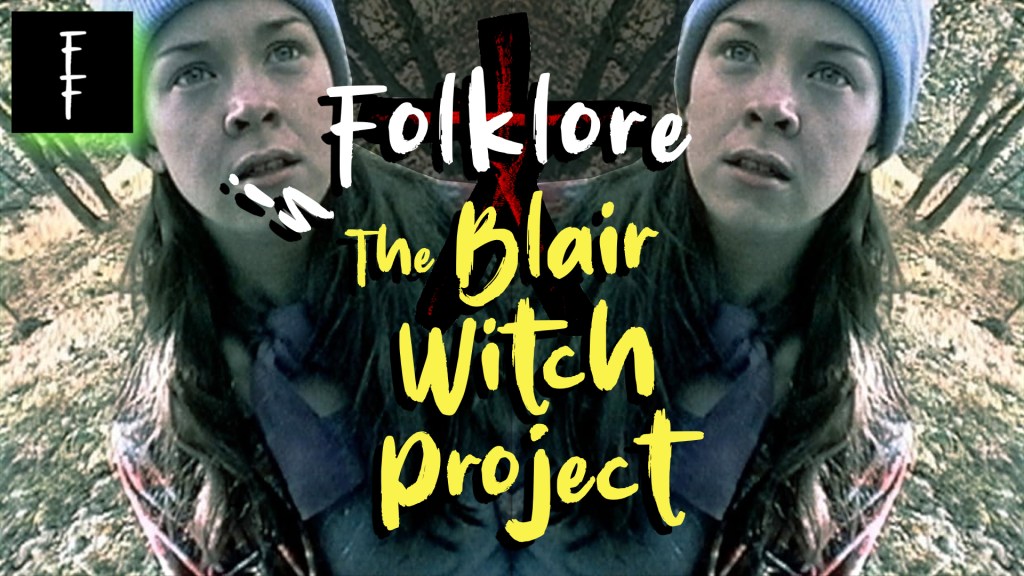
Is the Blair Witch actually a female bigfoot?
To quote Mary Brown:
“It was like a woman, only on her arms and on her hands and everything, it was like hair, like a real dark, almost black hair…like horse fur.”
Turns out this account may have been based on an Iroquois folktale.
We’ll get into it.
I’m I. E. Kneverday and at the end of this video I will be grading 1999’s The Blair Witch Project on its folklorical accuracy.
Along the way, we’ll learn about cairns, stickmen, and the significance of the number seven.
We’ll interrogate that fisherman’s eyewitness account of a white, misty thing rising out of the water.
And we’ll investigate the four distinct stories associated with the so-called Blair Witch:
The tale of the murderous hermit, Mr. Parr.
The tale of the two hunters who camped near the witch’s cabin.
The tale of young Robin Weaver, who described an old woman whose feet never touched the ground.
And, of course, the tale of the five men massacred at Coffin Rock.
Let’s take a look.
Pssst. You can watch a video adaptation of this essay right here. Text continues below.
The Making of 1999’s The Blair Witch Project (And the Meaning Behind Haxan Films)
I was 12 years old when The Blair Witch Project came out and I remember, even at that age, the buzz around this film.
The parodies, in particular.
I feel like for a while there everyone was just going ham with shaky cams and pulling in tight on boogery nostrils.
Written and directed by film school buddies Daniel Myrick and Eduardo Sánchez, The Blair Witch Project grew out of a shared realization that documentaries about paranormal topics are often scarier than fictional horror films that are trying very hard to be scary.
So Myrick and Sánchez brought in some investors, founded Haxan Films, and got to work on their found footage documentary-style horror film.
And yes, for those with an ear for Germanic languages, haxan is the Swedish word for the witch.
And more pertinently, it’s the title of a 1922 Swedish-Danish silent film that is part documentary, part reenactment of medieval witch torture and alleged demonic rituals.
A lot of which were based on the 15th-century Malleus Maleficarum, or Hammer of Witches, a book we will hear more about in a bit. (I also talk about it in my video on The Ninth Gate, FYI.)
Getting the Story Straight: What the People of Burkittsville Know About the Blair Witch
Now, on rewatch, one aspect of The Blair Witch Project that really sticks out to me is how during those opening, woman-on-the-street interviews, the residents of Burkittsville, Maryland, which is a real place by the way, give disparate accounts of who the Blair Witch is and why she’s so spooky.
In fact, one of the first Blair Witch legends we hear is….about…a dude.
Mr. Parr.
The Hermit of the Black Hills Forest: Mr. Parr’s Story Explained
We learn that he was an old hermit who lived up on a mountain.
This was in the 1940s, right around the time a bunch of local kids—seven, to be precise—started going missing.
“Finally, one day, old Mr. Parr come down into the market and said, “l’m finally finished.’”
And what he meant by that was, well, you remember.
Hence, the “unusually high number of children laid to rest” in the local cemetery, “most of whom passed in the 1940s.”
And hence all those hand prints on the walls in the house at the end of the film.
Because obviously that’s Mr. Parr’s house.
And when Heather Donahue, Michael Williams, and Joshua Leonard, who are all playing fictionalized versions of themselves, end up in the basement of that house, we get a brief recreation of the whole, having-to-stand-facing-the-corner situation.
Lending credence to the idea that Mr. Parr was indeed possessed by the Blair Witch when he committed the aforementioned atrocities.
The Ending of The Blair Witch Project Explained: Why Sympathetic Magic Is the Key
Because remember when Heather discovers, how should I phrase this, that bundle of Josh bits?
That reads to me like the Blair Witch is performing sympathetic magic, which involves either the imitation of a person (like with a doll or poppet) or the use of material that has been in contact with a person.
The intent being to affect said person at a distance.
This according to James George Frazer ‘s The Golden Bough.
And despite the presence of the stickmen (more on those later), the Blair Witch seems to be relying on the contact or contagion variety of sympathetic magic here.
She’s using Josh’s teeth, hair, and blood, all wrapped up in his flannel, to make him do her bidding.
Like hide in the basement and attack his fellow filmmakers.
Notably, in the Malleus Maleficarum, we get a reference to a similarly disgusting bundle that was allegedly used by a witch to make someone endure excruciating pain and extreme illness for three days.
With relief only coming after the cursed man pulled a white cloth down from above his door.
Inside of which he found, “a yellowish dust like a child’s excrement or pus, human hair, and various kernels of grain.”
Yeah, witches be nasty.
But just we’re clear, the 15th-century Malleus Maleficarum was written/compiled by a Catholic Inquisitor, Heinrich Kramer, who really spearheaded the whole “let’s accuse people of witchcraft and kill them” movement.
Not a good look.
So always take everything that book says with a protective ring of salt.
For my money, the main inspiration for the Mr. Parr hermit child-murderer backstory in The Blair Witch Project wasn’t a 15th-century book, it was Appalachian hermit lore.
The Appalachian Hermit Folklore (and History?) Behind Mr. Parr
Behold, exhibit A: The West Virginia Embalming Hermit.
Who was a real dude.
In 1888, the farmer and self-proclaimed scientist Graham Hamrick took his wagon on down to the local lunatic asylum and purchased a couple of female cadavers.
Secluded, in his house surrounded by dead things, Hamrick concocted his own embalming potion that ended up being of such interest to the scientific community that the Smithsonian tried to acquire his recipe.
But Hamrick was more interested in renting out his mummies to P. T. Barnum, who brought them around the world with his circus.
You can’t make this up.
Sure, it’s a far cry from Mr. Parr’s nastiness… until you consider what the local gossip would have been like at the time in Philippi, West Virginia.
Say, a dog disappears in the woods. Heaven forbid, a kid. Who do you think the people would have blamed?
The dude in the woods who is notoriously in need of bodies.
Onto Exhibit B:
The White Hermit of Mount Joy.
This one takes place in the mid-1700s on the outer edge of Appalachia, if you will, in Eastern Pennsylvania.
The so-called White Hermit didn’t live on Mount Joy, but beneath it, inhabiting a network of limestone caves and getting his water from a subterranean stream.
He’s described as having a long white beard and hair, and people would reportedly spot him running naked through snowstorms.
No, this doesn’t sound exactly like that fisherman’s description of a “white misty thing rising right out of the water and up the side of a tree.”
But imagine if you saw—at a distance—a naked, Gandalf-looking dude, who never got any sun, emerging from a limestone cave and darting off into the forest…
You might describe that as a white misty thing.
A White Witch in the Black Hills Forest? She Has Counterparts Across Cultures, an Affinity for Water, and Perhaps an Appetite for Death
Of course the more obvious explanation here, at least, folklorically speaking, is that the fisherman saw one of the Weiße Frauen from German folklore.
Or maybe it was one of the Witte Wieven from Dutch folklore.
Or one of the Dames Blanches from French folklore.
All of those names mean the same thing: White women. Or white ladies.
And while their precise characteristics differ from culture to culture, their general vibe is the same:
These are wise women, witches, if you prefer, who dress in all white and however around wooded areas and water sources.
There’s also a white woman counterpart in Welsh folklore, the Gwrach y Rhibyn a.k.a. the Hag of the Mist.
Granted, this one has more of a banshee vibe.
Even though banshees are Irish, or more accurately, they belong to a Gaelic or Goidelic Celtic storytelling tradition, whereas Welsh folklore is part of a Brittonic or Brythonic Celtic tradition.
But I digress.
To quote Wirt Sikes’ 1880 book, British Goblins:
“[The Gwrach y Rhibyn] is always an omen of death, though its warning cry is heard under varying circumstances; sometimes it appears in the mist on the mountain side, or at cross-roads, or by a piece of water which it splashes with its hands.”
The Robin Weaver Story From the Blair Witch Project Explained
Right before we learn about the white misty thing, the other fisherman gives us the low-down on Robin Weaver.
In the late 1800s, little Robin wandered off and got lost in the woods near Burkittsville, Maryland—then known as Blair. (According to the movie, not real life.)
She emerged three days later, apparently unharmed, appearing on her grandmother’s porch.
To quote this fisherman:
“She was babbling something about an old woman whose feet never touched the ground.”
I love that description.
Robin could have just said “she was floating, she was hovering, or she was flying,” but she didn’t.
Also, what the heck is going on here?
This little girl just went and lived with the Blair Witch in the woods for three days and the witch didn’t try to eat her or anything?
And as it’s later implied, when a search party goes out to find this little girl, they are unsuccessful.
The witch is presumably hiding her (more on that in a minute).
The Massacre at Coffin Rock
Oh, right, and while she doesn’t hurt Robin, the witch kills those five dudes in the search party at Coffin Rock and arranges their corpses into a grisly modern art piece.
Although this is 1888 so I guess it’s not that modern.
The Hunters and the Witch’s House
In an earlier, on-the-street interview, we learn that two men once went out hunting and “they were camped near the cabin, or something, that she’s supposed to haunt. And they disappeared off the face of the Earth.”
I’m guessing this cabin, or something, is Parr’s house. Although, timeline-wise, I’m not sure Parr’s house would have even been built yet.
It’s also likely the witch has her own hovel, and uses magic to keep it hidden.
Hence, she was able to keep Robin Weaver hidden as well. And make those hunters disappear.
What Do Those Stick Dolls Do in The Blair Witch Project?
Actually, co-writer/director Eduardo Sánchez is on the record saying that the stick-figure totems, or Twanas, are portals of sorts, marking the boundaries of the witch’s realm.
Meaning once you see those stick figures, she’s already got you.
You’re stuck inside the bubble and will end up right back where you started if you try to escape.
The Blair Witch Project’s Production designer, Ben Rock, designed the stickman for the film.
Rock’s original directive was to create this witchy artifact using bundles upon bundles of sticks all tied together.
Buuut he convinced the team to go with a more simplified design that is based on “the rune man,” which can be found on page 79 of Nigel Pennick’s book Magical Alphabets.
This according to Ben Rock himself, who also affirmed, on a BlairWitch.net message board (don’t you love the early internet?) that the symbols we see on the walls of Mr. Parr’s house are written in Transitus Fluvii.
What Are Those Symbols on the Wall in The Blair Witch Project? Transitus Fluvii Explained
Transitus Fluvii is an occult alphabet first documented in the German theologian and alchemist Heinrich Cornelius Agrippa’s Third Book of Occult Philosophy published in 1533.
Here’s how Rock came to be acquainted with it:
“Transitus Fluvii was something a friend of mine, who happened to be into Wicca, told me about.
“She told me about a book called Magical Alphabets by Nigel Pennick.
“Transitus Fluvii is briefly covered there (p. 42), along with the Celestial and Menachin alphabets (both cousins of Transitus Fluvii).
“[Producer] Gregg Hale and I talked about it A LOT, and it was something that Dan and Ed were into.
“Unlike Runes, Transitus Fluvii hasn’t been done to death, and since it’s based on Hebrew we kidded ourselves that I would actually spell stuff out in it.
“But there was no time to be that witty.
“I wrote up some stuff that phonetically sounded cool in Hebrew, but since there were like four or five of us dressing the house it probably doesn’t mean much.”
So that’s a wrap on the stickman and those not-so-mysterious symbols.
The production designer found both of them in the same book on how alphabets serve as metaphorical microcosms of reality.
The Cemetery Cairns (Stone Piles) in The Blair Witch Project Explained
The cairns, or piles of stones, in 1999’s The Blair Witch Project represent death.
They’re grave markers, essentially.
To quote J. A. MacCulloch’s The Religion of the Ancient Celts published in 1911.
“In Celtic districts a cairn or a cross is placed over the spot where a violent or accidental death has occurred, the purpose being to appease the ghost, and a stone is often added to the cairn by all passers-by.”
True, cairns have also historically been used as trail markers across cultures, but the way these ones are clustered together in the movie and the number of them, seven, make it clear:
These seven cairns were built for those seven children—Mr. Parr’s victims.
And the three additional cairns that appear signal that Heather, Michael, and Josh are next on the proverbial chopping block.
Or the real one, who knows.
Heather, meanwhile, is convinced that the cairns have something to do with a Bible story Mary Brown told them about off-camera, apparently.
She thinks it has something to do with Esau.
And she’s close, because she’s probably thinking about how Esau’s brother, Jacob, built a big ole cairn called the Heap of Witness (Galeed in Hebrew, Jegar-sahadutha in Aramaic).
The heap was actually a joint effort between Jacob and his father-in-law, Laban, their objective being to set up what amounted to a demilitarized zone.
Their agreement, or covenant, was essentially: as long as you don’t cross over to my side of the cairn, I won’t cross over to yours, and there will be no violence.
Sooo by walking past those creepy cairns in the creepy clearing in those creepy woods, Heather, Michael, and Josh seal their fates.
They’ve broken the unspoken covenant.
Also, let’s not forget that Josh accidentally kicks over one of the cairns.
That’s never a good idea.
To quote Walter Evans-Wentz’s 1909 book, The Fairy-Faith in Celtic Countries:
“A heap of stones in a field should not be disturbed.
“The fairies are said to live inside the pile, and to move the stones would be most unfortunate.
“If a house happens to be built on a fairy preserve, or in a fairy track, the occupants will have no luck.
“Everything will go wrong.
“Their animals will die, their children fall sick, and no end of trouble will come on them.”
Wait a minute.
Was the Parr house built on a fairy track?
And that’s why all that stuff happened?
Ehhh.
Going strictly by what we see and hear in this film, The Blair Witch Project has more in common with German witch folklore than Celtic fairy folklore.
The German Witch Folklore at the Heart of The Blair Witch Project
Specifically, when we take into account the setting, and those seven missing children, and young Robin Weaver hanging out with the witch…
This feels like an echo of the German fairytale The Witch’s Granddaughter.
To quote Margaret Arndt’s telling of story, which appeared in her 1913 book Fairy Tales From the German Forests:
“In a green valley between two mountain-slopes lay a little village….At the farther end of the village was a house…surrounded on all sides by a thick briar hedge. The Count knew that it had belonged to an old woman who was said to be a witch. There she had lived all alone, save for her seven cats, her seven ravens, her poultry—famous for the remarkable size of the eggs—and her little granddaughter, Babette.”
I know, it’s not much to go on.
The Significance of the Number Seven in The Blair Witch Project
And as many of you likely already know, we humans have attached a lot of meaning to the number seven over the centuries.
Or as Roswell Park put it in his 1912 essay, The Evil Eye:
“More value attaches in public estimation to the number seven than to any other, as we see in the miraculous powers ascribed to the seventh son of a seventh son.”
But the number seven isn’t always associated with good luck or good fortune.
Consider the following passage from another essay in Park’s Evil Eye collection, “The Relation of the Grecian Mysteries to the Foundation of Christianity.”
“The Chaldean races are undoubtedly of Turanian origin [that’s an outdated term, he means Sumerian] who originated the Cuneiform writing. Their most ancient writings represented evil spirits as coming from the desert in groups of seven, and contained formulas for exorcising them.”
Cool.
But let’s get back to my German fairytale.
Because I’m not done with The Witch’s Granddaughter.
Wait, that didn’t sound—
The Witch’s Grandaughter—Blair Witch Connections
In the fairytale, Babette, the witch’s granddaughter, our Robin Weaver-esque character, goes missing in the woods.
And a search party goes looking for her.
But they can’t find her because…
Look, I’ll let Margaret Arndt tell it:
“The Count immediately took steps to recover her. The forests were searched through and through by his men; but not the slightest trace could they discover…
“Meanwhile Babette followed her strange guide with many misgivings and sad sinkings of the heart.
“They had not gone far when they came to a cottage in the forest, surrounded, like her granny’s garden, by a briar hedge.
“Now I must tell you that Babette had fallen into the power of a reputed wizard, and he had the power of making everything within this briar hedge invisible and intangible to those outside.
“So that poor Babette would be more safely imprisoned there than in an iron-barred fortress…
“The wizard parted this hedge with his wand; it closed up thick and close behind them as they entered.”
Now, if you’re thinking to yourself, okay, okay, I see the connective tissue here.
The missing girl. The cottage in the forest. A supernatural being making everything within their zone impossible to see or touch.
If only there were a main character in this fairytale, who, I dunno, had an interaction with some occult symbols, you know, like the stickmen in the trees, or the Transitus Fluvii on the walls.
Oh, wait a minute, here we go.
To quote The Witch’s Granddaughter one final time:
“Then Rudolf took the precaution of marking the position of the trees in that part of the woods.
“Three tall fir-trees raised their heads among the beech and oaks. He cut a cross thus, on each one of them, because trees are so deceptive.
“This mark is the old symbol of the Mithras cult, two axes placed sideways signifying the striking of fire.
“It is an old sign known and respected by the fairies; so he hoped that the good folk would see it and further his quest….
“A great company of retainers were sent out by the Count to capture the so-called wizard; but they were unable to find either the fir-trees with the mark on them or the man, or the wood cottage.”
What do you think? Were the filmmakers familiar with this fairytale when they were developing The Blair Witch Project?
Or am I just cherrypicking details and drawing dubious parallels?
Oh, look, slime.
The Slime in The Blair Witch Project Explained: Flying Ointment or Ectoplasm?
Did you forget about the slime? I forgot about the slime. It’s on Josh’s stuff that the witch has presumably rifled through, perhaps a way of marking him.
My first thought here was, oh, did this witch spill some of her flying ointment?
Because that is a gooey substance described in New England folklore, which features in Robert Eggers’ The VVitch.
But no, a witch wouldn’t be spreading that stuff around on people’s backpacks.
Instead, it looks like this is a clear-cut case of ectoplasm.
Supernatural goop from the spirit world.
In the Victorian Era, ectoplasm was all the rage in occult circles. Mediums would pull it from their mouths, claiming it had manifested there supernaturally.
Arthur Conan Doyle, yeah, the Sherlock Holmes guy, described ectoplasm in great detail in his essay “The Half-way House of Matter,” first published in 1920 under the title “The Absolute Proof.”
And I quote:
“In examining and reporting these cases the witnesses averred that certain people, whom they called “materializing mediums,” had the strange physical gift that they could put forth from their bodies a viscous, gelatinous substance which appeared to differ from every known form of matter in that it could solidify and be used for material purposes, and yet could be re-absorbed, leaving absolutely no trace even upon the clothes which it had traversed in leaving the body. This substance was actually touched by some enterprising investigators, who reported that it was elastic and appeared to be sensitive, as though it was really an organic extrusion from the medium’s body.”
Lovely.
Later, ectoplasm was proven to be a hoax.
Mediums created it by chewing on various materials.
Helen Duncan, Britain’s so-called “Last Witch,” used cheesecloth to make her ectoplasm.
In 1944, Duncan became the last person to be convicted under the Witchcraft Act of 1735, which held that it was a crime to falsely claim you could summon spirits.
But what if you actually pulled it off?
Anyway, enough about slime. We need to move onto more serious matters:
Bigfoot.
I mean, Mary Brown.
Bigfoot in the Woods of Maryland? How The Blair Witch Project Might Connect to Iroquois Folklore
On rewatch, my witch-stereotype-ridden mind couldn’t help but think:
This Mary woman kinda looks like a witch.
And her story, about lying down on a pile of leaves while she’s fishing and getting approached by a fur-covered female flasher wrapped in a shawl.
It sounds, well…fishy.
It sounds like a story a witch might tell if she were trying to throw a nosey documentary crew off of her track.
Make them think it’s some kind of cryptid out there.
Maryland has a fairly robust history of bigfoot sightings, with the most well-known series of alleged encounters happening in the 1970s in Sykesville.
Giving rise to the legend of the Sykesville Monster.
But let’s assume Mary—everyone’s favorite ballerina/historian/scientist at the department of energy—is telling the truth.
And the Blair Witch is furry.
There’s actually a folkloric precedent for that.
Sort of.
Look, I found a story.
About a woman named Mary.
In a book from 1883: Myths of the Iroquois by Erminnie A. Smith.
And I know what you’re thinking: The Iroquois, in Appalachian Maryland?
Well, the Massawomeck were an Iroquoian people who were in the area in the 17th century, so we’re counting it.
To quote from Myths of the Iroquois, and specifically the story, A Case of Witchcraft:
“The victim in this case was a Mary Jemison, who, having severe pains in her chest, concluded that she was bewitched, and consulted the witch-doctors, who applied their extractive bandages, which greatly relieved her. She saw a dog as an apparition coming toward her, and directed her friends to shoot it, but they did not succeed in killing it. In like manner a cat, which was invisible to other people, was seen by her. She finally recovered, but Andrew John, who was pronounced her bewitcher, and who was outwitched, is now dying from consumption.”
I love a story with a happy ending.
And no, we don’t get a furry woman in a shawl.
But we do get furry animals coming towards Mary, that only she can see.
Again, definitely reaching.
But even if filmmakers Daniel Myrick and Eduardo Sánchez incidentally hit upon these similarities to folklore, it shows that they did their homework.
They were tapping into those aspects of witchcraft that cross cultures.
And they get bonus points for having that woman at the beginning mention a Discovery Channel documentary about the ghosts and legends of Maryland.
Which isn’t real.
Ghosts and Legends of Western Maryland (No, It’s Not From Discovery Channel)
But know what is real?
A documentary series called the Ghosts and Legends of Western Maryland.
That woman was remembering a real show.
As far as its folklorical accuracy grade is concerned, I feel compelled to give 1999’s The Blair Witch Project…an A-.
Thanks for reading.
Fan of folk horror?
You might be interested in my short film Samhain, available over on the Irish Myths channel.
More the reading type?
Check out…
Neon Druid: An Anthology of Urban Celtic Fantasy
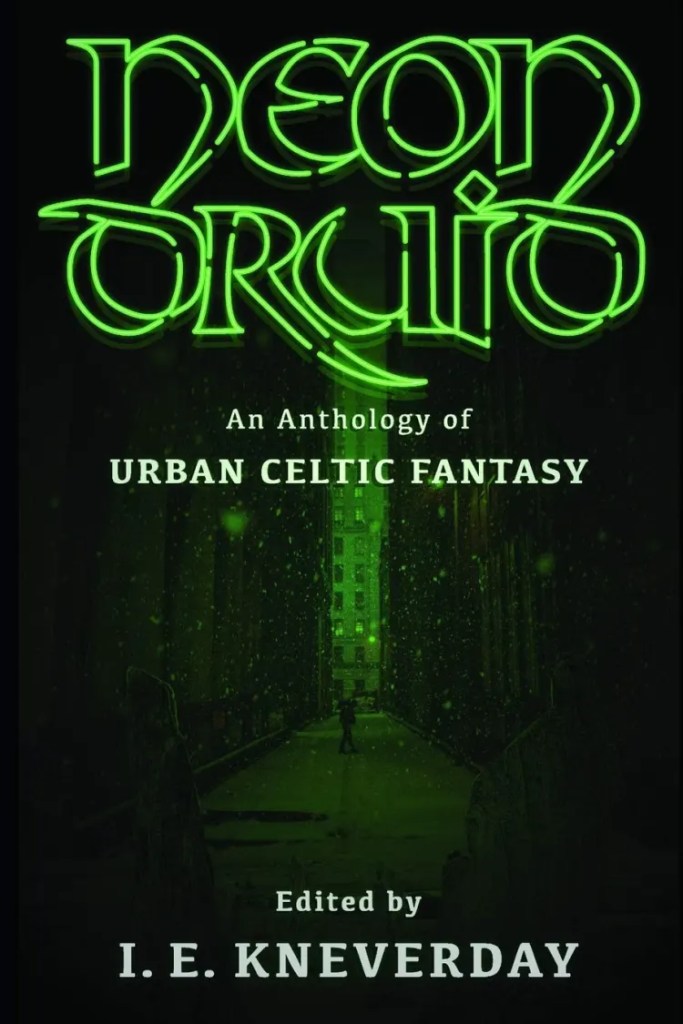
“A thrilling romp through pubs, mythology, and alleyways. NEON DRUID is such a fun, pulpy anthology of stories that embody Celtic fantasy and myth,” (Pyles of Books). Cross over into a world where the mischievous gods, goddesses, monsters, and heroes of Celtic mythology live among us, intermingling with unsuspecting mortals and stirring up mayhem in cities and towns on both sides of the Atlantic, from Limerick and Edinburgh to Montreal and Boston. Learn more…


Leave a Reply