
Folklore in Film is reader-supported. When you buy through links on our site, we may earn a small affiliate commission.
In an alternate reality…
There was a 200-million-dollar film released in 1984, starring a still alive John Belushi, that took place in the future and featured multiple teams of intergalactic Ghostsmashers.
That was the original vision of cowriter Dan Aykroyd, who, not incidentally, is the great grandson of a trailblazing spiritualist/dentist.
We’ll get into it.
I’m I. E. Kneverday, and in this reality, I will be grading 1984’s Ghostbusters, which had a budget of around 30-million dollars, on its folklorical accuracy.
Along the way, we’ll visit the haunted library that may have inspired the film’s inciting incident.
We’ll go to Zuul school and see if the Hittites, Sumerians, and Mesopotamians actually worshiped a shared pantheon.
And we’ll figure out what the heck a focused, non-terminal repeating phantasm is.
I mean, obviously it’s the same thing as a class 5, full-roaming vapor.
So why, then, does Dan Aykroyd’s Ray make a distinction between vapors and slimers when explaining how their ghost storage system works. Huh? Huh?
Let’s take a look.
Pssst. You can watch a video adaptation of this essay right here. Text continues below.
The Real Star of Ghostbusters (The Significance of the Five-Pointed Star)
Recently, I’ve been seeing stars.
Five-pointed ones, in particular.
And while it’s not a pentagram or pentacle (that would’ve been a bit on the nose), Bill Murray’s Peter Venkman holding up that card at the beginning with the star on it, was a warning.
Powerful, demonic forces lie ahead.
It was true in The Green Knight.
It was true in The Ninth Gate.
And, it’s true here.
Of course, the five-pointed star has a looong history.
Go back five thousand years and artisans in ancient Egypt, China, and, yes, Sumeria were all adorning their pottery with it.
Meanwhile, followers of the Greek philosopher Pythagoras used the triple interwoven triangle, or pentalpha, as their identifying symbol.
Sort of like biker gang jackets, but for nerds.
To quote John Burnet’s 1908 Early Greek Philosophy.
“The use of this figure [the pentagram or pentalpha] in later magic is well known; and Paracelsus still employed it as a symbol of health, which is exactly what the Pythagoreans called it.”
Yeah, so while in the popular imagination, this star now means…scary magic.
It used to mean, “we’re good!”
And I don’t want to speak for Wiccans or other modern neopagan groups, so please correct me if I’m wrong here, but there’s also this idea that the four natural elements are presented by the four points of the star: earth, air, fire, and water.
With the fifth point representing spirit, or divine consciousness.
It’s one’s higher self, which sits above the other, physical elements.
Which is very fitting for the context of the scene:
Venkman is evaluating whether it’s possible for the mind to bypass the barriers of the physical world.
And for some sadistic reason he’s seeing how negative reinforcement by way of shock therapy affects a person’s potential extrasensory perception, or ESP.
What Are Zener Cards?
All this being said, there are only five symbols total in a deck of Zener cards, which is what Venkman’s using here.
The psychologist Karl Zener developed them in the 1930s for the explicit purpose of testing for ESP.
And already we’ve run into a bit of an issue because the way this type of experiment usually works is—the test subjects know, ahead of time, what the five symbols are.
In addition to the star, there’s a square, a circle, a plus sign or cross, and three wavy lines.
So when that dude guesses “a couple of wavy lines,” and we’re presumably supposed to think, “Oh, wow, he was actually pretty close.”
No, he should have known that there is a card specifically with three wavy lines on it.
Unless, of course, Venkman isn’t running the experiment correctly because he’s incompetent/he’s only doing this study to pick up women.
Oh, yeah, that it’s.
Onto the library.
Did the Grey Lady of Willard Library in Evansville, Indiana Inspire the New York Public Library Ghost in Ghostbusters?
I love a good haunted library.
And I gotta wonder if either Akroyd or his co-writer Harold Ramis (who also plays Egon Spengler in the film) were familiar with the story of the so-called Grey Lady.
No, not the Grey Lady who haunts Gainsborough Old Hall in Lincolnshire, England.
Or the Grey Lady, who haunts Rufford Old Hall in Lancashire, England.
Or the Grey Lady who haunts Theatre Royal in Bath, England.
Or the Grey Lady who haunts the Dark Hedges in County Antrim, Northern Ireland.
Or the Grey Lady who haunts Fort St. Angelo in Birgu, Malta.
Or the Grey Lady who haunts Cumberland College, in Dunedin, New Zealand.
Or the Grey Lady who haunts the old parsonage in Sims, North Dakota.
No, I’m talking about the Grey Lady who haunts the Willard Public Library in Evansville, Indiana:
The most haunted library in the United States…according to an article in the University of Evansville’s student newspaper.
I’m sure there’s no conflict of interest there.
First documented in 1937, the Grey Lady allegedly brings with her the scent of perfume and feelings of cold.
The sensation of hair or earrings being touched.
She’s been known to turn water on and off and rearrange furniture.
You know, your usual, poltergeisty stuff.
And more pertinently to the story at hand, she’s also been accused of moving books.
The connection to Ghostbusters here is obvious—from the look of the ghost to her recreational activities, she’s very Grey Lady-esque.
And while the movie chooses not to explore the backstory of the ghost haunting the New York Public Library…
You better believe the residents of Evansville, Indiana investigated the Willard Public Library’s Grey Lady.
The leading theory is that she’s the ghost of Louise Carpenter, daughter of the philanthropist Willard Carpenter who founded the library and who, upon his death in 1883, left the entirety of his fortune to said library, cutting his children out of his will, which led to Louise bringing a lawsuit against the library.
So yeah, if anyone’s ghost was gonna haunt a library, it was gonna be hers.
And with Harold Ramis growing up in Illinois, right next door to Indiana, it’s not out of the realm of possibility that he had heard of Evansville’s Grey Lady.
Then again, Dan Aykroyd, who first came up with the idea for Ghostbusters, or Ghost Smashers, in 1981, is from Ottawa, Ontario.
And it’s not like Ontario has any haunted libraries….
Oh, wait, here we go.
It’s Haunted Library Night in Canada: The Ghost(s) of Waterdown Public Library in Waterdown, Ontario
The former site of the Waterdown Public Library in Waterdown, Ontario, which is now an office building, is allegedly haunted.
The scariness started around 1978 after construction workers discovered two tombstones during the installation of an elevator.
The ghosts or ghosts were said to haunt said elevator, and they would take books off of the library shelves and scatter them around.
No, that 1978 haunt date doesn’t give Aykroyd a ton of time to hear this story before coming up with Ghostbusters.
But it’s still a possibility.
Who Was Samuel Aykroyd? Meet Dan Aykroyd’s Great Grandfather: the Canadian Spiritualist Who Talked to Ghosts
Now, Aykroyd is on the record saying that the main inspiration for this film was his great grandfather, Dr. Samuel Aykroyd: a dentist by trade, but a spiritualist and occult researcher by passion.
One day, while flipping through some old journals he found in his Great-Grandad Sam’s séance room, like one does, Danny Boy couldn’t help but think of the comedic ghost movies produced during Hollywood’s Golden Age.
Including 1940’s The Ghost Breakers, and 1951’s Ghost Chasers.
And yes, those titles directly inspired the names Ghost Smashers and later Ghostbusters.
But isn’t it odd, or perhaps a tad disrespectful, that Aykroyd would read through his Great-Grandad’s journals and think of comedy?
Because by all accounts, Dr. Samuel Aykroyd took this occult stuff seriously.
He was legitimately trying, using all methods available to him, including hypnotism, to contact the spirits of people who had passed on.
And according to those journals, which document his investigations into the paranormal from 1905 to 1933, he was successful on several occasions.
Working with a group of like-minded spiritualists, he contacted an ancient Egyptian prince.
Dropped a line to a dude in the Ming Dynasty.
And got in touch with his own great-grandfather.
Sometimes Samuel used a small metal instrument known as a spirit trumpet to communicate with these spirits.
And on one occasion at a séance at his son’s house, i.e., Dan Aykroyd’s grandfather’s house, this trumpet levitated above people’s heads.
Or so Samuel claimed in his journals.
Where he also lamented that he was never able to coax any of the spirits he contacted into materializing or taking a physical form.
He was especially bummed that no ectoplasm ever showed up during his séances.
The Origins of Ectoplasm in Ghostbusters (1984)
As I explained in my previous video on The Blair Witch Project, ectoplasm is gelatinous goop from the spirit world that would allegedly manifest in the mouths and noses of mediums.
Giving new meaning to those words Venkman says in the library after being instructed to collect a sample of ectoplasmic residue:
“Somebody blows their nose and you want to keep it?”
And there we have it.
An example of how, in the film, Aykroyd is able to acknowledge the ridiculousness inherent in the paranormal phenomena his great-grand-dad wrote about.
While also establishing such phenomena as real in the movie, which in turn had the effect, thanks to the movie’s popularity, of bringing those phenomena back into the cultural zeitgeist.
“No one knew what ectoplasm was before the ‘Ghostbusters’ movie, right? Now millions of people know what ectoplasm is.”
Of course, Ghostbusters isn’t rooted solely in ghost stories and spirit-summoning lore.
There is some science…ish stuff as well.
Ray, Egon, and Venkman, the founding members of the Ghostbusters team, are parapsychologists, after all.
Science or Pseudoscience? The Psychical Research Behind Ghostbusters
And while we could argue about whether parapsychology should even be considered a science, or if it’s pseudoscience.
And I could point out how ectoplasm, for example, was revealed to be a scam cooked up, or chewed up, rather, by manipulative Victorian mediums with mouths full of cheesecloth…
I’d rather dig up old issues of The Journal of the American Society for Psychical Research.
Turns out Dan Aykroyd grew up with issues of that journal all around him because his father, Peter Aykroyd, was a subscriber.
Peter would go on to publish a book about the paranormal in 2009, A History of Ghosts.
And Dan would go on to become a member of the aforementioned journal’s namesake organization, the American Society for Psychical Research.
So is this where that talk about focused, non-terminal repeating phantasms and class 5, full-roaming vapors comes from?
Yes and no.
To be sure, the researchers writing in The Journal of the American Society for Psychical Research were interested in classifying phantasmic phenomena.
This goes back to 1884 and Volume 1 of the journal, which featured the paper:
“Specimens of the Classification of Impressions and Apparitions at Moments of Death or Danger.”
And this tradition was still going strong in 1972 when the paper “Are Poltergeists Living or Are They Dead?” was published in the journal’s 66th volume.
Elliott O’Donnell’s Ghost Classification System: What Are the Three Main Types of Phantasms?
But given their acumen, it’s likely the Aykroyd family was also familiar with the self-proclaimed ghost hunter Elliott O’Donnell…
Who wrote dozens of books about his supernatural research and alleged encounters.
And specifically, in 1910, O’Donnell attempted to map out the entire ghostly animal kingdom, if you will, in his book Ghostly Phenomena.
Distinguishing between three main types of ghosts or phantasms:
Phantasms of the Dead.
Phantasms of the Living.
And Elementals.
Let’s tackle each one of these in turn.
Phantasms of the Dead are your traditional, run-of-the-mill ghosts.
They are spirits that once inhabited material bodies but are now free from these corporeal restraints on account of their being dead.
These are different from Phantasms of the Living, which today we’d call astral projections.
They’re the spirits or superphysical counterparts of living material bodies that have managed to escape from said bodies and manifest elsewhere.
No death required.
Finally, we have elementals, which I find to be the most interesting of the bunch.
O’Donnell defines them as “a species of the phantasm that has never inhabited any kind of earthly body.”
But within this species there are many subspecies as well, including…
Impersonating Elementals, which are effectively indistinguishable from Phantasms of the Dead since they impersonate the spirits of the departed.
Vice Elementals, which haunt places where traumatic incidences have occurred.
Clanogrians, which haunt families or clans.
Morbas or Disease Elementals, which are “the agents of the evil creative powers,” i.e., they make people sick.
And finally we have Vagrarians, which are “merely survivals of experiments at life, prior to the selection of any definite forms of man and beast; they were created by the neutral Powers, and their attitude to man (whom they shun as much as possible), though spiteful and mischievous, is prompted by nothing actually sinister.”
Is it me or does that sound a lot like Slimer?
His form is neither man nor beast. He’s mean and mischievous but doesn’t actually hurt anyone.
Here, let’s see what else O’Donnell has to say about Vagrarians and see if there’s any more connective tissue, or ectoplasm.
“In addition to the power of materialising and dematerialising at will, Vagrarians can, at times, exercise a certain amount of physical force. I have heard of them, for example, moving furniture, banging on doors and walls, and making all sorts of similar disturbances…
“They are generally to be met within lonely places—country lanes and spinneys, empty houses, isolated barns, and on moors, commons, and hill-tops.
“In appearance they are caricatures of man and beast—sometimes compounds of both—and would seem to possess a great diversity of form.
“I have, for example, had them described to me as tall, thin figures with tiny, rotund, or flat, rectangular, or wholly animal heads, and again as short, squat figures with a similar variety of heads.
“They are probably the most terrifying of all apparitions, as, apart from the grotesqueness of their bodies, the expression in their eyes is invariably diabolical.”
I mean, come on.
Slimer’s Origins Explained: It’s a Vagrarian!
While the twelfth floor of the Sedgewick Hotel isn’t as isolated as, say, an empty house or barn out in the country, this is the metropolitan equivalent of that.
Slimer, with his ability to materialize and dematerialize and interact with physical objects, and his caricature-like face and potato-shaped body and those eyes…
It’s a Vagrarian.
Slimer is a Vagrarian.
And wait, before you comment (don’t. do it)
I am going to clarify that the name Slimer wouldn’t become standard for this green glowy goofball until the release of the 1986 animated series, The Real Ghostbusters.
Apparently Steven Johnson, the special effects artist who sculpted the character, dubbed it “Onion Head ghost” on account of the pungent odor emitted by the foam latex.
In the movie, Ray does use the term slimers (plural), but it’s to describe a category of ghost (to which this green one presumably belongs).
As I pointed out in my opener, Ray also categorizes the ghost-who-would-become-known-as-Slimer as a focused, non-terminal repeating phantasm.
And that non-terminal bit does seem to align with the notion of Slimer (I’m just gonna call it Slimer) being an elemental.
This isn’t the ghost of a dead person—even if it was designed to look like John Belushi, an homage to the late actor who was supposed to star in this movie.
The Biggest Ghostbusters Contradiction: Slimers vs. Vapors
As for the class 5, full-roaming vapor bit, I know later Ghostbusters lore fleshes out this classification system buuut it’s not in the movie.
And going by what’s in the movie, it does seem like Ray contradicts himself here.
Remember when he’s training Ernie Hudson’s Winston on the ghost storage system and explains:
“This is where we put all the vapors and entities and slimers that we trap.”
Implying that vapors and slimers are different…I was gonna say entities. But that’s in the list too.
And entities is such a broad word.
It feels like this just might be a case of lazy writing.
Orrr Aykroyd is improvising in this scene and while it sounds legit, especially with his delivery, on closer inspection, what he’s saying doesn’t quite meld with the film’s in-universe lore.
Okay, enough about Slimer.
We need to run the Zuuls.
Who or What Is Zuul in Ghostbusters?
I like my kids watch Ghostbusters for the first time last year and clearly it made an impression.
Because just the other day, one of them looked at a drawing and said “hey, that looks like Zuul!”
But here’s the thing.
They think this is Zuul.
I’ve tried to explain, no that’s not Zuul, that’s Serbian actress Slavitza Jovan’s Gozer you’re thinking of, kids.
You know, Gozer the Traveler, Gozer the Gozerian, Gozer the Destructor, Gozer the Destroyer, Volguus Zildrohar, Lord of the Sebouillia.
Zuuuuuul is Sigourney Weaver.
Or rather, Zuul the Gatekeeper possesses Sigourney Weaver’s character, cellist Dana Barret, after taking up residence in her refrigerator.
Meanwhile, Vinz Clortho, Keymaster of Gozer, inhabits Rick Moranis’s accountant character, Louis Tully.
And he gives us this fun exposition, which foreshadows the film’s finale without giving it away outright.
“During the rectification of the Vuldronaii, the Traveler came as a large Torb.
“Then, during the third reconciliation of the last of the Meketrex supplicants, they chose a new form for him, that of a giant Sloar!
“Many Shubs and Zuuls knew what it was to be roasted in the depths of the Sloar that day, I can tell you.”
How Many Zuuls Are There?
The implication here, of course, is that Gozer has gone through this process of destroying civilizations at least twice before.
And the form Gozer takes is chosen by its victims.
The mention of the multiple Zuuls being roasted is interesting, and perhaps implies that the Zuul entity we see in the film is a survivor, perhaps the sole survivor, of that previous apocalypse.
And is now forced to do Gozer’s bidding, ushering in more destruction.
Or, maybe the mentions of the multiple Zuuls means that during the Sloarpocalpyse, Gozer chose multiple gatekeepers, and thus multiple Zuuls ended up getting birthed into existence.
What do you think?
The Hittites, the Mesopotamians, AND the Sumerians? Oh my. Ghostbusters’ Gozer Mythology Explained
Now, the connection to folklore and mythology here is obvious, because as Dr. Peter Venkman himself tells us:
“[T]he name Zuul refers to a demigod worshiped around 6000 B.C. by the…Hittites, the Mesopotamians and the Sumerians. Zuul was the minion of Gozer. Gozer was very big in Sumeria.”
Is any of that true?
Let me say this.
It’s true that the Hittites, the Mesopotamians, and the Sumerians existed.
But it’s also true that the Hittites weren’t a culturally distinct people yet in 6,000 BCE.
They emerged in the 2nd millenia BCE, settling in Anatolia or Asia Minor, modern-day Turkey.
The Mesopotamians, they’re cool.
There have been people in Mesopotamia, the land between the Tigris and Euphrates rivers, since like 10,000 BCE or thereabouts, so that one totally works.
But then we have the Sumerians, who arrived in Southern Mesopotamia, at the earliest, in 5,500 BCE.
It’s close.
Let’s just give it to them.
Historical accuracy, not my thing, after all.
All I want to know is:
Is there a destructor god akin to Gozer who was worshiped by the Hittites, the Mesopotamians, and the Sumerians?
And my answer is:
Sort of.
Meet Utu, as the Sumerians called him.
An ancient Mesopotamian sun god known for two main things:
Protecting travelers (Gozer the Traveler anyone?),
And doling out justice, which he did in his capacity as a divine judge—leading some scholars to believe Utu is connected to the Underworld.
Flash forward a couple millennia and the Akkadians have effectively absorbed the Sumerians, and the god Utu along with them.
Only in Akkadian he’s known as Shamash.
How do the Hittites fit into this?
They don’t. Or do they?
The Akkadians and the Hittites were separated by hundreds of miles and hundreds of years.
I mean, it’s not like the Hittites adopted, for some weird reason, the cuneiform writing system the Sumerians had invented and the Akkadians had continued using.
Oh, they did?
So does that mean Utu/Shamash shows up in Hittite mythology?
He does.
Meet Ištanu, the Sun God of Heaven…
The Hittite version of the solar deity Utu/Shamash, whom the Hittites would have learned about while studying cuneiform.
To be fair, Ištanu is not as big of a deal as the Sun goddess of Arinna, who is the chief and patron deity of the Hittites.
What’s more, we don’t really have any surviving myths that are directly about Utu, Shamash, or Ištanu, so it’s hard to say if the film’s Gozer is an accurate representation of the deity.
And despite Ray quoting the Book of Revelation, which he mislabels the Book of Revelations, and claiming that “every ancient religion has its own myth about the end of the world,”
I can think of at least one ancient religion that didn’t have a myth about the end of the world:
The ancient Sumerian religion.
Sure, they have a flood myth, which helped inspire another certain flood myth.
But make no mistake, the Sumerian Flood Myth, like the Myth of Noah’s Ark that would be written down some thousand years later, is a story of the world’s creation; not its destruction.
And as I explored in my video on Obsession, the Sumerian myth “Inanna and the Huluppu Tree” bears more than a passing resemblance to The Adam and Eve in the Garden of Eden myth.
So if Ray had instead said “every ancient religion has its own myth about the beginning of the world,” that would have been a more defensible position.
Almost all religions make a guess as to where we came from.
Fewer have moved on to the question of where we might be going.
Still, just being able to draw that line from Mesopotomian mythology, through Sumerian mythology, to Hittite mythology (via Utul, Shamash and Ištanu) makes me feel better about everything Ghostbusters gets wrong.
Inter-Dimensional Cross-Rips in Ghostbusters Explained: What Was the Tunguska Event?
Finally, I need to take a minute to talk to you about a very serious and important subject:
Inter-dimensional cross-rips.
And specifically, the “Tunguska blast of 1909.”
For those unfamiliar with the Tunguska event…
Did you even watch the History Channel as a kid?
We’ll give Ray a break here for getting the year wrong because obviously he wouldn’t have had the History Channel.
On the morning of June 30th, 1908, there was a massive explosion over Siberia that felled an estimated 80 million trees over an area of 800+ square miles.
For more than a century, theories abounded as to what caused the devastating blast.
Alien spacecraft crash.
A death ray built by Nikola Tesla.
A free range blackhole.
But for my money, when Ray refers to the Tunguska blast as an inter-dimensional cross-rip, that’s actually Aykroyd giving a wink and a nod to the very real theory that a particle of primordial antimatter was the culprit.
A paper on the subject, Anti-matter Content of the Tunguska Meteor, even appeared in the journal Nature in 1966.
Of course, today we know that the most likely cause of the Tunguska event wasn’t matter/antimatter annihilation, but a meteor air burst.
A rocky meteor came zooming into Earth’s atmosphere at approximately 60,000 miles per hour, or 27km per second, and the air in front of that meteor compressed and compressed and the so-called ram pressure built and built until, kablooey.
Hence, there’s no impact crater, because the meteor exploded before it hit the ground.
But boy did that explosion still affect the surrounding environment.
In fact, if a Tunguska-sized rocky meteor were to pop over a city instead of a forest, there would be no more city.
Thus, when Ray implies that Gozer’s shenanigans amounted to a Tunguska-level event, he’s wrong.
There would have been way more destruction.
Folklorical Accuracy Grade for Ghostbusters (1984)
So for its folklorical accuracy grade, I’m giving 1984’s Ghostbusters…a C.
I think that’s tough, but fair.
And if you enjoyed this essay, please subscribe, leave a like, and comment:
“Nice thinkin’, Ray.”
Thanks for reading.
Fan of folk horror?
You might be interested in my short film Samhain, available over on the Irish Myths channel.
More the reading type?
Check out…
Neon Druid: An Anthology of Urban Celtic Fantasy
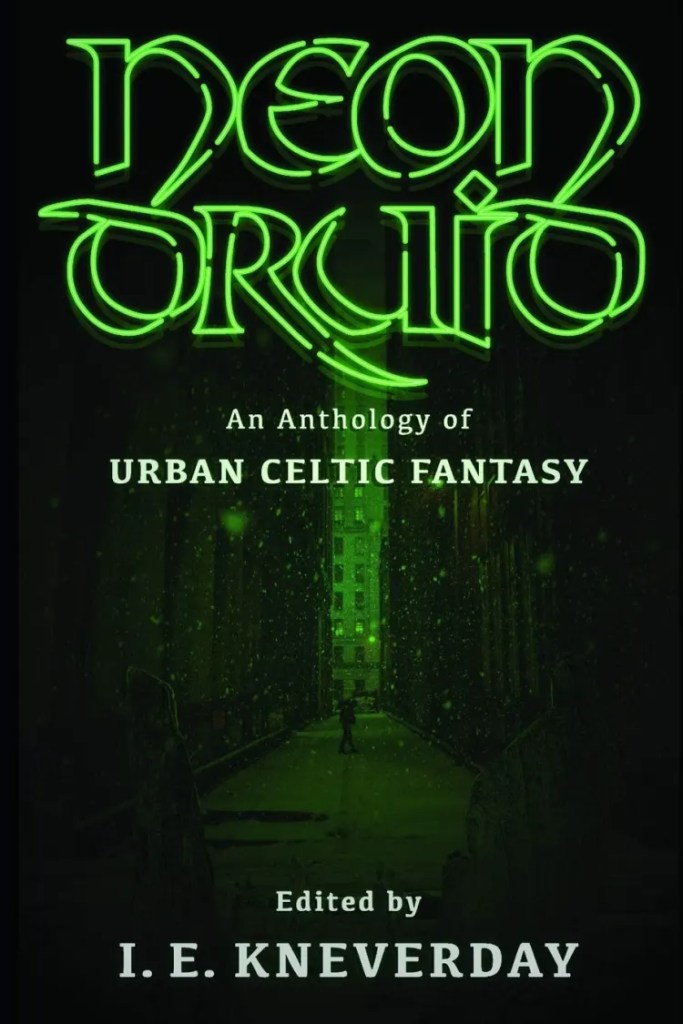
“A thrilling romp through pubs, mythology, and alleyways. NEON DRUID is such a fun, pulpy anthology of stories that embody Celtic fantasy and myth,” (Pyles of Books). Cross over into a world where the mischievous gods, goddesses, monsters, and heroes of Celtic mythology live among us, intermingling with unsuspecting mortals and stirring up mayhem in cities and towns on both sides of the Atlantic, from Limerick and Edinburgh to Montreal and Boston. Learn more…
Samhain in Your Pocket

Perhaps the most important holiday on the ancient Celtic calendar, Samhain marks the end of summer and the beginning of a new pastoral year. It is a liminal time—a time when the forces of light and darkness, warmth and cold, growth and blight, are in conflict. A time when the barrier between the land of the living and the land of the dead is at its thinnest. A time when all manner of spirits and demons are wont to cross over from the Celtic Otherworld. Learn more…
Irish Monsters in Your Pocket

In the Ireland of myth and legend, “spooky season” is every season. Spirits roam the countryside, hovering above the bogs. Werewolves lope through forests under full moons. Dragons lurk beneath the waves. Granted, there’s no denying that Samhain (Halloween’s Celtic predecessor) tends to bring out some of the island’s biggest, baddest monsters. Prepare yourself for (educational) encounters with Irish cryptids, demons, ghouls, goblins, and other supernatural beings. Learn more…


Leave a Reply