

Folklore in Film is reader-supported. When you buy through links on our site, we may earn a small affiliate commission.
Was that creepy old tree in Poltergeist based on a real, California oak that boasts a distinct arborglyph, or tree carving, made hundreds of years earlier by the indigenous Chumash people?
The same people who would have been the first inhabitants of what became the fictional community of Cuesta Verde?
We’ll get into it.
I’m I. E. Kneverday and at the end of this essay I will be grading 1982’s Poltertgeist on its folklorical accuracy.
Along the way, we’ll learn about canaries in coal mines, about the differences between hauntings and poltergeist…ings, we’ll go down the list of history’s most famous poltergeists, and of course we’ll get to the root of the so-called Scorpion Tee.
Let’s take a look.
Pssst. You can watch a video adaptation of this essay right here. Text continues below.
The Biggest Plothole in 1982’s Poltergeist (Also, Nostalgia)
Even though I was born five years after this movie came out, I still grew up with boxy, Cathode ray tube televisions, and beds made of brass and, yes, even wicker. Or rattan or whatever that is.
I actually think the last time I watched Poltergeist in full was on a CRT TV. Probably an edited version on TNT or TBS.
So this rewatch hit me right in the nostalgia.
Also, I’m a parent now, so this time I immediately grasped the film’s most obvious plothole (which was lost on me as a kid).
The parents would have ripped their house apart.
JoBeth Williams’s Diane and Craig T. Nelson’s Steve, upon learning that their daughter, Heather O’Rourke’s Carol Anne, had been sucked into the house, would have gotten crowbars and axes and tried, in vain, to find her.
Remember, Zelda Rubinstein’s Tangina Barrons, who has psychic abilities, allegedly, tells Diane:
“Your daughter is alive and in this house.”
At that point, those parents woulda been pulling up floorboards looking for her.
But if screenwriters Mark Victor, Michael Grais, and Steven Spielberg ever discussed such an idea, they likely deemed it unnecessary on account of them saving the big, house-destruction scene for the film’s climax.
And letting a ghostly vortex do the deed.
More on that later.
Who Really Directed Poltergeist (1982)?
Right now, I am legally obligated to tell you that while Tobe Hooper is credited as the director of 1982’s Poltergest, the aforementioned Steven Spielberg, who also produced the film under his Amblin banner and created detailed storyboards for the entire film, may have helped out just a smidge with directing duties…
Or he basically directed the whole thing.
Is the Movie Poltergeist Cursed?
I am also obligated to mention that some people think the film Poltergeist itself is cursed.
Or that its cast and crew are cursed.
Perhaps because real human skeletons were used in the pool scene:
“In my innocence and naiveté, I assumed that these were not real skeletons. I assumed that they were prop skeletons made out of plastic or rubber. I found out — as did the whole crew — that they were using real skeletons, because it’s far too expensive to make fake skeletons out of rubber. And I think everybody got real creeped out by the idea of that.”
Yeah.
Another theory holds that the crew disturbed sacred Native American land during filming in the cities of Simi Valley and Agoura Hills, California, areas that were first inhabited by the Chumash people.
That one is actually a conflation of movie lore and a popular news story about poltergeists from the 1950s.
Them movie lore, you’re likely already familiar with.
Steve and Mr. Teague are on that hillside, looking at that incredible matte-painting cemetery, as the latter casually explains how his development company is gonna relocate the entire burial ground to make way for Phase Five of Cuesta Verde Estates.
And when Steve pushes back:
“Come on. That’s sacrilegious, isn’t it?”
What does Mr. Teague reply?
Don’t worry about it. After all, it’s not ancient tribal burial ground. It’s just… people. Besides, we’ve done it before…In ’76. Right down there….All 300 acres. And let me tell you, it was quite a deal.”
Okay, that phrasing at the beginning deserves some scrutiny.
When Mr. Teague says, “Besides, we’ve done it before,” my first impression was that he’s referring simply (simply) to moving a cemetery.
In this case, moving the gravestones that were sitting on what would become phase 1 through 4 land to Broxton Memorial Park five minutes away.
But now I’m thinking, wait:
The “it” they’ve done before could be a reference specifically to bulldozing the ancient tribal burial ground upon which the modern cemetery had been built.
Like Mr. Teague is essentially saying, “yeah it stinks we’re gonna relocate this cemetery but at least we don’t have to destroy an ancient tribal burial ground like we did last time when we moved that other cemetery.
But don’t get me wrong, even if we did have to do that again, it wouldn’t matter because I am a misanthropic dirt bag.
Paraphrasing.
That is the movie lore.
America’s Spookeist Home Poltergeists Presents: Meet the Hermanns (The Seaford Poltergeist Explained)
In real life / urban legend, the Hermann family claimed to have been disturbed by…something between February 3rd and March 10th of 1958 in their home in Seaford, New York.
The so-called Seaford Poltergeist allegedly made loud noises and sent objects flying and caused bottles to pop open and knocked over a bookcase.
Newspapers took the story and ran (hovered?) with it.
A team of parapsychologists from Duke University visited the house and determined that the Hermann family’s 12-year-old son was responsible for the disturbances.
Not because he was a prankster but because he suffered from Recurrent Spontaneous Psychokinesis (RSPK).
A condition with a long history of…
Oh wait, no, they made up the term RSPK specifically for this case.
And needless to say, not everyone agreed with the assessment of the parapsychologists.
Which is how we got the following contemporaneous newspaper article with the headline:
Bottle Popping Blamed on Indians.
And you gotta read this to believe it.
Not to believe that it’s true, just to believe that someone actually wrote this:
“As police and electronics masterminds today sought the still-elusive answer to why bottles pop and sugar bowls fly in the Seaford ranch house of the James Herrmanns, some old-timers on Long Island came up with a new thought…
The spruce and tidy six-room house at 1648 Redwood Path, where for more than three weeks exploding jugs and zooming bric-a-brac have tormented the Herrmanns and defied the probers, emerged today as “dead center” of the occult jumpings of Chief Tackapusha and his devil-worshiping Massapequas back in the 1680s.
Solemned-toned historians recalled in nearby Hempstead:
“In these areas, including the Seaford neighborhood of the Herrmanns, Indians led by Tackapusha held fantastic religious rites in the forest. Heard through the shadows of the forest and the Puritan settlements were VIBRATIONS of unceasing and unearthly drum beats.
“These drum beats, ECHOING ALONG THE GROUND, sent a shiver into every white man within miles.
“Finally, the Puritans sent out armed bands and warned the Indians that they must stop their pow-wow or worship of the devil so that it did not VIBRATE into Seaford, or any other nearby town.”
“The oldtimer scholars, never batting an eye, noted that the Herrmann household was only a few miles from Tackapusha Park, a state park named for the diabolic Sachem who specialized in “rolling thunder along the ground, devilish sound waves created by weird drums and inhuman screams.”
Hooo boy.
Pro-tip: when a journalist in the 1950s cites their source as “oldtimer scholars” without giving names or credentials, you can be sure that most of what you’re reading is garbage at best, and racist nonsense at worst.
Regardless of how misguided it is, the theory that an indigenous American tribe was responsible for the poltergeist that would go on to inspire the movie Poltergeist, no doubt contributed to the proposed connection between Native American religion and the film’s cursed production.
Two quick clarifications:
First off, yes, the ole Seaford Poltergeist of ‘58 was an inspiration for the 1982 film.
It wasn’t a copy and paste job, obviously, but the general outline of a noisy ghost in a suburban home with a connection to one of the children is there.
Why Do People Think 1982’s Poltergeist Had a Cursed Production? Poltergeist Cast Deaths
Secondly, there wasn’t actually any curse on the film’s production. But here’s why some people think that:
Dominique Dunne, who played older sister Dana Freeling, was murdered by an ex-boyfriend the same year the movie came out, 1982.
Heather O’Rourke passed in 1988 at age 12, the result of an undiagnosed bowel obstruction she had from birth.
A couple of cast members from the Poltergeist sequels also died shortly after production on their movies.
Specifically, Julian Beck died of stomach cancer at age 60, and Will Sampson died of complications from a heart and lung transplant at age 53 after suffering from Scleroderma.
All of these deaths are terrible and tragic. But they’re not mysterious.
They can all be explained without the addition of supernatural hypotheses.
And here I will end our discussion of Poltergeist production lore and move onto the folk-lore we see on screen.
Includining…that dead bird.
Poltergeist’s Canary in a Coal Mine
Tweety is the proverbial canary in the coal mine.
This also went right over my head as a kid.
The idea here is that Carol Anne’s pet canary, Tweety, didn’t die of natural causes but of supernatural causes.
It was the first victim of the poltergeist/haunting.
The first indication that something spiritually unsettling was afoot.
We can actually trace the canary in a coal mine idiom back to a single dude, John Scott Haldane, a Scottish physiologist who first proposed sticking birds and other small animals into mines to check for dangerous levels of gases like carbon monoxide and methane.
Canaries were especially suited to the task on account of their fast metabolisms and dual-respiration systems (they snatch up oxygen during both inhalation and exhalation).
So compared to humans, canaries are much more sensitive to the presence of toxic gasses and they feel and display the effects of carbon monoxide poisoning, for example, much faster.
It was a great innovation if you worked in the mines.
Not so great if you were a canary.
Although apparently, miners would revive the canaries after they passed out, so it’s not like they were killing canaries every time they opened up new shafts.
Still, not ideal.
Diane puts the deceased Tweety in a cigar box, which is another object that yes, every house in the 80s and early 90s used to have.
The burial in the yard, of course, foreshadows the discovery of many more burials that had taken place in the yard.
But ultimately, the Freeling family do not heed the canary’s warning.
In fact, I think having Carol Anne ask for (and almost immediately receive) a goldfish as a new pet, is a commentary on the family’s aloofness here.
Because goldfish have notoriously short memories, according to fishlore.
And the family immediately forgets about the death of the canary and moves on.
Granted, research has proven that goldfish can actually remember quite a bit.
And judging by how much Carol Anne feeds this thing, it’s hard to rule out that she also overfed Tweety, perhaps contributing to its demise.
But I digress.
What’s the Difference Between a Poltergeist and a Haunting?
When the psychical researchers visit the Freelings home after Carol Anne gets sucked up, they diagnose the situation as a poltergeist disturbance, while also teasing the film’s ending:
“Poltergeists are usually associated with an individual. Hauntings seem to be connected to an area. A house, usually.
“Poltergiest disturbances are of a fairly short duration. Perhaps a couple of months. Hauntings can go on for years…hauntings don’t usually revolve around living people.”
Yeah, so while the entity’s focus on Carol Anne leads the investigators to suspect a poltergeist, we find out at the end of the film that the Beast, as Tangina Barrons calls it, is also keen on haunting.
And it devours the entire house.
So I think an argument could be made that the poltergeist in Poltergeist isn’t actually a poltergeist, but something much worse.
Comparing the Poltergeist From the Movie Poltergeists to Poltergeists From Folklore and Urban Legend
But setting aside that reveal, how do the disturbances at the Freeling household stack up against poltergeist stories of the past?
Let’s start at the beginning.
Martin Luther and the Etymology of Poltergeist
The term poltergeist originated in the German language in the 16th-century, if not early.
A popular theory holds that Martin Luther, of nailing Ninety-five Theses to the door of a church fame, invented the word.
Which is a compound of poltern, meaning to make noise or rattle, and geist meaning ghost or spirit.
And if you’re thinking to yourself, wait, why would Martin Luther be making up special words for noisy ghosts?
Well, for starters, he believed in them.
But in Luther’s view, poltergeists weren’t spirits of the dead but the Devil playing tricks.
And I quote:
“It is not a unique, unheard-of thing for the Devil to thump about and haunt houses. In our monastery in Wittenberg I heard him distinctly. For when I began to lecture on the Book of Psalms and I was sitting in the refectory after we had sung matins, studying and writing my notes, the Devil came and thudded three times in the storage chamber [the area behind the stove] as if dragging a bushel away. Finally, as it did not want to stop, I collected my books and went to bed. I still regret to this hour that I did not sit him out, to discover what else the Devil wanted to do. I also heard him once over my chamber in the monastery.”
You know, on my Poltergest rewatch I did sit up a bit at the part where Tangina Barrons declares:
“To her… it simply is another child.”
“To us… it is the beast.”
Does she mean the devil?
Is Satan the Big Bad of Poltergeist (1982)?
The Book of Revelation gives us three beasts: the beast of the earth, the beast of the sea, and the dragon.
The dragon is later revealed to be Satan so maybe that’s the beast to which she is referring.
In which case, hey, that’s a nice call back to Luther’s view on poltergeists.
Then again, the aforementioned “beast of the sea” is often interpreted as the antichrist.
So maybe the reason Carole Anne sees the beast as another child is because the antichrist is still growing up.
Regardless, even if Martin Luther coined the term poltergeist, poltergeist-like beings have inhabited folklore for a lot longer.
The First Poltergeist Folktale
Credit for the oldest poltergeist-ish story typically goes to a reputed haunting that took place near Bingen, Germany, which was recorded in the 9th century Annals of Fulda.
To quote the Annals:
“Here an evil spirit gave an open sign of his wickedness. First, by throwing stones and banging on the walls as if with a hammer, he made a nuisance of himself to the people living there. Then he spoke openly and revealed what had been stolen from certain people, and then caused disputes among the inhabitants of the place. Finally, he stirred up everyone’s hatred against one man, as if it were for his sins that everyone had to suffer such things; and so that he might be more hated, the evil spirit caused the very house which the man entered to catch fire.”
So to recap:
We’ve got a noisy, annoying spirit that gets progressively worse while also attaching itself to a specific person.
Sounds like a poltergeist to me.
Poltergeists in British Folklore
Arguably, Britain is the location that boasts the most accounts of Poltergeist activity.
English folklore even has its own term for such an entity, a Boggart: which was derived from the Middle English bugge, meaning spirit or monster.
Scottish folklore has a similar figure, the bogle, and that anime also comes from the Middle English bugge.
As do the words bug, bugbear, bogie, bogeyman, and bugaboo.
And while those words are certainly fun to say.
Bugaboo, bugaboo, bugaboo.
Poltergeist carries with it a certain…gravitas.
By which I mean: to many ignorant English-speakers like myself (mais je parle Francais aussi, bof), German words sound scary.
Kreuzschlitzschraubenzieher.
Now, some of the most popular British poltergeists include:
- The Cock Lane Ghost, which knocked and scratched its way to spiritual stardom in 18th-century London.
- The ghost or ghosts that haunt the Borley Rectory in Essex, which first showed up in 1863 after the building was constructed.
- The Black Monk of Pontefract, which got its start in West Yorkshire in 1966. Although the monk himself is believed to be from the 16th century.
- The Thornton Road Poltergeist, which threw some stones in Birmingham in 1981. And…
- The Mackenzie poltergeist, believed to be the ghost of the 17th-century George Mackenzie of Rosehaugh a.k.a. Bloody Mackenzie, who started messing with Edinburgh tourists in 1999.
The Drummer of Tedworth
One of the oldest British poltergeist folktales concerns the so-called Drummer of Tedworth, first recorded in the clergyman Joseph Glanvill’s 1681 book on witchcraft, Saducismus triumphatus.
It’s your classic tale of a male-Karen complaining about a street musician, who to be fair, forged his performance permit.
The drummer’s drum is confiscated and rewarded to the male-Karen.
The drummer himself is sent to jail.
So why, then, does the Male-Karen still hear, throughout his home, the incessant beating of that vagrant musician’s drum?
I mean, it’s not like some other person could play a drum.
More pertinently to the movie Poltergeist, the “ghost” in this story also has an affinity for the children of the house.
Here, listen to this part:
“[I]t returned in a ruder manner than before, and followed and vext the youngest Children, beating their Bed-steads with that violence, that all present, expected when they would fall in pieces.
“In laying Hands on them, one should feel no Blows, but might perceive them to shake exceedingly : For an Hour together it would Beat…
“After this, they should hear a scratching under the childrens Beds, as if by something that had Iron-Tallons. It would lift the Children up in their Beds, follow them from one Room to another, and for a while, haunted none particularly but them.”
This focus on the youngest children and their beds is of course paralleled in the movie.
But there can be no discussion of British poltergeists messing with children without talking about the island’s most infamous case of this phenomenon.
The Enfield Poltergeist
Between 1977 and 1979, the Enfield poltergeist wreaked paranormal havoc on a North London family, with two young sisters lying (hovering?) at the center of the disturbances.
And yes one of the claims was that the children levitated.
Also, it was proven that the sisters faked at least some of the phenomena, meaning when I said the sisters were lying, it was a double-entendre.
In addition to the floating kids, family members and visitors reported hearing disembodied voices and loud knocking noises.
They saw toys fly across the room.
Heavy furniture moved on its own.
But what interests me the most is…chair.
To quote an article from the Skeptical Inquirer’s Investigative files:
“A female police constable witnessed a chair wobble and slide but could not determine the cause of the movement.”
And this allegedly happened just a few years before Spielberg wrote the story treatment for Poltergeist in 1980.
Oh, right and where was Spielberg in 1980?
Welp, for a lot of the year he was at Elstree Studios in Hertfordshire working on a little film called Raiders of the Lost Ark.
Which I covered on this channel.
Did Spielberg hear about the Enfield events while he was working just 20 miles away from where they occurred?
Maybe.
The Night Side of Nature (This Book Popularized the Use of the Word Poltergeist in the English Language)
Or he learned about the finer details of poltergeists the way so many others did:
By reading British writer Catherine Crowe’s 1848 book The Night-Side of Nature, in which she dedicates an entire chapter to The Poltergeist of the Germans, and Possession.
Hmmm. The Night-Side of Nature.
Sounds a little bit like the original title Spielberg gave his story treatment.
Night Time.
That’s what the movie was gonna be called until Spielberg remembered that German words are scary.
The Tree in Poltergeist (1982) Explained: Is It Real? What Inspired It?
That gnarled tree in Poltergeist is not a real tree.
It’s a prop. Rubber stretched over metal.
But we know that Spielberg based this tree on an actual oak that stood outside his childhood window.
Sooo I guess that’s it. No folkloric origins here.
Meanwhile, in the film, Coach, I mean Steve, definitely makes it seem like there is a deep, sacred, mystical history to this tree.
As he tells his son, Oliver Robins’ Robbie, who will later get dragged out of his bedroom window by the animatronic arms of said tree:
“That’s an old tree. It’s been around here a long time. It was here before my company built the neighborhood. It knows everything about us. Rob. That’s why I built the house next to it so it could protect us. You and Carol Anne and Dana and your mom and me. It’s a very wise old tree.”
Gee, thanks Dad, I feel much better now, knowing that you agree the gnarled oak tree outside my window is sentient and has an encyclopedic knowledge of our family.
I’m gonna fall right to sleep now
And while I could go on a looong tangent about Oak trees being sacred to certain Celtic peoples and druids performing rituals in oak groves…
At present, my interest lies in the folklore and religious beliefs of the people who would have inhabited the land on which that oak tree is growing…errr existing?
Did Chumash Art Inspire the Poltergeist Oak Tree?
Yes, I know Cuesta Verde is fictional but presuming it’s meant to be close to its filming locations of Simi Valley and Agoura Hills, the indigenous Chumash people would have been the area’s original inhabitants.
In fact, just outside of Simi Valley, where the stand-in for the Freeling family home is located, is one of the most well-preserved examples of Chumash rock art.
These colorful pictographs can be found in the Simi Hills at a site known as the Burro Flats Painted Cave.
Now, if only the Chumash people were also known to have made art on giant oak trees…
And would you look at that: the so-called Scorpion Tree.
Which is an awful name because whatever that is supposed to be…maybe a mutant lizard with horns or a crown?…it sure as heck ain’t a scorpion.
Situated in the Santa Lucia Mountains, farther up the California coast but still within the boundaries of traditional Chumash land, the centuries-old oak tree bears a massive carving, or arborglyph.
For years, locals assumed that a bored cowboy had carved the creature.
But by comparing its design to other Chumash artworks, paleontologist Rex Saint Onge was able to determine: aha, this is Chumash.
But and this is a big but.
That doesn’t mean they weren’t familiar with Chumash folklore.
Did Chumash Folklore Inspire Those Glowy Poltergeist Balls?
Because in Thomas C. Blackburn’s 1975 work, December’s Child: A Book of Chumash Oral Narratives, we get the following description, which may have contributed to how certain phenomena were portrayed in the film.
And I quote:
“Sometimes in the evening people at La Quemada village would see a soul passing by on its way to Point Conception. Sometimes these were the souls of people who had died, but sometimes they were souls that had temporarily left the body. The people of La Quemada would motion with their hands at the soul and tell it to return, to go back east, and they would clap their hands. Sometimes the soul would respond and turn back, but other times it would simply swerve a little from its course and continue on to Similaqsa [the afterworld].
“When the people of La Quemada saw the soul it shone like a light, and it left a blue trail behind it. The disease from which the person had died was seen as a fiery ball at its side…
“[A] short time after the soul passed La Quemada the people there would hear a report like a distant cannon shot, and know that that was the sound of the closing of the gate of Similaqsa as the soul entered.”
Poltergeist’s glowy light balls explained. Maybe. What do you think?
Folklorical Accuracy Grade for Poltergeist (1982)
As for its folklorical accuracy grade, I’m giving 1982’s Poltergeist….an A.
And if you enjoyed this essay, please subscribe, leave a like, and comment the biggest lie of the movie, spoken by Tangina Barrons.
Who knows what I’m talking about?
Thanks for reading.
Fan of folk horror?
You might be interested in my short film Samhain, available over on the Irish Myths channel.
More the reading type?
Check out…
Neon Druid: An Anthology of Urban Celtic Fantasy
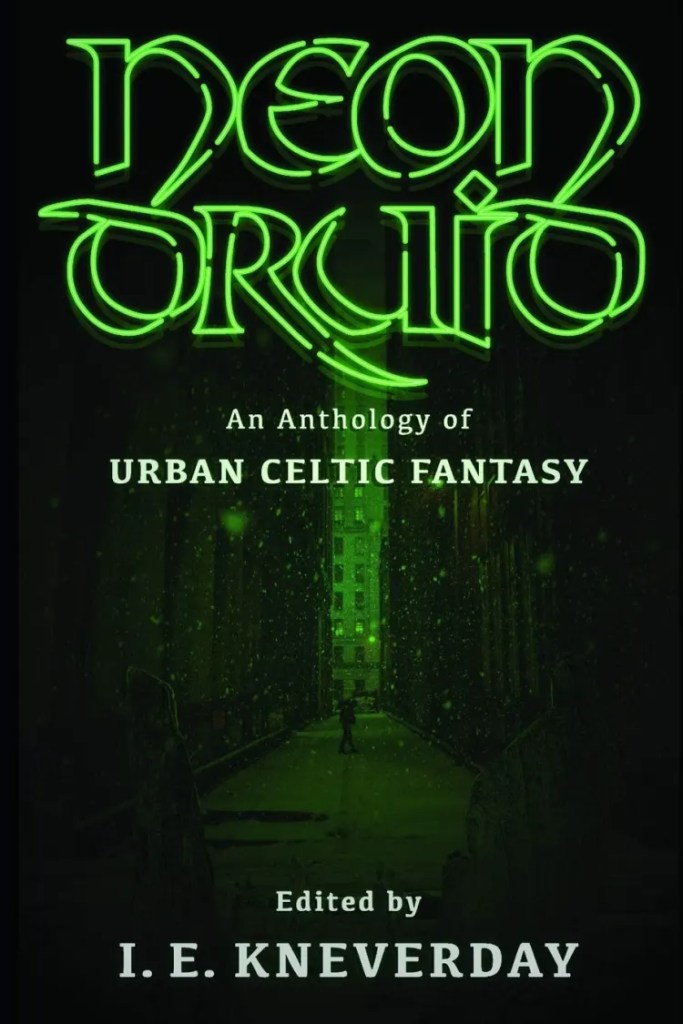
“A thrilling romp through pubs, mythology, and alleyways. NEON DRUID is such a fun, pulpy anthology of stories that embody Celtic fantasy and myth,” (Pyles of Books). Cross over into a world where the mischievous gods, goddesses, monsters, and heroes of Celtic mythology live among us, intermingling with unsuspecting mortals and stirring up mayhem in cities and towns on both sides of the Atlantic, from Limerick and Edinburgh to Montreal and Boston. Learn more…
Samhain in Your Pocket

Perhaps the most important holiday on the ancient Celtic calendar, Samhain marks the end of summer and the beginning of a new pastoral year. It is a liminal time—a time when the forces of light and darkness, warmth and cold, growth and blight, are in conflict. A time when the barrier between the land of the living and the land of the dead is at its thinnest. A time when all manner of spirits and demons are wont to cross over from the Celtic Otherworld. Learn more…
Irish Monsters in Your Pocket

In the Ireland of myth and legend, “spooky season” is every season. Spirits roam the countryside, hovering above the bogs. Werewolves lope through forests under full moons. Dragons lurk beneath the waves. Granted, there’s no denying that Samhain (Halloween’s Celtic predecessor) tends to bring out some of the island’s biggest, baddest monsters. Prepare yourself for (educational) encounters with Irish cryptids, demons, ghouls, goblins, and other supernatural beings. Learn more…


Leave a Reply