
Folklore in Film is reader-supported. When you buy through links on our site, we may earn a small affiliate commission.
Everyone knows willow wands are magic.
In folklore, I mean.
But this movie kind of messes with how that magic is usually unleashed.
We’ll get into it.
I’m I. E. Kneverday and at the end of this essay I will be grading 2025’s Obsession on its folklorical accuracy.
Along the way, we’ll learn way too much about the One Wish Willow’s potential origins.
We’ll explore how the Hansel and Gretel fairytale plays into the proceedings…
And we’ll pull back the fur on the Obsession cat theory: the idea that Nikki is possessed by Bear’s dead cat Sandy..
Let’s take a meow.
Pssst. You can watch a video adaptation of this essay right here. Text continues below.
The Inspiration for Obsession (2025): What the Film Borrows From 1902’s The Monkey’s Paw (and What It Changes)
Take one part 1990’s Misery, based on the Stephen King novel about a mentally unstable woman obsessed with a famous novelist…
Mix thoroughly with Lisa’s nightmare in the 1991 Simpsons’ Halloween special, Treehouse of Horror II, in which wishes made upon a cursed monkey paw yield dire results….
And you’ll get something approaching Obsession, the sophomore outing from writer/direct Curry Barker, who was born in 1999.
Which must have been a sign from the gods because as we all know, 1999 was the best year for movies ever.
(Even if 1987 was the best year for people.)
Anyway, that spooky Simpsons segment was of course inspired by “The Monkey’s Paw,” a short horror story by English author W. W. Jacobs, first published in Harper’s Monthly in 1902.
Barker doesn’t shy away from the fact that the plot of his movie is effectively a reworking of this older story.
A story that sees a skeptical but curious father grab hold of a mummified Moroccan monkey paw and wish for what amounts to a rather trivial amount of money as a way to test the paw’s alleged ability to grant three wishes.
Then the son dies in a horrific work accident and the company offers the grieving father (and mother) the exact amount of money he’d wished for.
So wish number two goes to bringing the son back to life.
But when there’s a knock on the door, Dad’s like:
You know what, whoever or whatever is out there, isn’t going to be the son I remember.
So poof wish number three returns the son to the grave.
The parallels with Obsession here are obvious.
Granted, the parent-child relationship is swapped out for an abusive quasi-romantic, quasi-incestuous relationship—more on that when we talk about Hansel and Gretel.
And while Michael Johnston’s Baron a.k.a. Bear doesn’t use his wish to bring anyone back from the dead, he does use it to wish for Inde Navarrette’s Nikki to love him more than anyone in the world.
Which results either in the summoning of a spirit or entity who takes over Nikki’s body, or the splintering of her mind, so that a new personality comes to the forefront.
Freaky Nikki.
Precise psychological/supernatural mechanism aside, the end result is the suppression of Nikki’s true self.
Whom we can hear on the phone screaming in the background when Bear calls the One Wish Willow customer support line.
And who can talk to Bear when the other entity/personality is asleep.
It should also be noted that the wish for a frivolous amount of money like we see in The Monkey’s Paw, also comes into play in the movie, courtesy of Cooper Tomlinson’s Ian.
Not that a billion dollars is frivolous in and of itself but in the context of being able to wish for, say, all of the money in the entire world, or I guess even more than that, a single billy is just kind of silly.
Obviously Ian, like the father in the story, chooses the number impulsively as a way to test the wish-making power of the One Wish Willow.
Speaking of which….
Is the One Wish Willow in Obsession Real?
The reason Curry Barker created the One Wish Willow, which did not exist before this movie, was to distance Obsession from The Monkey’s Paw.
“[I]t started with the Monkeypaw and I thought about that, but I didn’t want to use the Monkeypaw because it was too recognizable. And so then I went down this rabbit hole of trying to find things that you could make a wish off of. You’ve got the wishing well, you have shooting stars, a wishbone you break in half, but nothing really worked well for the movie. So I just said, ‘Screw it. I’m going to make something up.’”
Welp, looks like my work here is done.
Case closed.
Obsession gets an F in folklorical accuracy because the writer/director made up the mystical object at its center.
Only kidding.
What Is the One Wish Willow in Obsession Based On? Willow Wands in Ritual and Folklore
Because despite being a fictional novelty item, the One Wish Willow is clearly rooted (sorry) in folklore and superstition.
As many Obsession breakdowns have no doubt already pointed out, wands made from willow trees have been featured in many an ancient story.
Gilgamesh, Enkidu, and the Netherworld
Heck, we can go back 4000 years to when the poem Gilgamesh, Enkidu, and the Netherworld was written…
(It’s a Sumerian poem that predates the famed epic of Gilgamesh)
…and in its preamble we learn how Gilgamesh’s sister, the goddess Inanna, transplants a tree from the banks of the Euphrates to her divine garden.
It’s called the Huluppu tree in the story, and the traditional interpretation is that it’s a weeping willow.
Granted, there’s a strong ecological case to be made that it’s actually a Euphrates poplar, which has similarly droopy leaves, but I digress.
A serpent, an Anzû-bird, and the demon woman Lilitu (a forerunner to Lilith) walk into a bar…
Sorry, they move into Inanna’s tree in the garden, much to the goddess’s dismay.
So her brother Gilgamesh slays the serpent and kicks the others out.
Here’s what happens next:
“Gilgamesh then loosened the roots of the huluppu-tree;
And the sons of the city, who accompanied him, cut off the branches.
From the trunk of the tree he carved a throne for his holy sister.
From the trunk of the tree Gilgamesh carved a bed for Inanna.
From the roots of the tree she fashioned a pukku for her brother.
From the crown of the tree Inanna fashioned a mikku for Gilgamesh, the hero of Uruk.
What the heck is a pukku and a mikku?
The most common interpretation I see is that they’re a drum and a drumstick.
But a competing theory holds that pukku and mikku refer to the rod and ring of a Mesopotamian symbol thought to represent divine power.
So yeah, the argument could be made that Gilgamesh’s rod is literature’s first willow wand.
Although, I really doubt Curry Barker was familiar with the Sumerian myth “Inanna and the Huluppu Tree” when he wrote his screenplay.
Then again, in Sumerian art, Inanna is sometimes portrayed either with–or as—a big ole cat.
Keep that in mind for later.
The Power of Willow Branches (and Guanyin) in Chinese Buddhist Tradition
Scooch over to the east and jump ahead a couple of millennia to a time when Buddhism has spread across China, and the willow wand has a more direct and overtly magical role to play.
To quote Wei Li, a scholar of Chinese language and literature:
“Willow twigs are frequently employed in Esoteric rituals, where they are accompanied by spells to create intricate ceremonies that have the power to heal illnesses, ward off bad luck, and bring about happiness and tranquility…
“[L]ater on, the ritual became primarily linked to (Guanyin), who was believed to use them as crucial tools for healing and saving lives…
“Willow, being flexible yet strong, represents Guanyin’s grace under pressure, femininity, and compassion.”
FYI: Guanyin was considered to be a bodhisattva, or enlightened being, a concept I explore in more detail in my video on 1991’s Point Break.
Different Meanings Behind Bending Willow Branches vs. Breaking Willow Branches Across Cultures
But notably, in this context, it is the flexibility of the willow wand, its ability to bend without breaking, that makes it special.
Hence, when you do snap into some willow stick—the symbolism changes.
According to Li, there’s a Chinese custom of breaking a willow branch off of a tree when bidding someone farewell.
“It embodies the sorrow of parting…the impermanence of life.”
And it turns out in other mythologies and storytelling traditions, the breaking of a willow branch carries a distinct significance from the bending of the branch, or in the case of Flemish folk remedies, the tying of a willow branch into knots.
To quote James George Frazer’s masterwork of comparative mythology, The Golden Bough, from 1890:
“A Flemish cure for the ague [or fever] is to go early in the morning to an old willow, tie three knots in one of its branches, say, ‘Good-morrow, Old One, I give thee the cold; good-morrow, Old One,’ then turn and run away without looking round.”
A Swedish folk remedy advises that if you’re suffering from an infirmary, just grab yourself three willow branches, shape them into a hoop, get naked, and crawl through it.
Similarly, in Selborne, England, there was a tradition of curing, or attempting to cure, twisted necks and other injuries by twisting willow branches around the affected areas.
This according to Richard Folkard’s 1884 Plant Lore, Legends, and Lyrics.
But the flexibility and thus power of the willow branch was harnessed for more than just folk medicine.
In Hessian folklore, for example…
“It is affirmed that with knots tied in willow one may slay a distant enemy.”
Source: 1889’s The Folk-lore of Plants by T. F. Thiselton-Dyer.
The Connection Between Willow Trees and Death Across Cultures
Now, compare those instances of bending or shaping willow wands to one’s will, to this bit of Czech folklore:
“[The] Nymph appeared day by day among men, but always went back to her willow by night. She married a mortal, bore him children, and lived happily with him, till at length he cut down her Willow-tree: that moment his wife died. Out of this Willow was made a cradle, which had the power of instantly lulling to sleep the babe she had left behind her; and when the babe became a child, it was able to converse with its dead mother by means of a pipe, cut from the twigs growing on the stump, which once had been that mother’s abiding-place.”
And lest you think I’m cherrypicking (willow-picking?) the one example from folklore where a small object made from willow-wood is used to communicate with the dead…
Henri Doré’s 1914 Researches Into Chinese Superstitions provides us with another such example.
“In some places of Kiangsu province, magicians employ little images of idols or Pusahs. They must pray long and fulfil many ceremonies before rendering their image efficacious. When at last it is possessed by the God, divinised, ling, as pagans say, they use it as a medium, placing it on their bosom, begging it to find out such and such a soul with whom one wishes to communicate, and the little statue replies to all questions addressed to the departed soul, as if the spirit dwelt within the image.
“In Southern China, this image is made of the wood of the willow-tree. It is exposed to the dew for 49 nights, after which it is believed to have the power of speaking. The holder professes to send it into the world of spirits, to find the person about whom intelligence is sought.”
Okay, now that is an interesting tidbit to consider as we ponder what happened to pre-wish Nikki after Bear tore into his One Wish Willow.
For a wish like Bear’s, perhaps the willow has to find a spirit that can play the required part.
And building off of that, what happens if there isn’t a spirit who can do a good job imitating a human person who loves another human person more than anyone else in the world?
Well, they do a bad job. Like what we see in the movie.
The Orpheus of It All: How Willow Branches Represent Both Love and Death
Finally, I’d be remiss not to mention that in Greek mythology, the musician extraordinaire Orpheus famously goes on a quest to retrieve his dead wife from the underworld.
And what is Orpheus sometimes depicted holding or touching?
Willow branches.
In other cultures, willow wood has nothing whatsoever to do with death and necromancy, but is instead associated with that other, some might say scarier aspect of the Orphean tragedy:
Marriage.
Love, Marriage, and Willow Wands: How Willow Was Used in Marriage and Courtship Rituals
In Andrew Lang’s 1884 Custom and Myth, we learn about a Finnish marriage ballad that instructs the newlyweds as follows:
“The girl is to be long-suffering, the husband to try five years’ gentle treatment before he cuts a willow wand for his wife’s correction.”
Ummm.
In the movie, Bear allegedly spent seven years trying the “gentle treatment” approach with his courting of Nikki, I guess you could say.
But like a 19th-century Finnish husband, he eventually picks up a willow wand and “corrects her.”
Or in this case, literally changes her.
Then there’s the wedding stick from Welsh tradition.
According to Jonathan Ceredig Davies’s Folk-lore of West and Mid-Wales from 1911, the wedding officiant, as he went from house to house, would carry either a staff or a white wand that:
“as a rule was a willow-wand, from which the bark had been peeled off. This white stick was decorated with coloured ribbons plying at the end of it.”
But by far the most intriguing example of a willow wand being used for courtship rituals can be found in the north of England.
I’m now going to read a short paragraph about how the willow wand functions in this context, courtesy of William H. Wesson’s 1866 Notes on the folk-lore of the northern counties.
And I will then be reading the paragraph that comes immediately after that because, well, you’ll see why:
“Another mode of divination is by the willow wand. Let a maiden take a willow branch in her left hand, and, without being observed, slip out of the house and run three times round it, whispering all the time, “He that’s to be my gude man come and grip the end o’t.” During the third run, the likeness of her future husband will appear and grasp the other end of the wand…
“This spell somewhat resembles one by which German girls ascertain the colour of their future husband’s hair. They call it hair-snatching, and practise it thus. Between the hours of eleven and twelve at night, on St. Andrew’s Eve, a maiden must stand at the house-door, take hold of the latch, and say three times “Gentle love, if thou lovest me, show thyself.” She must then quickly open the door wide enough to put out her hand, and make a rapid grasp out in the dark, and she will find in her hand a lock of her future husband’s hair.”
So there you have it:
Some connective tissue between willow wands and hair-snatching, the latter being a hobby that Freaky Nikki picks up, much to Bear’s dismay.
The Ending of Obsession Explained: Cats, Shrines, and Binding Spells
And this leads us to what I think is the most reasonable interpretation for why Freaky Nikki makes those shrines.
And perhaps even why she makes Bear that cat sandwich.
And no, it’s not because Nikki herself has been possessed by a cat and is now compelled to bring Bear gifts.
That’s not it.
These shrines are either an attempt at romantic divination, like we just learned about.
It’s Freaky Nikki trying to figure out if Bear really loves her as much as she loves him…
Or, and this one seems more likely to me, she’s trying to hit Bear with a binding spell, a spell that allows you to influence or control someone.
(Something I touched on briefly in my Ninth Gate video).
This type of spell traditionally requires biological material and/or objects belonging to the person being targeted.
Hence, the hair. The dead cat.
And since the cat was also Bear’s final family member, it makes sense, in the darkest of ways, that Freaky Nikki would want to harness the emotional weight of that when performing her rituals.
And when making Bear’s lunch!
I think her demonic thinking here was: I did the ritual with the cat. Now Bear will eat the cat and badabing badaboom, he’ll love me even more.
Because as we find out later, when she cracks that One Wish Willow, Freaky Nikki’s ultimate desire is to have Bear love her as much as she loves him.
That’s her goal. Just like it had been Bear’s goal.
And for a fleeting moment, she succeeds.
That ending, with the two star-crossed lovers locking eyes, before Curry Barker hits us with that Shakespearean gut punch.
No, he doesn’t go full Romeo and Juliet, which I think was a smart choice. The audience needs to be left with a glimmer of hope, however slight.
What’s more, Obsession is decidedly not a romance. It’s a story of abuse. Bodily autonomy is the central theme, not love.
Upon learning that his wish had actually come true, Bear could have started working on reversing it right away.
Instead, he took advantage of the situation for as long as he possibly could.
How the Hansel and Gretel Fairytale Inspired Obsession
And what makes it all even creepier is that the movie goes out of its way to tell us that pre-wish Bear and Nikki had a sibling-like relationship.
To quote Ian:
“Apparently, Nikki and Sarah had a conversation about you that-that day you weren’t in, and, uh, Nikki said she just thought of you like her little brother or, you know, and she, like, friend-zoned you.”
And this, of course, is where the whole Hansel and Gretel comparison comes into play.
Because just as Gretel saves Hansel from the witch, so too does Nikki “save” Bear when he’s grieving the loss of his Nana, or so he implies.
So both of these relationships, to some extent, are built on trauma and dependency.
And in the Grimm Brothers telling of the Hansel and Gretel tale, there is this one part, which…
Honestly, if I hadn’t just seen the movie, I don’t think I would have made anything of it.
But after hearing Freaky Nikki read that excerpt from the book she’s working on…
Or did pre-wish Nikki write that?
Based on the content, I’d say it was definitely post-wish Nikki.
She seems to be riffing on a specific moment in the Hansel and Gretel fairytale, which happens right after Gretel shoves the witch into the oven.
And I quote:
“Gretel ran straight to Hansel, unlocked his stall, and cried, ‘Hansel, we are saved. The old witch is dead.’
“Then Hansel jumped out, like a bird from its cage when someone opens its door.
“How happy they were! They threw their arms around each other’s necks, jumped with joy, and kissed one another.”
Sooo in her book excerpt, Freaky Nikki is basically taking this innocent little moment of celebration and showing how a worse version of Hansel, i.e., someone like Bear, could have potentially taken advantage of it.
Thus, Nikki’s public-reading can be interpreted as a veiled cry for help.
Although, how veiled is it?
To quote Nikki:
“Hansel is my soul. A love only the branch of a willow tree could conjure.”
Yeah, she’s making it pretty clear:
This “love” you’re seeing here? It ain’t right.
Something supernatural is afoot.
And given Freaky Nikki’s ability to communicate these ideas in such a poetic way, I’d say that proves she isn’t being possessed by a cat.
Yes, she stands at the door for a long time and has a few accidents, but that isn’t really cat-like behavior.
It’s not like she’s catching birds and swatting at yarn.
What’s more, Barker is on the record saying this isn’t a possession movie.
So the Freaky Nikki persona isn’t a demon; there isn’t some darky entity controlling her.
Instead, she is obsession made manifest.
The ultimate toxic partner.
Why Did Bear’s Wish Go So Wrong in Obsession?
How did this happen?
Why didn’t Bear’s wish work better?
Maybe it has something to do with the phrasing and tone of Bear’s wish:
I wish Nikki Freeman loved me more than anyone in the fucking world.
Much like the wish for a billion dollars that comes later, this feels impulsive.
Haphazard.
And including a curse word in the wish couldn’t have helped things.
But ultimately, I’d argue it is the very breaking of the willow wood that yields these dark, unintended results.
Because remember, in most of the folkloric examples we looked at, it is the flexibility of the willow branch that supplies its therapeutic power.
It is the bending, shaping, and/or tying of willow branches in knots that allows one to change reality.
To heal wounds.
Or to kill at a distance.
The breaking of a stiff willow branch, like a One Wish Willow, represents something different. Something darker. Namely, death.
When the cashier tells Bear that customers who buy the novelty product “die or wish they were dead,” she isn’t lying!
It’s always going to end that way because the One Wish Willow, like the monkeypaw that came before it, is an inherently corrupt artifact.
It was either poorly designed or intentionally designed to produce bad results.
And while I do wish there had been a more thorough onscreen investigation into the One Wish Willow, beyond just reading a few entries on a discussion board and calling the number on the box…
What we did get was certainly intriguing enough to get these ole wheels spinning. Hence, this essay (and video).
As for Obsession’s folklorical accuracy grade, I’m going with…an A-.
And if you enjoyed this essay, please subscribe, leave a like, and comment what your one wish would be…if you dare.
Thanks for reading.
Fan of folk horror?
You might be interested in my short film Samhain, available over on the Irish Myths channel.
More the reading type?
Check out…
Neon Druid: An Anthology of Urban Celtic Fantasy
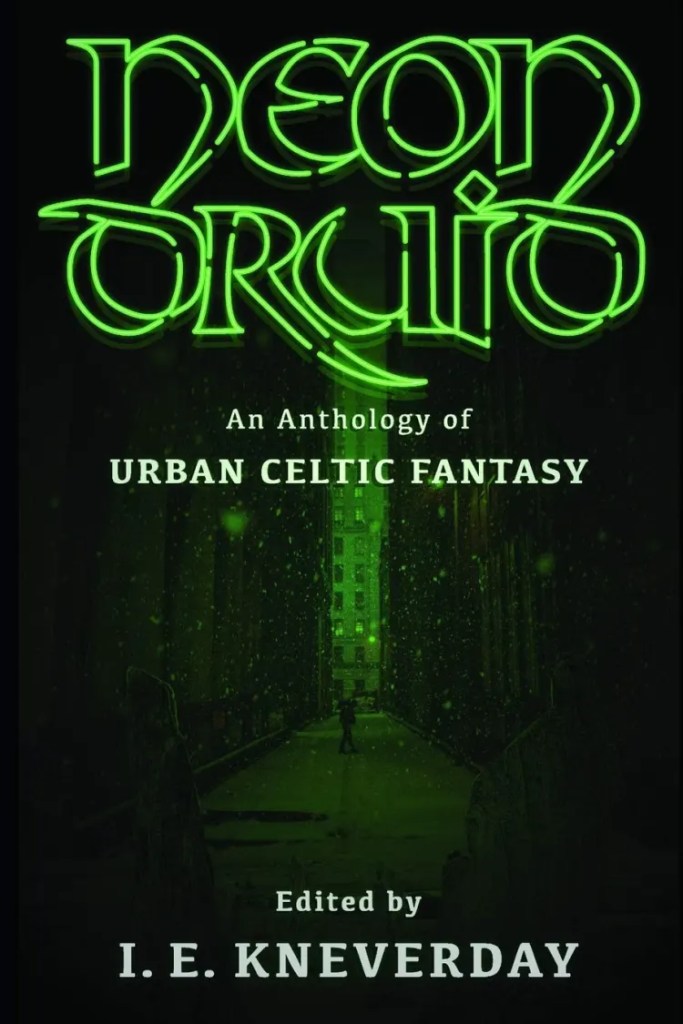
“A thrilling romp through pubs, mythology, and alleyways. NEON DRUID is such a fun, pulpy anthology of stories that embody Celtic fantasy and myth,” (Pyles of Books). Cross over into a world where the mischievous gods, goddesses, monsters, and heroes of Celtic mythology live among us, intermingling with unsuspecting mortals and stirring up mayhem in cities and towns on both sides of the Atlantic, from Limerick and Edinburgh to Montreal and Boston. Learn more…
Samhain in Your Pocket

Perhaps the most important holiday on the ancient Celtic calendar, Samhain marks the end of summer and the beginning of a new pastoral year. It is a liminal time—a time when the forces of light and darkness, warmth and cold, growth and blight, are in conflict. A time when the barrier between the land of the living and the land of the dead is at its thinnest. A time when all manner of spirits and demons are wont to cross over from the Celtic Otherworld. Learn more…
Irish Monsters in Your Pocket

In the Ireland of myth and legend, “spooky season” is every season. Spirits roam the countryside, hovering above the bogs. Werewolves lope through forests under full moons. Dragons lurk beneath the waves. Granted, there’s no denying that Samhain (Halloween’s Celtic predecessor) tends to bring out some of the island’s biggest, baddest monsters. Prepare yourself for (educational) encounters with Irish cryptids, demons, ghouls, goblins, and other supernatural beings. Learn more…


Leave a comment