
Folklore in Film is reader-supported. When you buy through links on our site, we may earn a small affiliate commission.
These are the five stages of watching Excalibur.
1. Ehhhh.
2. Oo! Patrick Stewart.
3. Okay, I’m into it.
4.Wait, NOW they’re looking for the grail?
5. What the Helen Mirren did I just watch?
I’m I. E. Kneverday and at the end of this essay I will be grading 1981’s Excalibur on its folklorical accuracy.
Along the way, we’ll learn about magic swords, magic spells, Magic Johnson…
Wait, no, he’s not in this—
And we’ll take attendance at the Round Table to find out if all of the shiny boys in the movie align with actual knights from Arthurian Legend.
Let’s take a look.
That Time Excalibur’s Creator, John Boorman, Almost Made a Lord of the Rings Movie
Before Peter Jackson brought The Lord of the Rings to the big screen, director and producer John Boorman gave it a shot.
He brought on an Italian architect, Rospo Pallenberg, to help him condense Tolkien’s three-volume epic into a single, 3-hour movie.
Needless to say, this project never materialized.
ExcalIbur’s Source Material: Le Morte d’Arthur by Thomas Malory
But the newfound writing team of Boorman and Pallenberg next set their sights on the OG sword and sorcery fantasy epic romance:
Le Morte d’Arthur, or the Death of Arthur, which was compiled/composed by Thomas Malory in the 15th century.
This work takes a lot of the Arthurian lore that came before and packages it all into a single, continuous narrative.
Which follows the conception, life, and death of King Arthur, while also highlighting the exploits of his knights.
Hence, it’s been argued that the original title for Le Morte d’Arthur was:
“The hoole booke of kyng Arthur & of his noble knyghtes of the rounde table.”
That is certainly a better descriptor of Malory’s nearly 250,000-word work.
Which is about half the size of The Lord of the Rings for those keeping score at home.
But arguably, and please, feel free to argue in the comments, Malory’s work is narratively denser.
By which I mean:
There’s more happening, with fewer poetic detours. I’m looking at you, Tom Bombadil.
What’s more, Boorman was able to squeeze a story spanning three generations of royal Pendragon warriors into a 2 hour and 20-minute film.
Is it a perfect film?
Of course not.
The battles at the beginning in particular feel small.
Like there are ten guys fighting ten other guys.
And I am convinced Nigel Terry’s performance as young Arthur could be seamlessly dropped into Monty Python and the Holy Grail.
But hey, that polished aluminum armor looks…chef’s kiss.
And while Ian McKellen denies basing his Gandalf performance on Nicol Williamson’s performance as Merlin, the similarities are plain to see.
But the inspiration goes both ways.
How Excalibur (1981) Handles the Dueling Legends Behind Its Namesake Sword
For example, having the Lady of the Lake repair or reforge Excalibur? That wasn’t in Malory’s story.
Malory’s version features two distinct swords that are both called Excalibur:
The sword Arthur pulls from the stone, and the sword given to him by the Lady of the Lake.
After Arthur breaks Excalibur number one during a fight with King Pellinore, of Questing Beast fame, the Lady of the Lake just gives him a new sword, Excalibur two.
The movie streamlines this, reconciling the two sword stories by having it be the same sword throughout.
First, Merlin summons Excalibur from the Lady of the Lake for Arthur’s father Uther Pendragon, who shoves it into a stone before croaking.
Arthur pulls it out, breaks it during a fight with Lancelot, tosses the broken Excalibur into the water (splish, splash), then the Lady of the Lake does a quick underwater repair job and badabing badaboom Excalibur is back in action.
Okay maybe that’s not exactly streamlined, but this approach succeeds in keeping the titular sword central to the generations-spanning story.
What Excalibur’s Filmmakers Borrowed From Tolkien’s Elves (Sword Repair, Age of Men)
And it’s likely Boorman and Pallenberg were inspired by their previous work on The Lord of the Rings, in which the Elves famously reforge a legendary sword for the king of men.
What’s more, the Elves are resigned to their fate; they know that the magical days of old are behind them and that the Age of Men, for better or worse, is upon them.
A sentiment that Merlin shares in 1981’s Excalibur.
And I quote:
“The one God comes to drive out the many gods. The spirits of wood and stream grow silent. It’s the way of things. Yes… it’s a time for men, and their ways.”
Now, obviously the tension between Celtic paganism and Christianity has always been central to Arthurian legend.
Because if these stories are as old as people claim, the original King Arthur wouldn’t have been a Romano-Brittonic Celtic warrior battling the invading Saxons, or Saracens, in Malory’s text.
He would have been a Brittonic Celtic warrior battling the invading Romans.
But the way Merlin talks about “a time for men” here sounds rather Tolkienesque.
True, in Malory’s work, Merlin does warn Arthur that despite all of his wizard magic, he (Merlin) is gonna end up getting trapped in the earth courtesy of a powerful, witchy woman.
Which absolutely comes to pass.
Who Traps Merlin in the Earth? Nimue vs. Morgana Le Fay
Granted, in the text it’s Nimue, the second incarnation of the Lady of the Lake (the first one gets her head chopped off) who does the Merlin-trapping.
While in the movie Excalibur it’s Arthur’s half-sister Morgana a.k.a. Morgan Le Fay who traps Merlin using the Charm of Making.
Speaking of the Charm of Making:
Why Is the Charm of Making Spoken in Old Irish?
Kudos to the filmmakers for turning to Old Irish for these words.
Anáil nathrach, ortha bhas betha, do cheol déanta
Serpent’s breath, charm of death and life, thy omen of making.
Does it make sense for Merlin to be speaking Old Irish?
Sort of. Maybe.
Old Irish is the most ancient of the Goidelic or Gaelic Celtic languages.
It gave rise to modern Irish, Scots Gaelic, and Manx.
But to be clear, the Celtic places where the Arthurian legends are set and/or have strong connections to, namely Wales, Cornwall, and Brittany…
Those are Brittonic/Brythonic Celtic places.
The Welsh, Cornish, and Breton languages are on a separate branch from their Irish, Scots Gaelic, and Manx cousins.
Both branches grew out of Common Celtic or Proto-Celtic.
But still, it was kind of an odd choice to have Merlin, a Welsh wizard, speak Old Irish.
Unless the implication is that Merlin is Irish himself, which—
Look, we don’t really have time for a tangent like this.
But I’d be remiss not to mention that in Arthurian lore, Merlin and Uther Pendragan go to Ireland to steal a stone circle that later becomes known as…Stonehenge.
Anyway, we also know that early medieval Irish scribes were exchanging stories with their Welsh counterparts.
And that some Old Irish narratives were absorbed into “British” stories.
For example, the 14th-century chivalric romance Sir Gawain and the Green Knight is based on the Old Irish story Bricrui’s Feast, which dates to the 8th century.
So perhaps by putting the most powerful of Merlin’s spells in the language of Old Ireland, Boorman was giving a nod to the Irish/Gaelic influence on Arthurian Legend.
Or, you know, maybe he was paying homage to the country he was filming in.
Since all of 1981’s Excalibur was filmed in Ireland.
Specifically in counties Kerry, Tipperary, and Wicklow.
Is the Charm of Making in Excalibur’s Source Material, Malory’s Le Morte d’Arthur?
All this being said about the words of the Charm of Making, the charm itself isn’t actually a thing in Arthurian legend.
In Malory’s text, the magical stuff just sort of…happens.
No incantations necessary.
Poof! Uther looks like Ingraine’s husband, the Duke of Cornwall.
And Poof! Merlin and Sir Ulfius look like a couple of the Duke’s knights—hey, that wasn’t in the movie.
Poof! Merlin’s in a rock sandwich.
In the text, it’s made explicit that Merlin deserves to be in that rock sandwich because he’s a huge creep.
“[A]lways Merlin lay about the lady [of the lake] to have her maidenhood, and she was ever passing weary of him, and fain would have been delivered of him, for she was afeard of him because he was a devil’s son, and she could not beskift him by no mean.
“And so on a time it happed that Merlin showed to her in a rock whereas was a great wonder, and wrought by enchantment, that went under a great stone.
“So by her subtle working she made Merlin to go under that stone to let her wit of the marvels there; but she wrought so there for him that he came never out for all the craft he could do.
“And so she departed and left Merlin.”
Translation: The Lady of the Lake tricked Merlin into mansplaining his favorite stone and then used an enchantment to keep him trapped under it forever.
Which isn’t all that dissimilar to how Morgana tricks Merlin in the movie.
Is Dragon’s Breath Based on Arthurian Legend? Merlin’s Greatest Magic Trick Explained
As for the Dragon’s Breath…
That one belongs squarely to the realm of movie magic.
Merlin does not conjure any fog in Le Morte d’Arthur.
Nor does Malory describe any mists of Avalon when Arthur is taken by ship to that otherworldly island.
The closest thing I could find was a dream Arthur has:
In which he sees a “dreadful dragon” do battle with a “grimly boar all black in a cloud.”
Yeah, it’s not much to go on.
Indeed, what really seems to be going on here is that Dragon’s Breath…looks cool on screen.
And it should be noted that in Homer’s Odyssey, Athena envelopes Odysseus in a mist that enables him to sneak undetected into a castle so he can talk to a queen.
But we don’t have to go all the way to Greco-Roman mythology for such inspiration.
Did Irish Mythology’s Féth Fíada Inspire Excalibur’s Magic Mist (Dragon’s Breath)?
In Irish mythology, the sea-god and otherworldly ruler Manannán mac Lir raises a magical mist, the féth fíada, to keep the homes of Ireland’s divine tribe, the Tuatha De Dannan, hidden from human eyes.
This is after the Milesians, i.e. humans representing the arrival of Celtic culture in Ireland, force the Tuatha De Dannan underground.
The Tuatha De Dannan retreat to their sidhe, or fairy hills; also known as barrows.
Hence, that chapter in Tolkien’s Fellowship of the Ring, Fog on the Barrow-downs.
It’s all connected.
Because we know Boorman and Pallenberg were intimately familiar with The Lord of the Rings.
(Boorman even corresponded with Tolkien about producing the aforementioned movie adaptation.)
And we know Tolkien studied Irish mythology and based his elves, at least in part, on the Tuatha De Danann:
The divine Irish tribe destined to be replaced by humans.
So in a sense, while the movie’s Dragon’s Mist isn’t accurate to the source material, it is at least somewhat accurate to the source material’s source material.
The Curious Case of the Missing Excalibur Scabbard
Now, I Liam Neesomone to explain to me why the scabbard of Excalibur isn’t included in this movie.
Because in Malory’s text, this scabbard or sheath is arguably more powerful than Excalibur itself.
With the scabbard, Arthur cannot bleed from injuries endured.
Without it? Blood city.
So what does Morgan Le Fay do before the Battle of Camlann?
She steals the scabbard.
Thus making it possible for her son Mordred to kill Arthur.
Speaking of the Mordred vs. Arthur showdown…
I know where Boorman got the look of this scene.
Visualizing the Death of Mordred and Arthur: How Boorman Borrowed From a 1922 Illustration
True, cinematographer Alex Thomson deserves a lot of the credit.
And he got a lot of it.
Excalibur was nominated for precisely one Academy Award when it came out and that was in the cinematography category. (It did not win.)
But in this scene in particular, set on this corpse-strewn battlefield, with the glowing orange sun setting in the background.
That’s pulled directly from N. C. Wyeth’s “the death of Arthur and Mordred,” an illustration he made for the 1922 edition of the 1880 book The Boy’s King Arthur.
The Boy’s King Arthur being an abridged version of Malory’s Le Morte d’Arthur.
Wait, so did Boorman and Pallenberg base their Excalibur script on an abridged version of the source material?
Not exactly.
It might have been helpful to look at.
Because in that 1880 reworking, editor Sidney Lanier was able to trim Malory’s nearly quarter-million-word epic down to a 90-thousand-word novel.
And he brought the focus more squarely on Arthur, his lineage, and a core group of his knights.
Which, sure, in a general sense Boorman and Pallenberg applied that same approach when condensing Malory’s work into a 25,000-word script.
But a quick perusal of all of three of these texts side-by-side reveals that the movie Excalibur is really doing its own thing here.
Especially on the Knights of the Round Table front.
Who Are the Most Well-Known Knights of the Round Table? And What Roles Do They Play in Excalibur (1981)?
Pop quiz:
Name as many of the Knights of the Round table as you can, from memory.
What are those big names that pop out at you immediately?
I think Sir Lancelot, it’s safe to say, is near the top of that list.
And in recent years, Sir Gawain has gained more name recognition, thanks to 2021’s The Green Knight.
Sir Perceval?
He certainly gets a lot to do in the movie. Including finding and recovering the Holy Grail. No big deal.
But wait a minute.
While Sir Perceval (and Sir Bors, whom Arthur only mentions in passing in the movie) are part of the trio of knights who take part in this successful Grail Quest, it is Sir Galahad, son of Lancelot, who achieves the grail.
That’s in Malory’s version and in the 1880 abridged, which I will quote here:
“[Now Sir Galahad rode many journeys in vain, and afterward, meeting with Sir Bors and Sir Percival, they knew many wonders and adventures; till on a certain day they came down into a ship, and in the midst thereof they found a table of silver and the Holy Grail all covered with white samite.
“And the Holy Grail wrought many miracles, comforting them in prison, feeding them, and healing the sick.
“And it befell that the Paynim king who had cast them in prison died, and the people by one accord chose Sir Galahad to be king, and he reigned there a year.
“And on a certain morning Sir Galahad, having risen early, and come unto the palace, saw before him the Holy Grail, and a man kneeling, and about him a great fellowship of angels.
“Then Sir Galahad knew that his hour was come.
“And he went to Sir Percival, and kissed him and commended him to God; and he went to Sir Bors, and kissed him and commended him to God, and said, ‘Fair lord, salute me to my lord Sir Launcelot, my father.’”
Yeah, sounds like this Galahad fella is kind of a big deal.
Can you remember who played Sir Galahad in 1981’s Excalibur?
Nobody. (Sir Not-Appearing-in-this-Film)
They cut him.
And they gave all of his glory to Percevel.
Why Having Sir Perceval Find the Grail Makes Folklorical Sense
Which, to be fair, was a super-smart move on their part…
…because in the oldest known Grail Quest legend, the 12th-century Perceval, the Story of the Grail by Chrétien de Troyes, it is Sir Perceval who achieves the grail.
Then in the 13th century, writers switch things up and start naming Sir Galahad as the True Grail Knight.
Demoting Percevel to sidekick.
So really, Boorman and Pallenberg just switched things back.
And while they were boosting Percevel’s profile they probably figured:
Sir Bors is redundant.
But if we remove Sir Bors, who will volunteer to champion Queen Guinevere in a trial by combat with Sir Lancelot off brooding?
Sir Percevel.
And then the filmmakers thought:
Wait, we forgot to include Arthur’s earliest and most loyal knight, Sir Bedivere, who famously hesitates to throw Excalibur into a lake when Arthur asks him to, but then he ultimately does, thus allowing Arthur to head on over to Avalon.
Who could possibly take over for Sir Bedivere in this crucial role?
It’s Sir Percevel.
Who is this guy’s agent? I would like to hire them.
Pour One Out for Sir Tristram (Tristan), Another Sir-Not-Appearing-in-This-Film
The same does not apply for Sir Tristram’s agent.
Poor Sir Tristram.
He’s mentioned north of 2,000 times in Malory’s Le Morte d’Arthur.
Meanwhile, in Boorman’s Excalibur:
He’s a no-show.
And lest you think I’m being too harsh on this movie or how the filmmakers handled this lore…let me be clear.
I think Excalibur is a major storytelling accomplishment.
Final Thoughts: Going Broad vs. Deep, Condensing the Uncondensable
If my critique sounds nitpicky, that’s only because this film offers so many nits for us to pick.
Think about the world’s most popular film about Arthurian legend:
Arguably, it’s Monty Python and the Holy Grail.
That movie, for all its comedic glory and attention to detail (I gave it an A- in folklorical accuracy) reimagines just a tiny sliver of the available lore:
It shows the quest for the grail, already in motion.
Whereas in Excalibur, there is so much going on narratively that the Grail Quest portion almost feels like an afterthought.
One day, Arthur’s just like: you know what? I think we need a holy chalice for the palace.
The filmmakers made a choice here:
Choosing breadth over depth.
Then again, those Grail Quest scenes do go pretty deep.
But my point is:
It wouldn’t be fair to judge Excalibur purely on the finer details, when that’s not what the filmmakers were focused on.
They were focused on telling a single, sweeping, medieval, epic, fantasy, romance set over a period of several decades in a sub-three-hour movie.
And during pre-production, Boorman, specifically, was thinking big.
Real big.
“I began to formulate the idea that the Grail cycle was a metaphor for the past, present and future of humanity.
“In the early chapters, the Uther Pendragon period, man is emerging…
“As law and order are imposed, Arthur gradually forfeits his connection with nature…
“The only way to cure the King and save the land is to find the Grail, the feminine symbol of wholeness and harmony, to find again a oneness with nature.”
Does Excalibur succeed in conveying this metaphor?
I don’t know.
But what I do know is that with Excalibur, Boorman and his team achieved something that Peter Jackson and his team would go on to achieve with The Lord of the Rings:
He successfully condensed the seemingly uncondensable (incondensable?).
Folklorical Accuracy Grade for Excalibur (1981)
As for its folklorical accuracy grade, I’m giving 1981’s Excalibur…an A.
And if you enjoyed this video please subscribe, leave a like, and comment:
“When a man lies, he murders some part of the world.”
Thanks for reading.
Fan of folk horror?
You might be interested in my short film Samhain, available over on the Irish Myths channel.
More the reading type?
Check out…
Neon Druid: An Anthology of Urban Celtic Fantasy
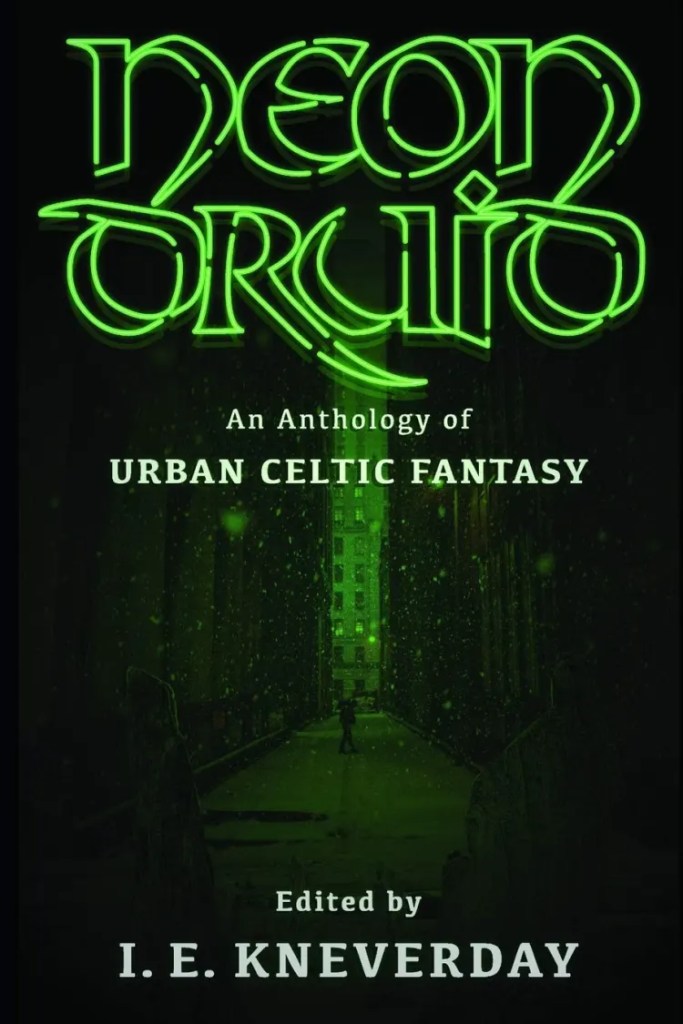
“A thrilling romp through pubs, mythology, and alleyways. NEON DRUID is such a fun, pulpy anthology of stories that embody Celtic fantasy and myth,” (Pyles of Books). Cross over into a world where the mischievous gods, goddesses, monsters, and heroes of Celtic mythology live among us, intermingling with unsuspecting mortals and stirring up mayhem in cities and towns on both sides of the Atlantic, from Limerick and Edinburgh to Montreal and Boston. Learn more…
Samhain in Your Pocket

Perhaps the most important holiday on the ancient Celtic calendar, Samhain marks the end of summer and the beginning of a new pastoral year. It is a liminal time—a time when the forces of light and darkness, warmth and cold, growth and blight, are in conflict. A time when the barrier between the land of the living and the land of the dead is at its thinnest. A time when all manner of spirits and demons are wont to cross over from the Celtic Otherworld. Learn more…
Irish Monsters in Your Pocket

In the Ireland of myth and legend, “spooky season” is every season. Spirits roam the countryside, hovering above the bogs. Werewolves lope through forests under full moons. Dragons lurk beneath the waves. Granted, there’s no denying that Samhain (Halloween’s Celtic predecessor) tends to bring out some of the island’s biggest, baddest monsters. Prepare yourself for (educational) encounters with Irish cryptids, demons, ghouls, goblins, and other supernatural beings. Learn more…


Leave a Reply