
Folklore in Film is reader-supported. When you buy through links on our site, we may earn a small affiliate commission.
Did you know that the killer Rabbit of Caerbannog was inspired by medieval marginalia—those little side-doodles in illuminated manuscripts?
You did?
Well, fine, but did you know that the Holy Hand Grenade of Antioch was based on a real artifact?
Or that The Black Beast of Argh has a counterpart in Arthurian Legend?
We’ll get into it.
I’m I. E. Kneverday and at the end of this essay I will be grading 1975’s Monty Python and the Holy Grail on its folklorical accuracy.
Along the way, we’ll explore how closely the film sticks to its source material, and how much of it is…completely different.
Let’s take a look.
Pssst. You can watch a video adaptation of this essay right here. Text continues below.
The Significance of the Trojan Rabbit in Monty Python and the Holy Grail: Camelot in Decline?
You know what they say:
The Trojan Horse had to roll so the Trojan Rabbit could fly.
It’s an ingenious plan.
One Sir Bedevere the Wise obviously borrows from ancient Greco-Roman tradition.
Despite being associated with Homer’s Odyssey, which only mentions the giant wooden animal plan in passing, and Homer’s Illiad, which doesn’t mention it at all, the Trojan Horse story we all know and love today actually comes from Virgil’s Aeneid.
But it seems Sir Bedevere forgot one crucial component of this ancient Greek castle-storming strategy.
To quote the Aeneid:
“They secretly hide a picked body of men, chosen by lot,
there, in the dark body, filling the belly and the huge
cavernous insides with armed warriors.”
Yeah, that part.
As for why Monty Python opted to have King Arthur and his knights build a rabbit rather than a horse…
We’ll, silliness, of course.
But there are a couple of other potential reasons.
For one: the French taunters tossing the Cottontail made of timber of course foreshadows the killer rabbit of Caerbannog flying around on its murderous rampage.
More on that in a minute.
But there’s another, admittedly much less likely explanation as well.
Which is that in later retellings of the Arthurian legends, i.e., the Matter of Britain, the rabbit is a symbol of Camelot in decay.
For example, to quote William Henry Frost’s 1897 Knights of the Round Table:
“[N]obody lived here now to enjoy it—nobody, that is to say, but the rabbits. For the place is theirs now, and they dig holes in the ground and make their houses where King Arthur’s castle stood, where he and his knights sat in the hall about the Round Table.”
Then in 1909, we get the Lost Land of King Arthur by J. Cuming Walters.
“Time has swept away every vestige of the power and glory of old, and left the open field, the trench, and the broken gray wall, as the sole mementoes of Camelot. The rabbit and the mole burrow to the foundations of Arthur’s royal town, and the centuries have laid moss and leaf upon the unfrequented paths and the vanishing signs of former occupation.”
So the imagery of a giant rabbit being flung at King Arthur and his knights, while undoubtedly silly, can also be interpreted as hugely insulting.
The French Taunter isn’t just throwing their failure back in their faces.
He’s throwing them a rather ominous reminder that King Arthur’s Seat of Power will ultimately be reduced to rabbit fodder.
Am I reaching?
Of course I’m reaching.
That’s what I do.
Granted, this next bit really isn’t in dispute.
From Manuscript Doodle to Cultural Icon: The Origin of Monty Python’s Killer Rabbit of Caerbannog
The killer Rabbit of Caerbannog was inspired by medieval marginalia.
If you’ve ever seen a medieval manuscript in a library or museum or even in a movie, you might be familiar with illustrations of this sort.
But to clarify, these are not sanctioned images, nor do they necessarily relate to the texts they accompany.
These are the doodles made at the illuminator’s discretion.
Examples include, but are not limited to:
Dogs playing bagpipes.
Monkeys mooning monks.
Man-eating snails.
And, would you look at that:
Killer rabbits.
Rabbits wielding weapons. Attacking knights.
And also rabbits staging elaborate executions.
One of—if not the—earliest examples of a killer rabbit illustration can be found in the 12th-century Arnstein Passional.
It depicts two rabbits, standing on their hind legs, looking on gleefully as they hang a hunter by the neck.
Fortunately, Dr. Eleanor Jackson, (formerly) the British Library’s Curator of Illuminated Manuscripts, knows the meaning behind the Arnstein hangrabbits and behind the phenomenon more broadly.
“This image gives us a clue about why medieval artists showed rabbits behaving so violently. In real life, rabbits and hares are docile prey animals. But in decorated initials and marginalia, medieval artists often depicted ‘the world turned upside down’, where roles are reversed and the impossible becomes the norm. So here, rabbits are violent hunters hellbent on punishing anyone who has committed crimes against rabbit-kind.”
The takeaway:
Monty Python is retelling a nearly thousand-year-old joke invented by monks.
Neither Trojan Rabbits nor Killer Rabbits Are Rooted in Arthurian Legend
None of it, however, has anything to do with Arthurian legend or the Grail Quest.
There are no illustrations of rabbits in the earliest Arthurian manuscripts.
Not in the 12-century History of the Kings of Britain by Geoffrey of Monmouth.
And not in the 11th-century copies of the 9th-century Historia Brittonum.
Nor, for that matter, does Sir Bedevere at any point, in any of these texts, use mythical Greco-Roman engineering to outwit—or attempt to outwit—an opponent.
Nailing Sir Bedivere. No, Not Like That. (Or That.)
That being said, in Arthurian legend, Sir Bedevere is often portrayed as one of Arthur’s most loyal knights as well as one of the first to join Arthur’s cause.
And he famously helps Arthur defeat the giant of Mont Saint-Michel—Mont Saint-Michel being a real, Lord of the Rings-set-design inspiring castle-city where?
In France.
I’ve been there, it’s awesome.
No, a French giant isn’t the same as a French human shouting from a high castle wall…buuut the legend could have provided Terry Jones, co-director of the film and actor behind Sir Bedevere’s helmet, with a creative spark.
And if you doubt that a member of the comedy troupe Monty Python would be familiar with a 12th-century story about a French giant, consider that Terry Jones was a respected Medieval historian.
For realsies.
How Folklorically Accurate Is King Arthur in Monty Python and the Holy Grail?
Bearing that in mind, it’s not all that surprising that Graham Chapman’s King Arthur has a backstory that sticks closely to the medieval literature.
Son of Uther Pendragon?
Check.
Defeater of the Saxons?
Check.
The sword Excalibur given to him by the Lady of the Lake?
Check.
And here a choice was made to skip over Arthur’s Sword in the Stone origin story, which entered the lore, courtesy of Robert de Boron, around the year 1200.
The “watery tart,” i.e. Lady of the Lake origin story is slightly older, having entered the lore, courtesy of Chrétien de Troyes, in 1177.
Although technically, the Sword in the Stone isn’t always the same sword as Excalibur, so the two stories can and do exist side by side in some tellings.
But enough about swords.
I’m here for the orbs.
The Holy Hand Grenade of Antioch Explained: Crown Jewel or Byzantine Bomb?
Because it turns out the Holy Hand Grenade of Antioch, which King Arthur and his knights use to defeat the Rabbit of Caerbannog, was based on the Sovereign’s Orb, which is part of the Crown Jewels of the United Kingdom.
Or at least, the design of the holy hand grenade was based on the 17th-century orb.
The Antioch part, meanwhile, comes from a different artifact: The chalice of Antioch.
That’s my theory, anyway.
The Antioch chalice is a silver gilded cup or perhaps oil lamp that dates to the 6th century.
But when it was discovered in Turkey in 1910, you better believe people claimed it was the Holy Grail, or as Walter Donovan would phrase it:
“The chalice used by Christ during the Last Supper.”
It’s not out of the realm of possibility that Jones or another member of Monty Python knew about the Antioch chalice and decided to play an explosive homage to it.
Then again, Antioch is an ancient city known for its roles both as a cradle of early Christianity and, later, as a Crusader stomping ground.
Sooo, I mean, if you’re going to have a Holy Hand Grenade come from somewhere, Antioch is a fine choice.
For those concerned with historical accuracy, no, gunpowder wouldn’t be used in battle in Britain until the 14th century, whereas Monty Python and the Holy Grail is set in the 10th century.
Buuut it should also be noted that it was in the 8th century in the Byzantine empire that one of the first steps along the way to the development of the modern grenade was taken.
Byzantine soldiers filled ceramic pots with Greek fire and chucked them aboard enemy ships.
Greek fire, of course, being a liquid, incendiary substance, the secret recipe to which was closely guarded.
So closely, in fact, that it’s been lost to time.
Although historians largely agree that Greek fire consisted of petroleum mixed with resins.
Now, was Antioch part of the Byzantine Empire during the invention of this proto-grenade?
No.
But it was part of it in the century right before and then again soon after. So there’s that.
And while in the original legends, the knights of the round table don’t use explosives, they do use uncommonly powerful weapons.
Arthur’s Sword Excalibur Explained: Dueling Origin Stories
The aforementioned Excalibur, which was perhaps inspired by a sword from Irish mythology, Caladcholg (Hard Dinter), is said to have a blade so sharp and strong it can cut steel and so shiny it can blind enemies.
Here’s how Thomas Malory describes the sword in action:
“[Arthur] drew his sword Excalibur that he had gained by Merlin from the lady of the lake, which, shining brightly as the light of thirty torches, dazzled the eyes of his enemies.
“And therewith falling on them afresh with all his knights, he drove them back and slew them in great numbers, and Merlin by his arts scattered among them fire and pitchy smoke, so that they broke and fled…
“That day King Arthur by himself alone slew with his sword Excalibur four hundred and seventy heathens.”
Four hundred and seventy dudes?
Also, can we please back up to that bit about Merlin:
“Merlin by his arts scattered among them fire and pitchy smoke.”
Are you kidding me?
What does that sound like?
It’s Greek fire.
Merlin is using Greek fire to help Arthur vanquish his enemies.
Where Is Merlin in Monty Python and the Holy Grail? (They Call Him Tim)
In Monty Python and the Holy Grail, there is no Merlin, per se.
But there is…Tim.
And how does Tim the Enchanter introduce himself?
With telekinetic explosions.
And yes, I know this doesn’t really look like what historical Greek fire would have looked like.
Which was more akin to napalm.
Regardless, given Merlin’s penchant for “scattering fire” in Malory’s Le Morte d’Arthur, there is a textual justification for including pyrotechnics in Monty Python and the Holy Grail.
If only my McGill professors could see me now.
I initially found it curious that Tim the Enchanter didn’t provide Arthur’s crew with the hand grenade since he clearly knows how to make explosions and is taking the place of the Merlin wizard figure.
The Core Tension of Arthurian Literature: Christianity vs. Celtic Paganism
Then again, by making the grenade holy and putting it in the hands of Brother Maynard, the film is able to tap into a key tension that permeates Arthurian lore:
The tension between Celtic paganism and Christianity.
The Origins of Tim the Enchanter: The Celtic Wild Man Motif
Tim, like Merlin before him and the Welsh Myrddin Wyllt before him and the Irish Mad Sweeney before him and the Scottish Lailoken before him, are all incarnations of the Celtic Wild Man of the Woods motif.
I’ve talked about this motif before in my video on the Irish folk horror film Hokum.
It features a usually successful or otherwise powerful person suffering a personal loss or other life-altering event that causes them to withdraw from society.
They live in the wilderness and learn the secrets of nature.
In Merlin’s case, and Tim’s case by extension, we’ve also got some cross over with the Gaulish Celtic nature god Cernunnos on account of those horns.
Specifically, Cernunnos is often depicted with stag antlers sprouting from his head.
And in later neopagan imaginings he’s a sort of half stag / half man.
Meanwhile, Merlin is known to take the shape of a stag.
And would you look at that?
He’s also depicted with deer antlers.
Tim the Enchanter’s Ram Horns Explained: An Ode to Apollo Karneios?
Tim the Enchanter is going for a slightly different look with the ram horns, which outside of Egyptian mythology, are most closely associated with the Dorian deity Apollo Karneios.
Apollo Karneios is a mashup of the Greco-Roman god Apollo and a pre-Dorian shepherd/sheep deity.
The end result is this ram-horned god, worshipped as the protector of flocks.
But I digress.
The Black Beast of Argh’s Legendary Origins: The Arthurian Questing Beast Explained
The Black Beast of Argh.
Surely, this creature has no parallel in the…
Wait, nope, there it is.
Or Beast Glatisant.
In the original legend, Arthur is having a dream about Mordred ruining everything and the realm being overrun by serpents and monsters.
Then he wakes up and sees:
A giant serpentine monster drinking from a lake.
Then King Pellinore comes to Arthur and admits that it is his family’s duty to hunt and kill the beast.
Sir Palamedes, who does not appear in the movie, leads the charge but notably Sirs Perceval and Galahad accompany him on his quest.
So, does this questing beast look anything like the beast that crawls out of the Cave of Caerbannog?
Let’s look at the descriptions.
According to Malory, the Questing Beast has “a head like a serpent’s head, and a body like a leopard, buttocks like a lion, and footed like an hart (which is an adult male red deer).”
The Post-Vulgate Queste de Saint Grail (Quest for the Holy Grail) goes into more detail, describing the beast thusly:
“It had the barbed and sinister head and neck of a snake, its eyes glowing like carbuncles, a flaming mouth that seemed to shoot fire, ears up right like a greyhound’s, the body and tail of a lion.
“On its back, near its shoulders, was a pair of wings shimmering like sunbeams, as also on the top of its rump.
“It had the legs and feet of a deer. Its forelegs were stained in various ways, for all the colors in the world were there.
“The glare of its eyes was like that of two torches. Its teeth were bigger than those of a large boar.”
The Post-Vulgate Suite du Merlin, meanwhile, is much more vague, describing the Questing Beast as a “very large beast, the most bizarre of form ever seen, as strange of body as of conformation and as strange inside as outside.”
Gilliam, assuming he was familiar with these descriptions at the time, eschewed the two-eyed version of the beast in favor of leaning into the strange and bizarre.
But there are some elements that make it through. The big teeth, for example.
And turns out having the Black Beast be colorful was a folklorically accurate choice.
Or was it?
Because in the very first account to feature a Questing Beast-like creature, the Vulgate Cycle’s Estoire del Saint Grail (or Story of the Holy Grail), we get the following account:
[T]he longer I looked at it, the less I knew what kind of animal it was…
[I]t had the head and neck of a sheep, and these were as white as new snow;
“and it had the feet, legs, and thighs of a dog, and all this was as black as coal;”
“and it had the breast and body and rump of a fox and the tail of a lion. Thus it resembled various animals.”
Well, there’s your black beast right there.
Or black-legged beast at least.
And with a sheep’s head, it’s possible this thing has horns.
Later in the text, we get a description of another beast, and this one definitively has horns.
It could be the same beast, or one that belongs to the same mythical species.
Because as you’re about to notice, there’s a bit of overlap in how the narrator describes them:
“This beast was so bizarre that no matter how long any man looked at it he could not say what it was, but it was so redoubtable and cruel that it was ravaging the entire region.
“It was destroying the green wheat, killing men and horses, tearing down houses, taking small children from the cradle…
“Nor should any man who was not armed have attacked the beast, for on its forehead it had three horns so sharp and keen that no armor, no matter how well struck, could resist them.”
The Questing Beast’s Cantabrian Cousin: The Cuegle
And is it just me, or does this iteration of the beast from Arthurian Legend sound remarkably similar to the following creature from Cantabrian folklore.
Cantabria being that region/province/autonomous community in northern Spain, which, like Britain, was heavily Celticized for a long stretch of its history.
“[The Cuegle] is squat and fat, with three arms, five rows of teeth, and a horn on his head. Never satiated, he swallows any creature he can get his hands on, even if they are larger than he is, for he is very strong. He also eats small children, stealing them even with their cradles.”
And while I’m tempted to go on a long-winded rant about the Goidelic/Gaelic Celtic influences on Arthurian legend, in addition to the more obvious Brittonic/Brythonic Celtic ones…
I’ve got another channel for that.
Right here, right now, we need to count some eyeballs.
1…2…
It’s 22.
And the reason it’s 22 is of course because?
Well, as we all know, Terry Gilliam was raised in a very religious Christian household.
So surely he knew about these four fellas from Revelation 4:6:
”… on each side of the throne, are four living creatures, full of eyes in front and back.”
Which in turn is a likely callback to Ezekiel 1:18 and its description of the Ophanim.
“…for the rims of all four were full of eyes all around.”
Is the number of eyes ever specified?
No.
But Gilliam didn’t pick the number 22 out of a hat.
He took the very scientific, academic approach of…
Using his birthday.
The 22nd of November.
That’s why the Black Beast of Argh has 22 eyes.
Folklorical Accuracy Score for Monty Python and the Holy Grail
As for its folklorical accuracy grade, Monty Python and the Holy Grail gets…
Oh god I’m almost afraid to say it.
An A-.
Run away!
And if you enjoyed this video, please leave a like and comment:
“You fell out of the tall tower, you creep.”
Thanks for reading.
Fan of folk horror?
You might be interested in my short film Samhain, available over on the Irish Myths channel.
More the reading type?
Check out…
Neon Druid: An Anthology of Urban Celtic Fantasy
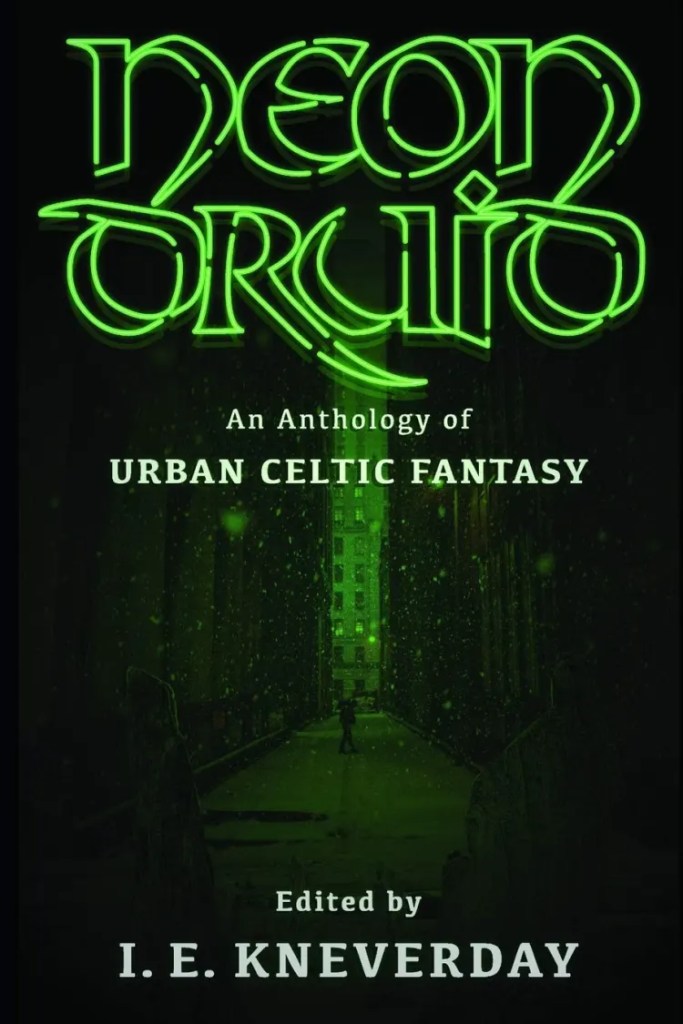
“A thrilling romp through pubs, mythology, and alleyways. NEON DRUID is such a fun, pulpy anthology of stories that embody Celtic fantasy and myth,” (Pyles of Books). Cross over into a world where the mischievous gods, goddesses, monsters, and heroes of Celtic mythology live among us, intermingling with unsuspecting mortals and stirring up mayhem in cities and towns on both sides of the Atlantic, from Limerick and Edinburgh to Montreal and Boston. Learn more…
Samhain in Your Pocket

Perhaps the most important holiday on the ancient Celtic calendar, Samhain marks the end of summer and the beginning of a new pastoral year. It is a liminal time—a time when the forces of light and darkness, warmth and cold, growth and blight, are in conflict. A time when the barrier between the land of the living and the land of the dead is at its thinnest. A time when all manner of spirits and demons are wont to cross over from the Celtic Otherworld. Learn more…
Irish Monsters in Your Pocket

In the Ireland of myth and legend, “spooky season” is every season. Spirits roam the countryside, hovering above the bogs. Werewolves lope through forests under full moons. Dragons lurk beneath the waves. Granted, there’s no denying that Samhain (Halloween’s Celtic predecessor) tends to bring out some of the island’s biggest, baddest monsters. Prepare yourself for (educational) encounters with Irish cryptids, demons, ghouls, goblins, and other supernatural beings. Learn more…


Leave a Reply