
Folklore in Film is reader-supported. When you buy through links on our site, we may earn a small affiliate commission.
Of all the Robin Hood movies that have come out over the decades, my absolute favorite has to be…
Point Break.
Yes, you heard me correctly.
Think about it:
We have our Robin Hood, Bodhi.
We have his band of Merry Men, the Ex-Presidents.
We have our Sheriff of Nottingham, Angelo Pappas.
Our Prince or King John in Agent Ben Harp.
And of course we have our Maid Marian in Tyler.
Wait, so who the heck is Johnny Utah supposed to be?
We’ll get into it.
I’m I. E. Kneverday and at the end of this essay I will be grading 1991’s Point Break on its folklorical accuracy.
Along the way, I’ll uncover all of the Robin Hood references hidden in the film.
Let’s take a look.
Pssst. You can watch a video adaptation of this essay right here. Text continues below.
Point Break: A Modern Robin Hood Reimagining
It’s a tale as old as time.
A bunch of surfer dude adrenaline junkies disguised as former U.S. presidents rob a bunch of Los Angeles banks in order to finance their endless summer until a college quarterback turned rookie FBI agent uses a love interest to infiltrate their ranks and screws everything up.
Okay, so maybe it’s not that old of a tale.
But let’s put the modern setting aside for a second.
The Kathryn Bigelow-directed Point Break, which was written by W. Peter Iliff, with a story credit going to Rick King and an uncredited script polish attributed to James Cameron, is more than just an extreme sports action/adventure crime thriller.
It’s also a meditation on what it means to be human while living in a society full of laws and expectations.
And if you think I’m getting too deep, brah, just listen to Patrick Swayze’s Bodhi explain it:
“This was never about money for us. It was about us against the system. That system that kills the human spirit. We stand for something. To those dead souls inching along the freeways in their metal coffins. We show them that the human spirit is still alive.”
No, it’s not exactly stealing from the rich and giving to the poor.
But to be fair, that isn’t really Robin Hood’s M.O. either.
His goal is actually to retrieve and return the tax revenue that is being unjustly collected by the Sheriff of Nottingham and his cronies.
This is the epitome of taxation without representation.
The sheriff is taxing the people of Nottingham into poverty.
And Robin Hood, like Bodhi, is fighting against this unjust system.
In Point Break, Bodhi further justifies his thievery by pointing out that the money in the banks the Ex-Presidents rob is insured.
So none of the patrons of those banks will lose any of their money.
Angelo Pappas = The Sheriff of Nottingham
That being said, robbing banks is still, ya know, illegal.
So the FBI steps in to quell this rebellion against the system.
And here is where Gary Busey’s Angelo Pappas, the film’s Sheriff of Nottingham, comes into play.
Pappas is leading the investigation into the Ex-Presidents and has a plan for finding them and taking them down.
But instead of doing the gruntwork himself, Pappas sticks Keanu Reeves‘ Johnny Utah on a surfboard and tasks him with infiltrating the group.
And ultimately it is Johnny Utah who must face off against the Ex-Presidents’ ringleader Bodhi, the film’s Robin Hood figure.
Johnny Utah = Guy of Gisborne
So the heck is Johnny Utah?
But of course he is Guy of Gisborne.
Full disclosure:
I had no idea who this character was until I started digging into Robin Hood lore for my video on Pirates of the Caribbean.
Turns out Guy of Gisborne is one of Robin Hood’s oldest antagonists, making his first appearance in the appropriately titled ballad, “Robin Hood and Guy of Gisborne.”
This ballad, Child Ballad number 118, dates to the year 1650 but likely originated in the 1400s if not earlier.
The ballad begins with Robin and his chief merry man, Little John, spying a mysterious stranger leaning against a tree.
Little John says he’ll go investigate, but Robin interprets this a challenge (because testosterone) so Robin approaches the mystery man.
Who turns out to be…
Guy of Gisborne, an assassin hired by the Sheriff of Nottingham to kill Robin.
But before they fight for realsies, Guy and Robin bust out their bows and arrows and have a shooting contest.
Which immediately makes me think of Johnny Utah and Bodhi trading projectiles while playing football on the beach.
Although to be fair, I think surfing is the real bow and arrow shooting equivalent here.
Because as we all know, folklore establishes Robin Hood as the absolute best archer in the realm.
So when he faces off against Guy of Gisborne, he wins easily.
Bodhi = Robin Hood
Similarly, Bodhi is the best surfer in his realm.
Just listen to the way Lori Petty’s Tyler (our Maid Marian) talks about him:
“That’s Bodhi. They call him the Bodhisattva. He’s a modern savage. He’s a real searcher. The guy’s even crazier than you, Johnny.”
Now, if you’re thinking to yourself:
Bodhi, the Bodhisattva, that’s a Buddhist concept, so my proposed Robin Hood parallel must therefore be rendered…bogus.
Not so fast.
The fact that Tyler talks about Bodhi as if he is some living legend, only strengthens the Robin Hood comparison.
As does the fact that Bodhi isn’t the character’s real name.
After all, it’s likely the name Robin Hood was a title or alias bestowed upon or adopted by any number of English outlaws beginning in the 13th century.
This according to historian John Maddicott.
The whole Sir Robin of Loxley moniker and accompanying idea that he is noble-born, comes later.
What Does Bodhi’s Name Mean in Point Break? The Bodhisattva Explained
As for why Patrick Swayze’s character is called Bodhi a.k.a. the Bodhisattva…
In Buddhist tradition, this name refers to someone who is committed to achieving enlightenment, i.e. reaching nirvana.
More specifically, in Mahayana Buddhism, a bodhisattva is someone who is capable of reaching nirvana but chooses to delay or forgo their ascension, if you will, so that they can help others reach it, too.
Thus, in Point Break’s Bodhi, we have this perfect melding of the athletic, outlaw Robin Hood figure with the compassionate, spiritual leader Bodhisattva figure.
It’s pretty radical dude.
The Ex-Presidents = Robin Hood’s Merry Men
And if you’re still not convinced that Bodhi is a modern day Buddhist Robin Hood, let’s look at his Merry Men.
In the earliest ballads, Robin Hood has precisely three outlaw companions:
Little John, Much the Miller’s Son, and William Scarlock a.k.a. Will Scarlet.
Nathanial = Little John
Little John is reimagined as Nathanial in the film.
He is Bodhi’s second in command.
And notably Nathanial is not afraid to challenge Bodhi.
Like when he says: “You acted like nothing happened.”
And Bodhi responds, “Relax, Nathanial.”
Prompting Nathanial to shout:
“Don’t tell me to relax Bodhi! He’s a f*ckin’ federal agent!”
Similarly, Little John is the second in command of the Merry Men who famously challenges Robin Hood on a log bridge at a river crossing and the two duel with quarterstaffs.
Grommet = Much the Miller’s Son
Much the Miller’s Son, meanwhile, is reimagined as Grommet.
He’s the youngest and most cautious member of the Ex-Presidents, confessing at one point that he is scared and wants to run.
And I quote:
“F*ck the stakes Bodhi! The only one that thinks that this is a game is you, man. This is real. This is serious sh*t.”
Grommet’s concern here directly mirror’s Much the Miller’s Son’s concern in his earliest appearance in the lore.
Specifically, in the ballad Robin Hood and the Monk, Much warns Robin not to travel alone, insisting that he should bring a dozen guards with him.
Roach = Will Scarlet
Then we have Will Scarlet, who is reimagined in Point Break as Roach.
Roach is the most hot-headed and trigger-happy of the group. He’s also given the most ceremonial death, if you will, after getting shot by Pappas (the film’s Sheriff of Nottingham).
Similarly, Will Scarlet’s backstory is that he kills his father’s steward in a fit of rage and thus flees to the greenwood before joining up with Robin.
What’s more, Scarlet’s original name in the ballads, Scarlock or Scathelocke, translates literally to “shatter-lock,” which in Medieval England meant something like brawler, or someone who can break out restraints.
He can’t be stopped.
Although, eventually, the Sheriff of Nottingham and his men do stop him. Permanently. With weapons. And Scarlet is laid to rest near a church at Blidworth in Nottinghamshire.
Or so the story goes.
But wait a minute:
We’ve got the three chief Merry Men of the early Robin Hood ballads all accounted for within the ranks of the Ex-Presidents…
So where does Friar Tuck fit into all this?
Oh, he’s in there alright.
Rosie = Friar Tuck
Friar Tuck entered the Robin Hood lore around the same time as Maid Marian, likely by way of 15th-century folk plays, which were infamously bawdy,
In one such play, Robin Hood gives Maid Marian to Friar Tuck as a concubine.
Which is paralleled in Point Break when Bodhi gives Tyler to Rosie.
Rosie is the Friar Tuck of this film.
He’s not on the front lines robbing banks and getting into shoot-outs.
Rather, Rose is in charge of domestic duties.
Which in this case includes hostage-keeping.
And while in later lore, Friar Tuck evolves into a jovial figure, Rosie is definitely a dark reflection of this friar archetype.
And it’s possible the film’s writers were critiquing the Church and/or the mendicant orders when they had Bodhi say this:
“I hate this, Johnny. I really do. I hate violence. Don’t you see that’s why I need Rosie? I could never do that, man. I could never hold a knife to Tyler’s throat. She was my woman. We shared time. But Rosie is a…mechanism, you know? Once you set him in motion, he will not stop. He’s, like, got this gift, the blankness. But when three o’clock comes, he will gut her like a pig and try not to get any on his shoes and there’s nothing I can do about it unless I get there.”
Tyler = Maid Marian
Putting this nastiness aside, the Bodhi, Johnny, Tyler love triangle—and I’d argue it is a legit triangle because there is certainly some bromance going on—also has a parallel in the Robin Hood lore.
While Maid Marian is traditionally thought of, first and foremost, as Robin’s love interest, she is later reimagined, in the 19th century, as an object of Guy of Gisborne’s desire.
Although, it’s much more sinister than that.
The 1890 opera Robin Hood sees the Sheriff of Nottingham come up with a plan to force Maid Marian into a marriage with Guy so he can steal her inheritance.
Similarly, Point Break’s Sheriff of Nottingham, Pappas, and Guy of Gisborne, Johnny Utah, conspire to emotionally manipulate Tyler so they can crack the case they’re working on.
And here, I think, we should take a quick pause to fully appreciate just how much of a scumbag Johnny Utah really is.
Jonny Utah = A Huge Scumbag
For a lot of people, it might be hard to picture Johnny as the antagonist of this film.
And to those people I’d say:
Watch the scene where John is talking to the data analyst.
The scene where he says:
“Here we go. Both parents deceased. Airplane crash, San Diego, ‘84. Yeah. Definitely.”
You’re telling me that’s the good guy (pun intended) of the film?
Ben Harp = Prince/King John
And while we’re on the topic of FBI agents, John C. McGinley’s Ben Harp is an obvious stand-in for Prince John or King John, who, while a historical figure, exists in a fictionalized form in the Robin Hood lore.
Beginning with Anthony Munday’s writings in the year 1600, John is presented as the royal superior of the Sheriff of Nottingham who regularly chastises the sheriff for his failure to capture Robin.
And, speaking more broadly, John demands nothing less than absolute loyalty from his subjects and is more concerned than anyone with upholding the current system.
That’s Ben Harp to a T.
An FBI Director obsessed with doing things by the book who refers to Pappas, the man in charge of catching the Ex-Presdients, as a fat, slow, pathetic screw-up.
He also calls him, and I quote, a “sh*tface.”
The Death of Angelo Pappas (The Sheriff of Nottingham)
Pappas, of course, meets his demise at the hands, or guns, rather, of the Ex-Presidents.
It’s Roach (the Will Scarlet figure) who pulls the trigger, which doesn’t line up perfectly with the Robin Hood lore.
Because in the ballad, “Robin Hood and Guy of Gisborne,” it is Little John who puts an arrow through the Sheriff of Nottingham’s heart.
The movie reverses this by having Pappas shoot and kill Nathanial (the Little John figure).
Point Break’s Ending Explained: The Bodhi/Robin Hood Legend Lives On
But perhaps the biggest change the movie makes to the lore is having Johnny Utah (i.e, Guy of Gisborne) come out on top.
He catches his Robin Hood, Bodhi.
Although on rewatch it certainly seems like Bodhi could have drowned Johnny if he had really wanted to.
Regardless, in the aforementioned ballad, Guy is able to stab Robin Hood with his sword but then Robin cuts his head off.
It’s a clear and decisive victory for Robin Hood.
Whereas in Point Break, the Robin Hood figure loses.
Or does he?
Think about it.
By letting Bodhi surf those monster waves, Johnny is essentially sending him back into his version of Sherwood Forest.
He’s letting Bodhi die on his own terms.
What’s more, we never actually see a body, which means the legend of Bodhi can continue to live on.
Just like the legend of Robin Hood.
And when we interpret the film through this lens, it’s also clear to me that Johnny Utah does die.
Or at least, a part of him does.
Metaphorically, of course.
Because the very last thing we see on screen is Johnny Utah tossing his FBI badge into the sea.
And I like to think that when he does this, Bodhi’s words are echoing through his head:
“We can exist on a different plane, we can make our own rules. Why be a servant to the law when you can be its master?”
Thus, in the greatest Robin Hood adaptation to ever be put to film, Robin Hood emerges victorious.
Or submerges victorious.
You know what I mean.
As far as its folklorical accuracy grade is concerned, I’m giving Point Break…
An A.
Thanks for reading.
Fan of folk horror?
You might be interested in my short film Samhain, available over on the Irish Myths channel.
More the reading type?
Check out…
Neon Druid: An Anthology of Urban Celtic Fantasy
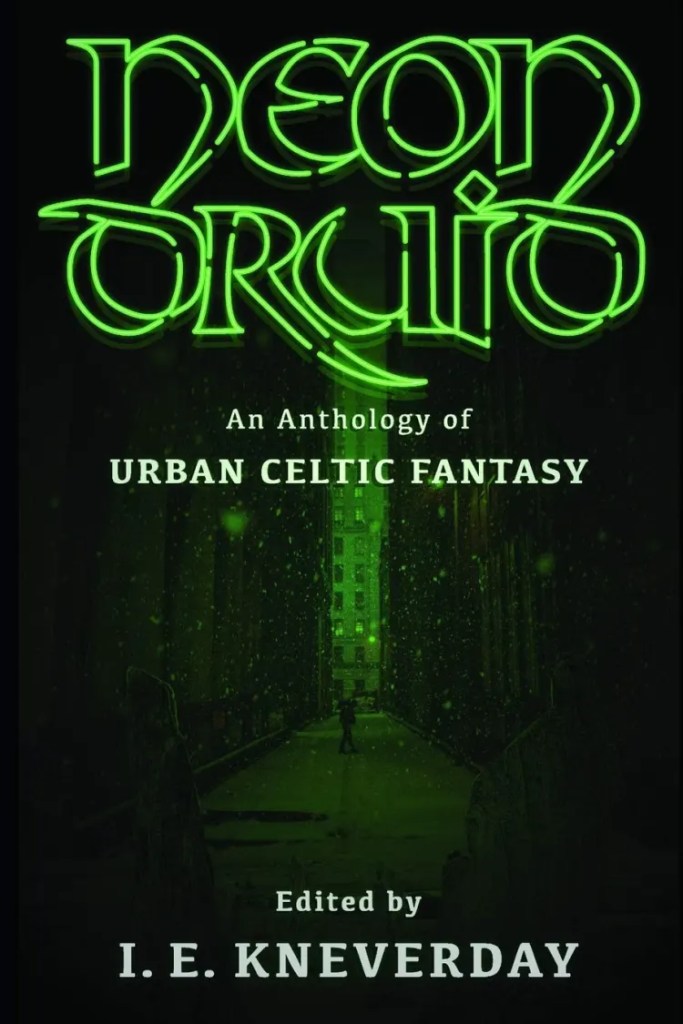
“A thrilling romp through pubs, mythology, and alleyways. NEON DRUID is such a fun, pulpy anthology of stories that embody Celtic fantasy and myth,” (Pyles of Books). Cross over into a world where the mischievous gods, goddesses, monsters, and heroes of Celtic mythology live among us, intermingling with unsuspecting mortals and stirring up mayhem in cities and towns on both sides of the Atlantic, from Limerick and Edinburgh to Montreal and Boston. Learn more…
Samhain in Your Pocket

Perhaps the most important holiday on the ancient Celtic calendar, Samhain marks the end of summer and the beginning of a new pastoral year. It is a liminal time—a time when the forces of light and darkness, warmth and cold, growth and blight, are in conflict. A time when the barrier between the land of the living and the land of the dead is at its thinnest. A time when all manner of spirits and demons are wont to cross over from the Celtic Otherworld. Learn more…
Irish Monsters in Your Pocket

In the Ireland of myth and legend, “spooky season” is every season. Spirits roam the countryside, hovering above the bogs. Werewolves lope through forests under full moons. Dragons lurk beneath the waves. Granted, there’s no denying that Samhain (Halloween’s Celtic predecessor) tends to bring out some of the island’s biggest, baddest monsters. Prepare yourself for (educational) encounters with Irish cryptids, demons, ghouls, goblins, and other supernatural beings. Learn more…


Leave a Reply