
Folklore in Film is reader-supported. When you buy through links on our site, we may earn a small affiliate commission.
I just rewatched the first Pirates of the Caribbean movie and what struck me the most wasn’t the pirate folklore.
It was all the references to folktales and fairytales Disney adapted for their animated features.
Pinocchio, Snow White, Aladdin, The Little Mermaid, Peter Pan, Beauty and the Beast, Robin Hood…
The Robin Hood one is my favorite.
They’re all in there—if you know where to look.
I’m I. E. Kneverday and at the end of this essay I will be grading Pirates of the Caribbean: The Curse of the Black of the Pearl on its folklorical accuracy.
Along the way, I’ll uncover hidden references and tricorner hat-tips to fairytales that have gone unnoticed after two-plus decades of analysis.
Let’s take a look.
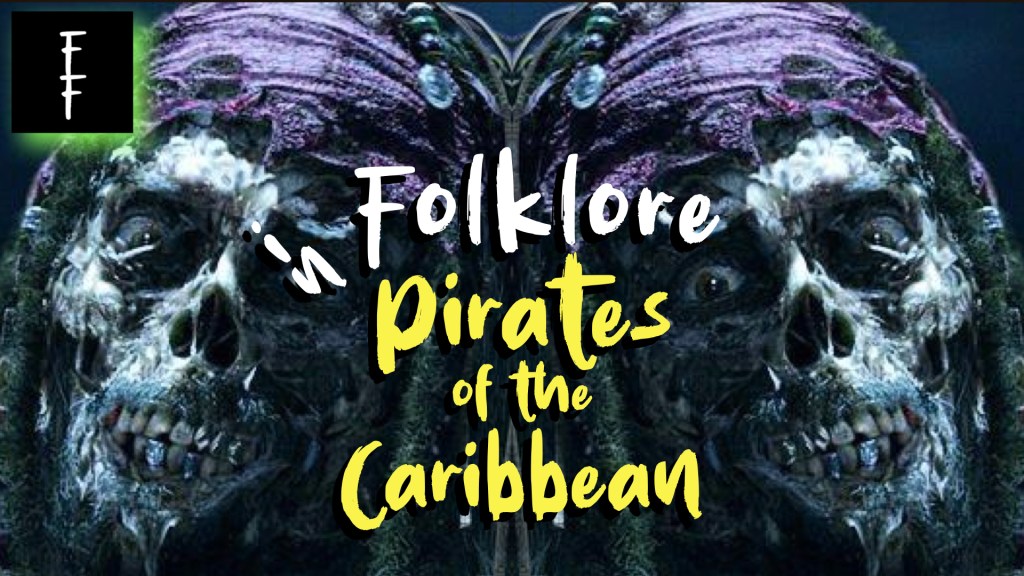
Pssst. You can watch a video adaptation of this essay right here. Text continues below.
Historical Anachronisms in Pirates of the Caribbean: The Curse of the Black Pearl
Set in the twilight years of the Golden Age of Piracy, which stretched from the 1650s to the 1730s, Disney’s theme park ride-inspired Pirates of the Caribbean: The Curse of the Black Pearl is chock full of anachronisms.
From the futuristic uniforms (these came out in 1747!).
To the cannonballs exploding (they were solid metal at the time, no explosives inside)…
To Port Royal being totally fine (the Jamaican city was infamously destroyed by a massive earthquake in 1692.).
But to be fair, those are historical inaccuracies.
I’m here for the folklore.
Ello, Puppet? Hidden Pinocchio References in Pirates of the Caribbean
And right off the wooden puppet nose, we get a reference to Pinocchio.
Remember when the comic relief pirates, Pintel and Ragetti, keep calling Miss Elizabeth Swann poppet when they’re trying to kidnap her?
FYI: A poppet is a doll often associated with witchcraft, which evolved from the same root word as “puppet.”
Pupil has the same root, because when you look in someone’s eye you see a little tiny version of yourself.
(Hello.)
Anyway, when Miss Swann is hiding, Pintel calls out: “We promise we won’t hurt you.”
And Ragetti, surprised, turns to his partner and says “Eh?”
Then, once the realization sets in that Pintel is lying, what does Ragetti do?
He does the universal sign for Pinocchio nose.
It’s there for all to see.
Buuut there’s a problem.
For many, that name, Pinnochio, which literally translates to “pine eye,” but means “pine nut,” immediately brings to mind images of the 1940 animated classic.
However, the story of Pinocchio is older than that.
But not that much older.
Italian author Carlo Collodi’s Story of a Puppet was published in serialized form between 1881 and 1883, before being released as the 1883 novel, The Adventures of Pinocchio: Story of a Puppet.
That’s more than a century after Pirates is set.
Of course, Collodi was likely inspired by earlier works that see toys come to life, including 1838’s The Steadfast Tin Soldier by Hans Christian Andersen and 1816’s The Nutcracker and the Mouse King by E.T.A. Hoffmann.
Even still, those stories don’t get us back to when Pirates of the Caribbean is set, which is likely the late 1720s.
But, what folkloric element preceded these tales of sacred figurines coming to life?
Poppets.
It’s all connected.
As for the growing nose…
It’s thought that Collodi was inspired by the English satire The Life and Opinions of Tristram Shandy, Gentleman, which was published in several volumes between 1759 and 1767.
That’s due in part to the fact that author Laurence Sterne wrote a whole section on noses, and how the size of one’s nose can determine one’s destiny.
The years still don’t line up, however.
So the Pinocchio gesture is technically an anachronism.
But I could be justified in being mad about it because it’s about fairytale stuff, right?
Regardless, I’m not mad.
Because I think there’s some interesting commentary happening here, as the pirate making the Pinocchio gesture is himself not a real boy, so to speak.
He’s a cursed zombie ghost skeleton pirate who, like all of the other cursed zombie ghost skeleton pirates in the movie, are trying to regain their humanity.
What’s more, in Collodi’s original story, Pinocchio is witness to a curse, the so-called Donkey Fever—a transformative, moral punishment that develops in misbehaving children in the Land of Toys.
Which Disney redubbed Pleasure Island.
Which rhymes with Treasure Island, the title of Robert Louis Stevenson’s famed 1883 pirate novel.
Coincidence?
Yeah, probably.
And what are pirates if not the ultimate misbehaving children?
Who also kill people with cutlasses.
And with poison apples?
Is the Apple in Pirates of the Caribbean an Ode to the Poisoned Apple in Snow White?
Turns out that apple Hector Barbossa holds out to Miss Swann when she first comes aboard the Black Pearl isn’t poisoned.
Sooo why did she think it might be?
Because Barbossa wasn’t eating any of the food and she didn’t yet know that he was cursed and no longer had any taste for it?
Okay, fine, and….
Perhaps Miss Swann was also familiar with the fairytale Snow White, which the Brothers Grimm published in 1812.
I know, I know.
But to be clear, the story, which features an evil-queen witch-lady offering Snow White a blood-red poisoned apple, was only collected by the Grimm Bros—it had been circulating long before then.
And Snow White the character was likely inspired by the historical 16th-century noblewoman, Margaretha von Waldeck, who was both famed for her beauty and believed by many to have been poisoned.
Of course, the apple itself is also an obvious anachronism.
It’s green.
Most likely a Granny Smith.
An apple cultivar that wouldn’t be, well, cultivated, until 1868.
Rookie mistake, right?
Unless, the Australian apple was deliberately chosen to pay homage to the Australian actor who plays Barbosa, Geoffrey Rush.
All of that aside, is having a character question the toxicity of an apple really enough to substantiate the claim of a Snow White Easter Egg in the first Pirates of the Caribbean?
And of course, stories about women being tempted by fruit go back quite a long way.
How Elizabeth Swann’s Corset Connects to the Original Snow White Fairytale
That’s why screenwriters Ted Elliott and Terry Rossio, and director Gore Verbinski, made sure to include an earlier scene, in which Miss Swann is nearly killed by…
…a corset.
Which also happens in the Brothers Grimm telling of Snow White.
The evil queen doesn’t go straight to poison apple in her quest to eliminate her perceived rival; she starts by giving Snow White a corset that squeezes the breath out of her.
Fortunately, the dwarfs show up and remove the corset.
Which means, yes, in Pirates of the Caribbean’s interpretation of this motif, Captain Jack Sparrow, who does a swan dive in order to save Miss Swann, is standing in for the dwarfs.
Which kind of fits, actually.
An Aladdin Easter Egg in Pirates of the Caribbean? (Stop Rubbin’ It!)
This next one might be a bit of a stretch, but if I had three wishes, one of them would be for you to please hear me out.
We’re in the treasure cave on Isla de Muerta.
Pintel and Ragetti are examining their riches, which includes a pair of very Mary Poppins-esque parasols, but that’s neither here nor there.
At the top of their wish list, once they’re wealthy men, is a glass eye for Ragetti—the wooden one gives him splinters.
Which leads us to everyone’s favorite line in Pirates of the Caribbean.
Pintel saying to Ragetti:
“Stop rubbin’ it!”
An instruction that earns a dirty look from another pirate.
Now, the obvious joke is obvious.
But perhaps this joke also has an Aladdin layer to it.
I mean, they’re in that treasure room.
Talking about how they’re both going to be rich.
So when I heard the words “Stop rubbin’ it!” on rewatch, my mind didn’t immediately go to the gutter.
It went to the Genie’s lamp in Aladdin.
And lo and behold, who wrote the screenplay for Disney’s 1992 animated adaptation of the famed Middle-Eastern folktale from One Thousand and One Nights:
Ron Clements and John Musker AND Ted Elliott and Terry Rossio. The same dudes who wrote Pirates of the Caribbean.
*Head explodes.*
Little Mermaid References in Pirates of the Caribbean? (Beyond Lieutenant Gillette’s Namedrop)
And if you still aren’t convinced there are references to fairytales sprinkled throughout this movie, I give you the most on-the-nose reference of them all:
Commodore Norrington’s right-hand man, Lieutenant Gillette, namedrops The Little Mermaid.
I mean, he doesn’t say Ariel.
But when Miss Swan is explaining how the pirates can’t be killed and is urging him to tell Norrington about it, Gillette dismisses her by saying:
“Don’t worry, Miss. He’s already informed of that. A little mermaid flopped up on deck and told him the whole story.”
Yeah.
Clearly, the screenwriters are making a cheeky reference here to Hans Christian Andersen’s 1837 aquatic fairytale, The Little Mermaid, which Disney adapted into an animated feature in 1989.
And I’d say they can fully get away with this one, anachronistically speaking, because even without having knowledge of that particular folktale, referring to a mermaid—little or big—makes sense in the context of the scene.
Gillette is teasing her.
He’s a British sailor.
And mermaids have long been a part of British folklore.
One of the earliest examples can be found in the Old English saga Beowulf, which features Grendel’s mother the mer-wif, or water-woman.
What’s more, mermaid sightings were reported by European sailors in the Caribbean as early as…1493.
Wait, that would mean…
Yes.
To quote Christopher Columbus:
“On the previous day, when the Admiral went to the Rio del Oro, he saw three mermaids, which rose well out of the sea; but they are not so beautiful as they are painted, though to some extent they have the form of a human face.”
These were most likely manatees, but still.
Of course, for those of us who are familiar with the story of the Little Mermaid, the name-drop in this scene is particularly relevant because Miss Swann…
I’m just gonna call her Elizabeth.
Elizabeth is a young, rebellious spirit who is keen to discover a new world, over the protests of her powerful father.
In the end, she chooses love.
Even though William Turner is a poor.
I mean a pirate.
And he’s a blacksmith.
(I’d say he’s bonafide.)
My point being, Elizabeth is definitely giving off Ariel vibes.
Peter Pan References in Pirates of the Caribbean? (Lost Boys, Neverland, Home Invasions, Swordfighting Moves)
Meanwhile, Jack Sparrow, whom I compared to the seven dwarfs earlier (which I still stand by), is more of a Peter Pan type.
Or maybe Rufio is a better fit.
Fun fact: the original title of J. M. Barrie’s 1904 play was Peter Pan; or, The Boy Who Wouldn’t Grow Up.
And who is Jack Sparrow if not a swashbuckling manchild, stuck in a perpetual state of adolescent hedonism, unshackled by any desire for personal growth?
Of course, Peter Pan surrounds himself with his Lost Boys, who are not allowed to grow old, according to him.
Meanwhile, Pirates of the Caribbean’s cursed pirates can’t grow old either.
They too are stuck in a state of arrested development.
And if we want to take this all the way back to folkloric archetypes, yes, Peter Pan’s namesake is the Greek god of the wild and perpetual nymph companion, Pan.
He’s in the deep woods, in the wild spaces, jammin’ out on his flute.
Peter Pan’s version of this wild location is Neverland.
Jack’s is Tortuga, but also when he’s at sea aboard The Black Pearl.
That’s all part of the supernatural Pirate World, which is usually distinct from the Normal World, i.e., Port Royal, except for when certain characters from the Pirate World cross over and sneak into your bedroom.
Considering all of these parallels between Pirates of the Caribbean and Peter Pan, I guess it’s not that big of a surprise that Jack borrows one of Peter’s signature swordfighting moves from the 1953 animated feature.
Remember when Peter slices the plume off of Captain Hook’s hat?
Jack does the same thing to Barbossa’s hat.
Does Lumiere, the Talking Candelabra in Beauty and the Beast, Appear in Pirates of the Caribbean?
This next one is admittedly one I went hunting for.
After noticing all of the other references, I thought: there’s gotta be a Beauty and the Beast Easter egg in here somewhere.
And I found it.
No, it’s not William Turner accidentally breaking the wall sconce candelabra.
Or Elizabeth using a candelabra as a makeshift lock.
It’s the candelabra in the treasure cave (see video!).
Clearly, it’s meant to be Lumière, who was a real bright spot in the 1991 animated Beauty and the Beast film.
Are there any talking candles in the oldest recorded version of the folktale, which was put to paper by Gabrielle-Suzanne Barbot de Villeneuve in 1740?
Nope there’s no talking decor of any kind.
But one can’t help but notice the broad similarities.
A curse or spell has transformed someone into a scary monster dude, and only a very special person can break that spell and return said scary monster dude to their original human form.
And yes in my comparison, Barbossa is the beast who believes Elizabeth is the spell-breaking Belle.
But twist! Will Turner is actually the beauty who “cures” the beast.
Norrington is Gaston.
I don’t know how Jack fits into all of this. Let me know what you think in the comments.
The Significance of That Crown in Pirates of the Caribbean: A Robin Hood Connection?
Now, for my favorite folktale hiding in plain sight in the first Pirates of the Caribbean movie:
Who remembers near the end, when Jack is rummaging through the treasure and finds that crown.
Not only does he find it, he puts it on.
And on this rewatch, it struck me:.
The camera is lingering a bit here.
Then I thought…am I crazy or is that the same crown the lion, Prince John, wears in the animated 1973 Robin Hood movie?
So I checked.
And it wasn’t exactly the same; the cartoon crown’s ornaments are more square, whereas the ornaments on the live-action Pirates of the Caribbean crown clearly have a Fleur-de-lis motif going on.
But then I thought, wait a minute:
The lion in Robin Hood is based on a real dude: the late 12th-/early 13th-century King of England, John, a.k.a. John Lackland.
And because he was a king of England, we’ve got lots of pictures of him and his crown.
And would you look at that?
Jack Sparrow is wearing King John’s crown.
The significance here is two-fold.
First, while the Robin Hood legend stretches perhaps as far back as the 13th century, John became a permanent fixture in the lore in the late 16th century, courtesy of playwright Anthony Munday.
As did John’s big bro and royal predecessor, Richard the Lionheart.
John, however, is a Robin Hood antagonist.
So by wearing that crown in Pirates of the Caribbean, Jack is effectively being presented as the king of thieves.
You thought Robin Hood was something? How about a swashbuckling anti-hero who steals from the rich and gives to himself?
Secondly, the movie is also paying homage to another story here, one that straddles the line between folklore and history.
See, in 1216, during the First Baron’s War, John was transporting all of his stuff through some marshlands in a bunch of wagons when the incoming tide washed everything away.
And yes, it’s theorized that John’s signature bejeweled crown was amongst the items lost.
Along with, and I quote:
“143 cups and 14 goblets, 14 dishes, 8 flagons, 5 pairs of basins, 40 belts, 6 clasps, 16 staffs, 52 rings and 2 pendants’ – mostly in gold or silver – as well as ‘4 shrines, 2 gold crosses, 3 gold combs, a gold vessel ornamented with pearls … 2 candelabra, 2 thuribles and 3 golden phylacteries”
I’m sorry did somebody say candelabra?
Anyway, this is such a fun extension of the Robin Hood mythos:
Having the Lost jewels of John, King of England, get rediscovered and redistributed amongst pirates.
And with all of these hidden folkloric references now unveiled, it’s hard not to appreciate how the filmmakers got them all in there without making them too obvious (most of them, anyway), and without making the plot feel overstuffed.
Homer’s Iliad in Pirates of the Caribbean (And a Connection Between Achilles and the Cross-Dressing Pirates)
One final tip-of-the-hat that deserves some love is the overt mention of the Trojan War and deployment of the Trojan Horse as described by Homer in his Illiad.
The scene in question features comic relief pirates Lintel and Ragetti in dresses holding Mary Poppins parasols.
They’re rowing toward the Royal Navy dudes under the guise of being…gifts for the the crew.
To quote Ragetti:
“This is just like what the Greeks done at Troy. ‘Cept they was in a horse instead of dresses. Wooden horse.”
What makes this whole scenario extra folklorically signicant, let’s say, is that one of the main heroes of the Illiad, Achilles, famously dresses up like a woman in a later retelling of the myth.
Specifically, in the Achilleid, written by Roman poet Statius, Achilles’s mom sends her son to live on Skyros, where he disguises himself as a woman.
That way he can avoid dying in the Trojan War as had been prophesied.
It woulda worked out, if not for that pesky son of a nymph Odysseus, who comes and finds Achilles and brings him to the battle.
(Just kidding, Odysseus isn’t a son of a nymph—but Achilles is!)
Is it possible the screenwriters had Achilles’s cross-dressing in mind when they wrote this scene?
I’d like to think so.
Pirates of the Caribbean: The Curse of the Black Pearl’s Folklorical Accuracy Grade
As far as Pirates of the Caribbean: The Black Pearl’s folklorical accuracy grade…
It’s gonna be… a B+.
Thanks for reading.
Fan of folk horror?
You might be interested in my short film Samhain, available over on the Irish Myths channel.
More the reading type?
Check out…
Neon Druid: An Anthology of Urban Celtic Fantasy
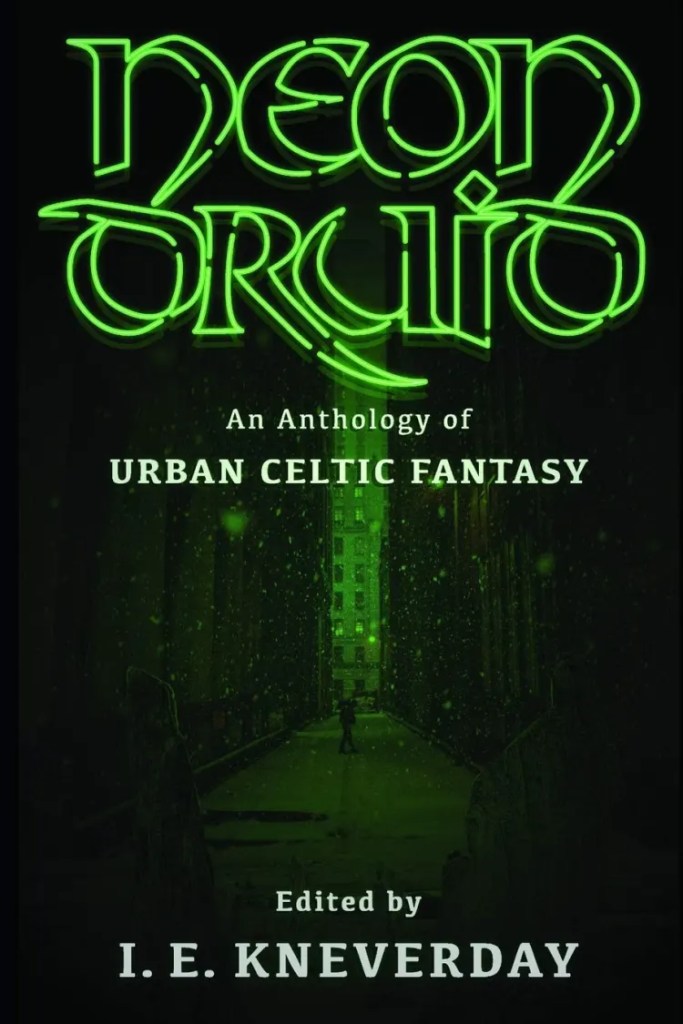
“A thrilling romp through pubs, mythology, and alleyways. NEON DRUID is such a fun, pulpy anthology of stories that embody Celtic fantasy and myth,” (Pyles of Books). Cross over into a world where the mischievous gods, goddesses, monsters, and heroes of Celtic mythology live among us, intermingling with unsuspecting mortals and stirring up mayhem in cities and towns on both sides of the Atlantic, from Limerick and Edinburgh to Montreal and Boston. Learn more…
Samhain in Your Pocket

Perhaps the most important holiday on the ancient Celtic calendar, Samhain marks the end of summer and the beginning of a new pastoral year. It is a liminal time—a time when the forces of light and darkness, warmth and cold, growth and blight, are in conflict. A time when the barrier between the land of the living and the land of the dead is at its thinnest. A time when all manner of spirits and demons are wont to cross over from the Celtic Otherworld. Learn more…
Irish Monsters in Your Pocket

In the Ireland of myth and legend, “spooky season” is every season. Spirits roam the countryside, hovering above the bogs. Werewolves lope through forests under full moons. Dragons lurk beneath the waves. Granted, there’s no denying that Samhain (Halloween’s Celtic predecessor) tends to bring out some of the island’s biggest, baddest monsters. Prepare yourself for (educational) encounters with Irish cryptids, demons, ghouls, goblins, and other supernatural beings. Learn more…


Leave a Reply