
Folklore in Film is reader-supported. When you buy through links on our site, we may earn a small affiliate commission.
The 13th Warrior has a ghost problem.
And look, I know what you’re thinking:
The 13 Warrior has ghosts in it?
No, it doesn’t.
And that’s the problem.
I’m I. E. Kneverday and at the end of this essay, I will be grading The 13th Warrior on its folklorical accuracy.
Along the way, we’ll explore how the film reimagines the Beowulf saga for a non-supernatural world.
And we’ll get to the bottom of my biggest beef:
Why did the film set up the idea of mylingar (or child spirits) but never pay it off, despite having two perfect opportunities to do so?
Let’s take a look.
Psst. You can watch a video adaptation of this essay right here. Text continues below.
The Book Behind The 13th Warrior: Michael Crichton’s Reimagining of the Beowulf Saga (Eaters of the Dead)
The 1999, John McTiernan-directed 13th Warrior began its narrative life as a book.
Michael Crichton’s 1976 novel, Eaters of the Dead.
To quote the man himself:
“I wrote Eaters of the Dead on a bet that I could make an entertaining story out of Beowulf.”
Having read the book, I’d say: mission accomplished.
Although, to be fair, Beowulf was already pretty entertaining—as far as Old English epic poems go.
And writer Burton Raffel made it accessible to the masses with his 1963, modern-sounding translation.
Putting Crichton’s book and commentary aside, the Beowulf references in The 13th Warrior are readily apparent.
For starters, there are the names.
Beowulf References in The 13th Warrior: Movie Names Explained
The blond-haired leader of the Viking crew is named, not, Beowulf but Buliwyf.
They switched the “l” from the second part of the name to the first.
Meanwhile, King Hrothgar is the same.
Ditto Queen Wealhtheow, albeit with a simplified spelling (Weilew).
The king and queen’s seat of power, the meadhall Heorot (Hurot), is the same.
One of the 13 warriors bears Beowulf’s father’s name, Edgetho (Edgtho).
Another is named for Beowulf’s uncle, the Geatish king Hygelac (Hyglak).
A more controversial choice was to name King Hrothgar’s scheming son after Wiglaf, who in the saga is actually Beowulf’s most loyal thane.
I think the idea here was to have Wigliff be a dark reflection of Buliwyf.
Like how Belloq is a dark reflection of Indiana Jones in Raiders.
Both men are born with status, yet the former hides behind that status while the latter proves himself worthy of it again and again through acts of bravery.
Hence, the King calls for Buliwyf’s aid when attacked by the creatures that shall not be named.
Or at least, at the beginning of the film they can’t say the name.
Because once they break the seal, everybody’s saying it.
Wendol.
Who Are the Wendol? The Wendigo + Grendel Theory
The Wendol are the bearskin-clad cannibals who, much like the Beowulf saga’s man-eating monster Grendel, have a nasty habit of terrorizing Heorot hall.
And I have a strong suspicion that the name “Wendol” came about by taking the second half of Grendel and tacking it on to the first half of the name Wendigo.
The Wendigo being an evil spirit or supernatural creature from Algonquian folklore, known for its gluttony and tendency to eat humans.
Algonquian-speaking peoples lived (amongst other places) along the Northeastern Coast of North America, making them the perfect geographic choice for some folkloric crossover with ancient Nordic peoples.
Who we know made it to the Americas at least once prior to that guy Christoper’s trip across the pond.
And I’d be remiss not to mention that in modern depictions, the Wendigo almost always has horns or antlers.
Which may help explain the origin of the Wendol military leader’s “Horns of Power.”
The horns might also be a nod to Cernunnos from Gaulish Celtic mythology, who has sort of become the poster boy for modern paganism.
What is Beowulf (and The 13th Warrior) Really About? Paganism vs. Christianity
And what is the Beowulf saga, and by extension, The 13th Warrior, if not an allegorical depiction of the power of monotheism overcoming the last vestiges of pagan power?
The movie puts an even more interesting spin on this idea by making our POV character, Antonio Banderas’ Ahmed Ibn Fahdlan Ibn Al Abbas Ibn Rashid Ibn Hamad, a Muslim.
Whereas the original saga, while rooted in pre-Christian mythology, is heavily Christianized in its preserved form.
Which isn’t much of a surprise given that it was recorded by an Anglo-Saxon Christian poet.
A poet who went so far as to refer to the ancient Danish religious practices of making sacrifices and speaking vows as “hoping for Hell’s Support, the Devil’s guidance.”
Hate the Beowulf Saga? Blame the Irish
And who, dare I ask, is responsible for bringing such a strong Christian viewpoint to these Anglo-Saxons, who were formerly pagan themselves?
The Irish.
Hence, the high crosses with their Hiberno-Saxon knotwork (colloquially known as Celtic knotwork).
And hence, the Beowulf saga.
Or should I say, the Táin bó Fraích. Or, Cattle Raid of Fráech.
Because there is a case to be made that this Old Irish myth, which features a hero entering a dark lake and facing off against a dragon/serpent, inspired the Old English saga, Beowulf.
The Irish Péist—Norse Wyrm Connection: Dragons in The 13th Warrior
Fun fact: In the original Irish version of the Táin bó Fraích, the word used for dragon was péist, which translates literally to “worm.”
And similarly, in Beowulf the “dragon” is often referred to as a wyrm, which was the forerunner to the modern English word, worm.
And now it makes sense why, when the villagers are like, “Hey, there’s a glow worm coming.”
Antonio Banderas’s character, the master of language comprehension that he is, is immediately like: “Oh, you mean a dragon?”
Ahmad ibn Fadlan: The Historical Arab Traveler Thrust into a Legendary Old English Tale
By the way, in case you were curious why this work of historical fiction seemingly stretched the bounds of historical accuracy in order to have an Arabic diplomat from Baghdad meet up with a bunch of Vikings…
Welp, the thing is…that actually happened.
Ahmad ibn Fadlan was a real dude who, in the 10th century, traveled to what is now Russia and stayed at an encampment along the Volga River.
And who was staying right nearby?
The aptly named Volga Vikings (a.k.a. the Rus) who had originally come from Sweden.
But enough about history.
I’m here for the folklore.
Including, creepy spirit kids.
Creepy Spirit Kids: The Mylingar of Scandinavian Folklore
It’s such a small detail, introduced at the beginning of the film, but it really helps set the tone:
Herger the Joyous explains to Ahmad that the reason that boy stands on the bow of the ship like a statue is to let the Vikings see him.
Because it’s possible the boy could be a spirit.
So by standing there, he’s letting the Vikings see that he is, in fact, a real boy.
And it turns out this was a real concern, at least amongst the superstitious.
Because in Scandinavian folklore, mylingar (singular: myling) are the ghosts of children whose mothers didn’t want them, so they…yikes.
So now the mylingar roam the earth, demanding proper burials or sometimes just names.
To achieve the former they’ve been known to hop on the backs of travelers and force said travelers to carry them to graveyards.
Only the mylingar get heavier as they get closer to graveyards, and sometimes the piggyback-givers can’t complete their journeys, which results in the little child spirits…well, yikes again.
It’s such an unsettling bit of lore to introduce at the beginning of a film.
And on rewatch, I realized that seeing a lone child out in the open somewhere is a recurring motif in The 13th Warrior.
After our heroes journey to the North, we get that lone survivor from an earlier, offscreen raid, coming down the hillside.
And in the second half of the film, just as our heroes have completed barricading the hall, we get another lone child coming down the hillside.
Prompting Ahmed Ibn Fahdlan Ibn Al Abbas Ibn Rashid Ibn Hamad to get on his horse, jump the barricade, and go rescue her.
But wouldn’t it have been cooler, if, when our man got on his horse, Herger the Joyous was like “hey, where the heck are you going?”
And Ahmed Ibn Fahdlan was like, “You don’t see her?”
And Herger’s like “No! It’s not real!”
But he goes anyway and the whole point should have been that he’s being lured out by this evil spirit and he should have listened to Herger’s advice from before and respected their lore.
And maybe he figures that out at the last second and turns back…just as a spear flies by his head.
Or maybe the evil child spirit jumps on his back and tries to kill him.
The twist, of course, is that this is not a literal ghost or spirit.
It’s just a wicked spooky kid, maybe even one of the village’s kids, who has been kidnapped and brainwashed.
Don’t call it a rewrite.
Call it fulfilling the principle of Chekhov’s myling.
Although, come to think of it, we could interpret the girl being swooped up and carried by our hero as a symbolic representation of a myling receiving its salvation.
In which case, what have I been complaining about?
We’ve got bigger fish-people to fry.
By which I mean Grendel’s mother.
But let’s do this in order.
The Three Primary Antagonists of Beowulf and The Thirteenth Warrior
The Beowulf saga features three primary antagonists, all of whom have equivalents in the 1999 movie, The 13th Warrior.
There’s Grendel, represented in the film by the Wendol.
Grendel’s mother, represented by the Wendol Mother.
And the dragon, represented by the glow worm or fire serpent.
Are the Wendol in the 13th Warrior Based on Grendel From Beowulf?
Let’s start with our boy Grendel and here is the introduction he gets in the Beowulf saga:
“…Hrothgar’s men lived happy in his hall
Till the monster stirred, that demon, that fiend,
Grendel, who haunted the moors, the wild
Marshes, and made his home in a hell
Not hell but earth. He was spawned in that slime,
Conceived by a pair of those monsters born
Of Cain, murderous creatures banished
By God.”
Sounds like a nice guy.
And right off the flattened Viking sword, we’ve got an allusion to Grendel living in the earth.
Which is exactly what we see with the cave-dwelling Wendol.
As for what type of monster Grendel is, the anonymous Anglo-Saxon poet who recorded the Beowulf saga employed two distinct terms:
Þyrs (pronounced theer-ss), meaning giant or demon.
And Jötunn, which basically means the same thing: giant.
Although it should be noted that etymologically, Jötunn comes from the Proto-Germanic *etunaz, which translates literally to “eater” but can also mean a “giant,” “overeater,” or “glutton.”
Marvel fans and Norse mythology fans (what’s up) will know that the trickster god Loki is famously part-Jötunn.
Or “Frost Giant,” as they say in the MCU.
But to the best of my recollection, Loki doesn’t eat anyone.
Whereas Grendel is a glutton for human flesh.
Although if you want to get technical, it seems like he’s more of a marrow guy.
To quote Beowulf himself:
“I think, if my time will have come,
There’ll be nothing to mourn over, no corpse to
prepare
For its grave: Grendel will carry our bloody
Flesh to the moors, crunch on our bones
And smear tom scraps of our skin on the walls
Of his den.”
This disturbing imagery and even some of the language is replicated in the scene where Antonio Banderas’ Ahmed Ibn Fahdlan Ibn Al Abbas Ibn Rashid Ibn Hamad goes into the hut, sees the gory devastation caused by the Wendol, and reports:
“They have been… gnawed upon.”
Now, adapting a single, giant, man-eating monster into a bloodthirty horde of humans (or Neanderthals if you prefer) makes sense if your aim is to do a grounded take on Beowulf.
Because in the poem, Grendel snatches and smashes (to death) thirty dudes in one night and drags their bodies back to his subterranean lair.
The movie has a similar scene.
And showing the Wendol carrying away the heads of their victims—mimicking Grendel carrying away the bodies—is a nice (well, not nice) touch.
Of course, the Wendol are also keen to carry away their own dead.
And now I understand why:
You need to have the Grendel-gets-his-arm-ripped-off scene. It’s a major turning point in the Beowulf saga.
But when your Grendel is a Wendol, i.e. a group of human-sized monsters comprising the whole, a few of their corpses being left behind serves as the equivalent of Beowulf scoring himself a giant Grendel arm.
Because once they can see these bodies up close, our warriors are able to know for sure that these bear-clad, man-eating monsters are humans.
Or just about.
Is the Wendol Mother in the 13th Warrior Based on Grendel’s Mother From Beowulf?
Which brings us to Grendel’s mother.
And her 13th Warrior equivalent, the Wendol mother.
In the Beowulf saga, Grendel’s mother is described as a merewif.
Literally, a water woman.
It’s like a mermaid, only witchier.
We’re not talking full Ursula though here—she doesn’t have tentacles.
Anyway, having the movie’s Beowulf equivalent Buliwyf pass through water to reach the mother in her subterranean sanctuary is spot on.
As is having the mother attack Buliwyf first.
To quote the saga:
“She welcomed him in her claws,
Clutched at him savagely but could not harm him,
Tried to work her fingers through the tight
Ring-woven mail on his breast, but tore
And scratched in vain.”
Of course, in the movie, we see the mother figure successfully wield a claw against our hero.
And we all know what happens next.
Both Grendel’s mother and the Wendol mother lose their heads.
Is the Mother Figurine in The 13th Warrior Real? The Venus of Willendorf Explained
As for the figurine of the Wendol mother, and that giant sculpture of her we see in the cave—those are great touches.
The exaggerated imagery here, evoking fertility, hearkens back to a belief system from 30,000 years ago.
A time when a divine mother or fertility goddess may have been at the center of spiritual life.
And if you’re wondering how I came up with that 30,000-year date:
That’s how old the so-called Venus of Willendorf is.
Which is a real artifact discovered in what is now Austria that the filmmakers turned to for design inspiration.
For the record, the Venus of Willendorf isn’t actually a representation of the Greco-Roman goddess Venus because Greco-Roman mythology didn’t exist 30,000 years ago.
It’s just a name archaeologists use for ancient figures that look like this.
How Calvary Serves as Beowulf’s Dragon in the 13th Warrior
Finally, we have the dragon from Beowulf.
Which in The 13th Warrior turns out to be…calvary.
Flaming calvary, I should say. Because all of the mounted Wendol carry torches.
This was another smart choice.
Because if you’re trying to come up with a real-world equivalent of a giant fire-breathing monster capable of wreaking the type of havoc the Beowulf dragon wreaks…And believe me, that thing wreaks…your options are limited.
To quote the saga:
Vomiting fire and smoke, the dragon
Burned down their homes. They watched in horror
As the flames rose up: the angry monster
Meant to leave nothing alive. And the signs
Of its anger flickered and glowed in the darkness,
Visible for miles, tokens of its hate
And its cruelty, spread like a warning to the Geats
Who had broken its rest.
I mean come on.
The movie for sure succeeded in capturing that imagery.
That being said, historically, the use of cavalry didn’t become popularized in Denmark until the 12th century.
And it wouldn’t be adopted in Sweden until the 13th century.
Meanwhile, this movie is set in the 10th century.
But, and this is a two-cheeked butt:
Cheek A: Horse domestication and horseriding developed independently on the Eurasian Steppes.
Incidentally, it was along the Volga River where the most successful domestication practices were pioneered—around 4,000 years ago
My point being: it’s not impossible that the Wendol, this isolated tribe, came up with horse domestication independently.
And what’s even more likely is that they stole some domesticated horses and bred them.
But this brings me to cheek B.
Which is:
I don’t care so much about historical accuracy.
Folklorical Accuracy Grade for The 13th Warrior
What I’m interested in… is folklorical accuracy.
And given everything we’ve looked at in this essay.
I feel it within my bones…
My bones that may one day be crunched on or gnawed upon by man-eating monsters…
…that The 13th Warrior deserves…
An A+.
If you enjoyed this essay, please leave a like and comment “Ahmed Ibn Fahdlan Ibn Al Abbas Ibn Rashid Ibn Hamad.”
Thanks for reading.
Fan of folk horror?
You might be interested in my short film Samhain, available over on the Irish Myths channel.
More the reading type?
Check out…
Neon Druid: An Anthology of Urban Celtic Fantasy
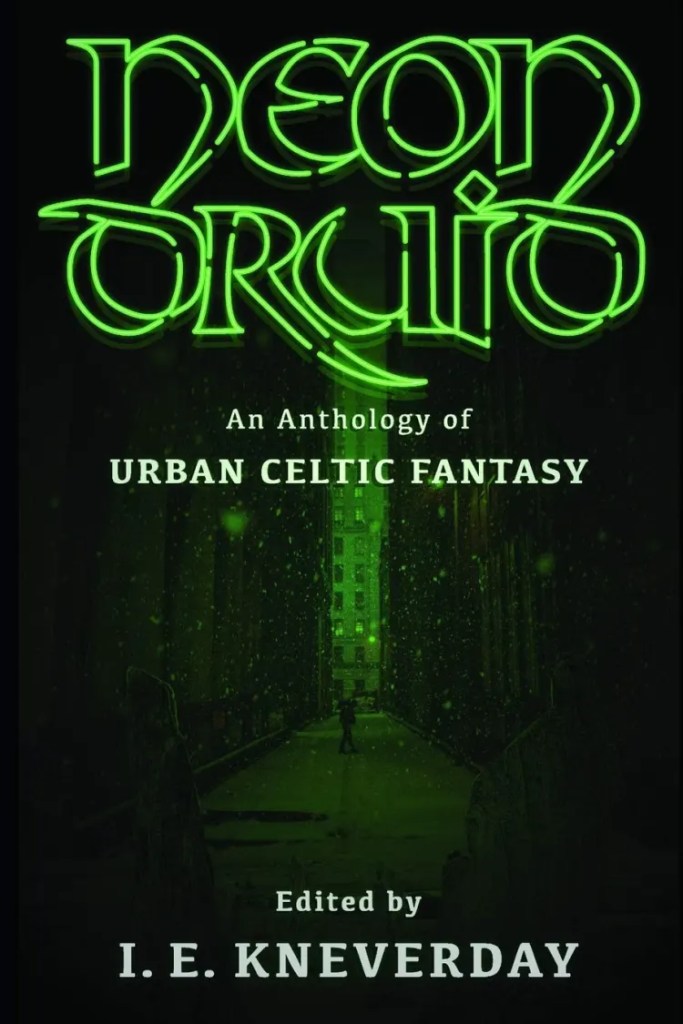
“A thrilling romp through pubs, mythology, and alleyways. NEON DRUID is such a fun, pulpy anthology of stories that embody Celtic fantasy and myth,” (Pyles of Books). Cross over into a world where the mischievous gods, goddesses, monsters, and heroes of Celtic mythology live among us, intermingling with unsuspecting mortals and stirring up mayhem in cities and towns on both sides of the Atlantic, from Limerick and Edinburgh to Montreal and Boston. Learn more…
Samhain in Your Pocket

Perhaps the most important holiday on the ancient Celtic calendar, Samhain marks the end of summer and the beginning of a new pastoral year. It is a liminal time—a time when the forces of light and darkness, warmth and cold, growth and blight, are in conflict. A time when the barrier between the land of the living and the land of the dead is at its thinnest. A time when all manner of spirits and demons are wont to cross over from the Celtic Otherworld. Learn more…
Irish Monsters in Your Pocket

In the Ireland of myth and legend, “spooky season” is every season. Spirits roam the countryside, hovering above the bogs. Werewolves lope through forests under full moons. Dragons lurk beneath the waves. Granted, there’s no denying that Samhain (Halloween’s Celtic predecessor) tends to bring out some of the island’s biggest, baddest monsters. Prepare yourself for (educational) encounters with Irish cryptids, demons, ghouls, goblins, and other supernatural beings. Learn more…


Leave a Reply