
Folklore in Film is reader-supported. When you buy through links on our site, we may earn a small affiliate commission.
Was there supposed to be a werewolf in this 1992 movie or did Francis Ford Coppola just get confused?
We’ll get into it.
I’m I. E. Kneverday and at the end of this essay I will be grading Bram Stoker’s Dracula on its folklorical accuracy.
Along the way, we’ll learn about the potentially interwoven origins of vampires and werewolves…
We’ll figure out where in the Van Helsing the idea of making Mina Harker a reincarnated princess came from…
And we will settle, once and for all, the most divisive Dracula debate:
Did Bram Stoker actually base his fictional vampire on the historical Vlad the Impaler?
Or is that revisionist lore that this very movie helped perpetuate?
Let’s take a look.
Pssst. You can watch a video adaptation of this essay right here. Text continues below.
The Making of Bram Stoker’s Dracula: A Hollywood Legend/Horror Story
Screenwriter James V. Hart, of Hook fame, once compared his Dracula script to the dark side of Neverland.
A producer corrected him: the script really reflected the dark side of its writer.
Remind me never to have dinner at James V. Hart’s house.
To the discerning Dracula / Bram Stoker fan, which apparently included Winona Ryder, Hart’s script stood out for its mature take on the subject matter and faithfulness to the source material.
Ryder, who was looking for a meaty role (err, poor choice of words), brought the script to Francis Ford Coppola…
And the rest, as they say, was a huge mess.
To quote screenwriter James V. Hart:
“1992. I get a phone call at midnight in NYC.
“It is Francis Coppola. He has been in post-production on Dracula for several months, and it is not going well.
“Another disastrous preview has the studio on edge. He asks [politely commands] me to get on a plane and come to San Francisco.
“He hates the film, hates the script, hates me for writing it, hates the cast, hates the studio, and he wants to show me the film to prove it.”
“The next night I met Francis at the Zoetrope building…in San Francisco…
“For 2 hours and 10 minutes, I watched the worst piece of shirt film I had ever seen.”
Through some last-minute reshoots and what Hart refers to as “seamless” execution on Coppola’s part, the final film was assembled.
The ending, in particular, was given an update, thanks to feedback provided by some fella named George Lucas-something.
How the Ending of the 1992 Dracula Movie Differs From the Ending of Bram Stoker’s 1897 Novel
To be clear, this ending was always going to be slightly different from the book’s ending.
The latter of which sees Jonathan Harker, with a “sweep and flash” of his great Kukri knife, shear through Dracula’s throat, “whilst at the same moment Mr. Morris’s bowie knife plunged into the heart.”
And that’s it, end of Dracula.
Meanwhile, in his script, Hart wisely wrote that bowie knife into the hand of Winona Ryder’s Mina, so she could deliver the final, final blow, after Keanu Reeves’ Jonathan Harker and Billy Campbell’s Quincey P. Morris weaken the vampire.
That way, instead of having men kill a monster to save a woman (which has been done once or twice before), Hart gives us a finale in which a woman kills a half-man, half-monster out of pity.
But what Hart forgot to do in his script…was have Mina cut Dracula’s head off.
Because earlier in the film, how is Sadie Frost’s Lucy Westenra dispatched after she is infected with Dracula’s vampirism?
Same way as in the book:
Big ole stake through the heart followed by a decapitation.
Apparently George Lucas was the one to point out that in the original cut of the movie, it wasn’t like poetry, it didn’t rhyme.
So about a year after principal photography had wrapped, Coppola got Ryder to chop Oldman’s head off.
Which she was apparently happy to do because the two actors did not get along.
And while the ending we got is certainly better than the one that got booed in a test screening.
(In that version, Mina immediately runs to Keanu Reeves’ Jonathan after stabbing Drac.)
This resolution still leaves a lot to be desired because…
The Biggest Problem With Bram Stoker’s Dracula (1992)
Dracula, in this movie, is too cool. At least, superficially.
Maybe Hart wrote him too cool.
Maybe Coppola directed him too cool.
Maybe Oldman played him too cool.
Costume designer Eiko Ishioka, who won an Academy Award for her work on this film, definitely dressed him too cool.
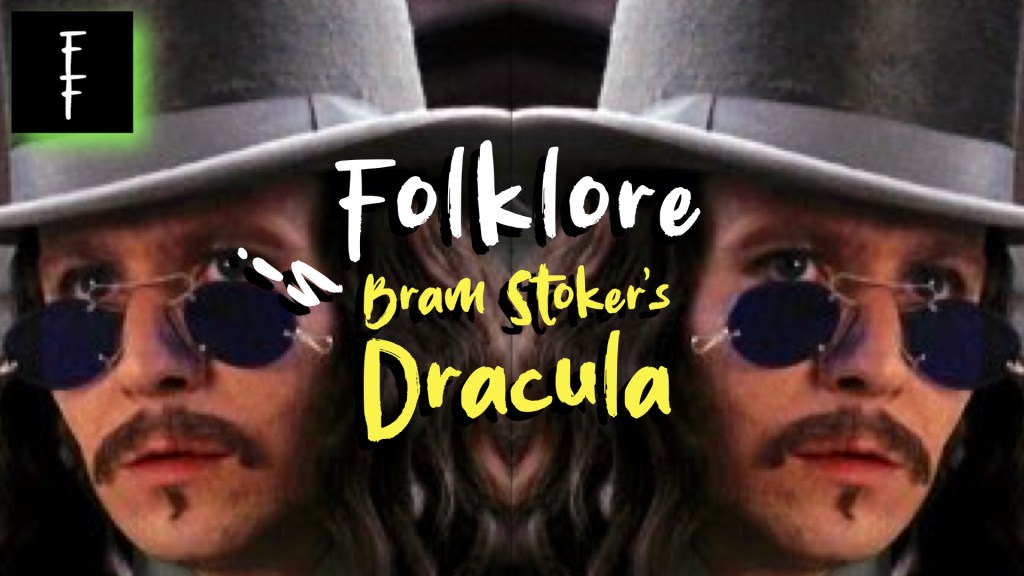
Whichever way you slice it, this version of Dracula isn’t a full-blown monster, he’s also a forlorn, lovelorn, everything-lorn tragic anti-hero who walks around in broad daylight in a top hat and blue-tinted pince-nez sunglasses.
And we’re supposed to believe that Mina prefers the dopey real estate lawyer?
This is where the 1992 movie deviates significantly from Irish author Bram Stoker’s’ 1897 gothic horror novel.
Because not only does the movie show Dracula seducing Mina rather than attacking her outright like in the book, it’s also established that Mina has a good reason to love Dracula back:
She’s the reincarnation of his 15th-century wife, Princess Elisabeta.
A character with a deep history in folklore and…
Wait, no, they made her up.
Then again…
Since this film firmly establishes Dracula as Vlad the Impaler, the historical 15th-century Wallachian war hero and infamous maker of people-kebabs, the Princess Elisbeta subplot can sort of work.
History tells us that before putting a ring on the Hungarian noblewoman Justina Szilágyi, Vlad had an unnamed first wife.
Folklore, meanwhile, gives her a name, Anastasia Holszanska, and tells us she was the niece of a Polish queen.
Does that make her a princess? I don’t know, close enough.
The Biggest Change the 1992 Dracula Movie Makes to the Source Material
Regardless, I like that the filmmakers seemingly took advantage of Vlad the Impaler’s somewhat murky romantic past and put their own stamp on it.
Buuut having Princess Elisbeta reincarnate hundreds of years later as Mina, the fiancee of the English solicitor who oversees Dracula’s real estate transactions, was a choice.
The novel Dracula mentions the concept of reincarnation precisely once when Dr. Seward says the following:
“There must be no chances, this time; we shall not rest until the Count’s head and body have been separated, and we are sure that he cannot re-incarnate.”
Yeah, so here reincarnation isn’t presented as a phenomenon that unfolds across centuries.
It’s something a seemingly dead vampire can do relatively quickly if its body isn’t properly disposed of.
What Inspired 1992 Dracula’s Reincarnated Princess Subplot?
So how did screenwriter James V. Hart come up with this idea of having a princess from one era get reborn into a different era while being pursued by the same, long-lived lover?
And remember, this is before 1999’s The Mummy came out.
Although perhaps Hart was familiar with the ancient Egyptian folktale that helped inspire that script:
The Tale of Two Brothers, which I talk about in my Mummy video.
Hindu Mythology in Bram Stoker’s Dracula?
Hindu mythology presents a stronger analogy.
Think of Vlad as the god Vishnu and Elisbeta as his consort, the goddess Lakshmi.
Every time Vishnu descends to earth in avatar-form, Lakshmi comes too in an avatar of her own.
For example, she is Sita to Vishnu’s Rama, and Rukmini to his Krishna.
Similarly, in the modern era, Vlad the Impaler has taken on the avatar of Count Dracula.
While Princess Elisbeta has been reborn into the avatar Wilhelmina Murray.
And let’s not forget the animal avatars.
Because just as Vishnu’s avatar Varaha takes the form of a boar and his avatar Narasimha takes the form of a man-lion, Vlad/Dracula can appear as a man-wolf, and a man-bat, and a big ole stack of rats.
Irish Mythology in Bram Stoker’s Dracula? The Wooing of Etain
But for my money, the ancient story that most directly inspired Dracula’s reincarnation subplot didn’t come from India, but from Ireland.
Birthplace of Bram Stoker.
How fitting.
The Wooing of Étaín sees the Irish god Midir seduce the titular princess, Étaín, the most beautiful woman in Ireland with the help of the love god Aengus.
Midir’s first wife (yep, he was married) isn’t too happy about this, so poof, she turns Étaín into a puddle, from which emerges a fly.
First wife conjures up a bunch of storms and for a thousand some-odd years fly-Étaín is trapped in the air.
Finally she lands in the goblet of an Ulster chieftain’s wife who swallows the fly.
She swallowed the fly and then she got pregnant and gave birth to Étaín.
So Étaín is reincarnated, grows up to become the most beautiful woman in Ireland (again), and is married off to Ireland’s High King, Eochu Airem.
But guess who comes back a knockin’ after all those years?
Midir.
(He’s back.)
At first he disguises himself as the king’s ailing brother, the appropriately named, Aillil, so he can get close to Étaín.
But then when Midir does reveal himself to her (no, not like that), it turns out that she doesn’t remember him.
Like, at all.
Wait, is Spider-Man: Brand New Day based on Irish mythology?
No, because in the Irish myth the princess is like: Oh, ok, I’ll go with you, magic stranger man, provided my current husband says it’s okay.
Flash forward to the end of the story and Midir transforms into a flight of swans and carries Étaín off into the sunset.
I mean come on, this is basically the story of Dracula, complete with animal transformations, just minus the blood-sucking stuff.
Oh, and the creepy old dude wins at the end.
Dracula’s Irish Origins: Was Irish Author Bram Stoker Inspired By a Local Legend?
Now, if you think it dubious that the filmmakers would turn to Irish mythology for inspiration, may I remind you that Bram Stoker was Irish.
In fact, Stoker used to hang out at the family home of Oscar Wilde, where Oscar’s mother, the poet and folklorist Jane Wilde, may have introduced the aspiring author to another bit of Irish lore:
That of Abhartach, a neamh-mairbh, or walking dead.
In life, Abhartach is a cruel and tyrannical chieftain.
So cruel that his people bring in outside help to overthrow him.
There’s just one problem: Abhartach refuses to stay dead.
He comes in the night, demanding bowls of blood.
Until finally, a hero shoves a wooden sword through Abhartach’s heart, buries him upside down, and builds a cairn or dolmen over the spot.
Some people think the Slaghtaverty Dolmen in Garvagh, Co Derry still marks that spot to this very day.
It’s a fantastic story.
And I’ve made the argument before, over on my Irish Myths channel, that Abhartach, not Vlad the Impaler, was the real inspiration for Stoker’s Count Dracula.
Only I don’t think we have to choose.
Obviously, the Abhartach story offers some intriguing parallels.
Where Did Staking Vampires Come From? How Did This Practice Originate? Do You Need a Wooden Stake to Kill Dracula?
But it’s not like Stoker got caught up, for example, in only having wooden weapons be effective against vampires.
A bowie knife will do the trick in a pinch.
Irish folklore aside, people across medieval Europe would stake presumed vampires in their coffins not to kill them but to hold them down.
To prevent them from rising again.
So the precise material didn’t really matter, so long as it was strong.
Pro tip: if you are gonna use wood to stake a vampire, avoid hawthorn.
The Oldest Historical Account of a Vampire: Jure Grando
Because in the oldest, historically documented case of an alleged vampire, townspeople dug up the body of a stonemason, Jure Grando, who had died some 16 years earlier, and attempted to plunge a hawthorn stick into his heart only the stick kept bouncing off his chest.
So they decapitated him instead.
That was in 1672.
In what is now Croatia.
Who or What Is a štrigon? The Strigoi of Romanian Mythology
But the specific word people used to describe Jure Grando was a Romanian one: štrigon.
In Romanian mythology, the strigoi are undead spirits that can become invisible and take on the forms of beasts.
What’s more, they sustain themselves on human blood.
Put all of these pieces together and Stoker surely had all of the lore he needed to write the novel that would become Dracula.
Plus, it’s not like he was inventing the genre.
That Other Irish Gothic Horror Vampire Novel: Sheridan Le Fanu’s Carmilla
Horny vampire gothic horror was already a thing, thanks in large part to another Irish author, Joseph Sheridan Le Fanu, who published the novella Carmilla, about a woman being targeted by a female vampire, in 1872.
So all Stoker really needed was a catchy name.
An Account of the Principalities of Wallachia and Moldavia
And he found it in an 1820 book: An Account of the Principalities of Wallachia and Moldavia.
It was written by the English diplomat William Wilkinson who spent several years living in Bucharest.
Based on Stoker’s Notes for Dracula, which brings together seven years-worth of research, sketches, and outlines, this was the author’s singular source for the name.
In fact, all of Stoker’s notes about “voivode Dracula,” with voivode meaning war lord or military leader, were copied almost verbatim from Wilkinson’s book.
Here it is. Here’s all of the Dracula history Stoker found important enough to document during his research:
“Wallachia continued to pay [tribute] until the year 1444; when Ladislas King of Hungary, preparing to make war against the Turks, engaged the Voivode Dracula to form an alliance with him.
“The Hungarian troops marched through the principality and were joined by four thousand Wallachians under the command of Dracula’s son.
“And, Their Voivode, also named Dracula,* did not remain satisfied with mere prudent measures of defence: with an army he crossed the Danube and attacked the few Turkish troops that were stationed in his neighbourhood; but this attempt, like those of his predecessors, was only attended with momentary success.
“Mahomet, having turned his arms against him, drove him back to Wallachia, whither he pursued and defeated him.
“The Voivode escaped into Hungary, and the Sultan caused his brother Bladus to be named in his place. He made a treaty with Bladus, by which he bound the Wallachians to perpetual tribute… [19].
*Dracula in the Wallachian language means Devil.
The Wallachians were, at that time, as they are at present, used to give this as a surname to any person who rendered himself conspicuous either by courage, cruel actions, or cunning.”
It makes a lot more sense now why the names Vlad, Vlad Tepes, Vlad the Third, and Vlad the Impaler don’t appear in Stoker’s novel:
Stoker relied on the language of his source.
That being said, Wilkinson was very clearly referring to Vlad the Third a.k.a. Vlad the Impaler, son of Vlad the Second, when he wrote about the commander of the Wallachians, “Dracula’s son, who was also named Dracula” crossing the Danube and attacking the Turks.
That’s Vlad the Impaler.
So while he is in Stoker’s notes, Vlad’s notorious savagery is not. There’s no mention of his impaling.
Does Dracula Speak Turkish or Romanian? Vlad’s Family History Explained
And in the novel, specifically in chapter three, where Dracula lays out his family history:
He identifies himself as belonging to the Székelys, a Hungarian-speaking subgroup native to a region of Transylvania called Székely Land, which includes the valleys and hills of the Eastern Carpathian Mountains.
And historically, the Székelys claimed Attila the Hun as an ancestor.
Stoker even has it in his notes:
“TRANSYLVANIA inhabited by Magyars, Saxons, Wallachs, and Szekelys. Magyars to West—Saxons South—Szekelys East and North—Wallachs (descendents of Dacians) mixed with Saxons. Szekelys claim to be descended from Attila and the Huns, who were found settled on Eastern frontier when country conquered by Magyars in 11th Century.”
Meanwhile, the historical Vlad the Impaler belonged to one of the other aforementioned ethnic groups, the Wallachs, also known as the Vlachs or Wallachians.
So when in the movie Dracula asks Jonathan, rhetorically:
“What devil or witch was ever so great as Attila whose blood flows in these veins?”
And then says to Mina:
“Please, permit me to introduce myself. I am Prince Vlad of Szekely.”
He’s effectively denying his Wallach heritage.
But then in the film’s opener, he speaks Romanian, an Eastern Romance language, the language of the Wallachs.
Wait a minute:
As a prince of Szekely, Dracul’s native tongue would have been Hungarian.
What the heck is going on here?
Was Dracula Based on Vlad the Impaler?
The way I see it, the filmmakers did the same thing Bram Stoker did—only worse.
They took all of this Transylvanian history and folklore (like the Attila the Hun connection, which has never been proven) and they squeezed it into this one, composite character.
I say Stoker did it better because he leaves things open-ended.
His Dracula has an encyclopedic knowledge of his land’s history and heroes, including knowledge of the one “who as Voivode crossed the Danube and beat the Turk on his own ground. This was a Dracula indeed!”
Notice that while teasing his potentially deep past here, Dracula never comes out and says directly “and I was that Voivode! I’m Prince Vlad!”
Instead, the closest thing we get to that kind of confirmation comes from Van Helsing declaring:
“He must, indeed, have been that Voivode Dracula who won his name against the Turk, over the great river on the very frontier of Turkey-land. If it be so, then was he no common man; for in that time, and for centuries after, he was spoken of as the cleverest and the most cunning, as well as the bravest of the sons of the ‘land beyond the forest.’
So to wrap up Dracula’s origin story and put a nice bow on it.
There’s no denying that Stoker intended his vampire to have a connection to Vlad the Impaler.
Full stop.
But at the same time, Stoker didn’t seem to be familiar with the impaling part of Vlad’s history.
Nor did he seem particularly concerned with eschewing Vlad’s historical Vlach ancestry in favor of making the character a descendant of Attila the Hun.
So while I already said the first thing, about there being a connection, I can also conclusively say that Stoker’s Dracula is by no means a direct copy of the historical Vlad the Impaler.
Why Does Dracula Turn into a Werewolf in the 1992 Movie?
Now, we need to talk about Dracula’s wolf-man form.
Did someone get their Universal Monsters mixed up?
—
But before we get into it, let’s all take a deep breath.
Dracula stretch.
And if you haven’t already please subscribe to the Folklore in Film YouTube channel.
My kids really want me to get one of those shiny plaques.
—
Everyone knows that vampires are bat-monsters.
So what is Gary Oldman doing in that wolf-man suit?
Let’s go to the source:
How many times do you think Stoker mentions bats in his 1897 novel Dracula?
15 times.
Follow-up question:
How many times do you think Stoker mentions wolves?
77 times.
Dogs, meanwhile, he mentions 56 times.
Spiders, 23 times.
Rats, 14 times.
Birds, 12 times.
All this to say: book Dracula seems to hold canines close to his non-beating heart.
And who can forget this gem of a line, when Dracula hears the wolves howling outside his castle:
“Listen to them—the children of the night. What music they make!”
Book Dracula can also command wolves and, according to Van Helsing, “transform himself to wolf.”
Of course, in the movie, Dracula doesn’t merely take on the form of a wolf, he transforms himself into a half-man, half-wolf monster thing with the face of a bat, sort of.
Call it a wolf-man.
Call it a were-wolf.
Call it a creature that doesn’t appear in the original book.
Or does it?
Are There Werewolves in the Original Dracula Novel?
Stoker mentions were-wolves twice in Dracula.
First, when Jonathan is trying to translate what the Transylvanian peasants are saying, we get the following:
“I could hear a lot of words often repeated, queer words…so I quietly got my polyglot dictionary from my bag and looked them out. I must say they were not cheering to me, for amongst them were “Ordog”—Satan, “pokol”—hell, “stregoica”—witch, “vrolok” and “vlkoslak”—both of which mean the same thing, one being Slovak and the other Servian for something that is either were-wolf or vampire”
Interesting.
A word that can mean were-wolf or vampire.
It’s almost as if these two nocturnal monsters known for preying on humans and taking on the shapes of animals, have a shared origin.
Do Vampires and Werewolves Have a Shared Origin?
And just to be clear, I am by no means the first person to suggest this.
Here, I found a roughly contemporaneous source.
In 1895, two years before Stoker published Dracula, the occult researcher and Theosophical Society member Charles Webster Leadbeater unveiled his book The Astral Plane: Its Scenery, Inhabitants and Phenomena.
According to Leadbeater, the inhabitants of our reality can be divided into two broad categories: Human and Non-Human.
And within that Human category, there are two subcategories: Living and Dead.
Granted, Living and Dead are really just shorthand for “those who have still a physical body, and those who have not.”
With that in mind, I can see how Leadbeater came to the determination that both vampires and werewolves belong to the Dead Human category.
While it’s tempting to think: oh, these are just humans who died and came back as non-humans, or they gave their souls to Satan and were thus rendered non-human…
Leadbeater says no:
The death part is only important insofar as it can allow for the Ego or essence of a person to break the shackles of their earthly body.
Thus giving them the power to shapeshift and do other spooky stuff.
As for why Leadbeater grouped vampires and werewolves together in his long list of supernatural beings, I’ll let him explain:
“[T]hough they differ very widely in many ways we may yet perhaps group them together, since they have in common the qualities of unearthly horror and of extreme rarity—the latter arising from the fact that they are really relics of earlier races.
“We…ought to have evolved beyond the possibility of meeting such a ghastly fate as is indicated by either of the two headings of this sub-section [The Vampire and Werewolf], and we have so nearly done it that these creatures are commonly regarded as mere mediæval fables…
“The popular legends about them are probably often considerably exaggerated, but there is nevertheless a terribly serious sub-stratum of truth beneath the eerie stories which pass from mouth to mouth among the peasantry of Central Europe.”
The second mention of werewolf in Bram Stoker’s novel comes from Dracula himself, and it ties back to the family history we explored earlier.
And I quote:
“We Szekelys have a right to be proud, for in our veins flows the blood of many brave races who fought as the lion fights, for lordship. Here, in the whirlpool of European races, the Ugric tribe bore down from Iceland the fighting spirit which Thor and Wodin gave them, which their Berserkers displayed to such fell intent on the seaboards of Europe, ay, and of Asia and Africa too, till the peoples thought that the were-wolves themselves had come.”
This is fascinating.
And no I don’t mean the shoutout to those Norse/Germanic gods, but hey that’s cool too.
From Berserkers to Werewolves: That Time Dracula Explained It All
In describing the Berserkers, and comparing them to werewolves, Dracula is inadvertently explaining the folkloric origins of the werewolf.
Now, if you’ve seen my videos on The Northman and/or Midsommar, you’re already familiar with berserkers:
They’re warriors who have adopted the appearance/spirit of particular animals, usually bears or wolves, and in battle and on raids they go, well, berserk.
Imagine being a medieval villager.
And seeing a shape running toward you in the night—covered in fur.
Is that a wolf head, up on its shoulders?
And now it’s screaming and howling and attacking the village beneath the moonlight.
Thus, the berserker, and other medieval raiders who went “a-wolfing,” helped give rise to legends of wolfmen, man-wolves, werewolves, and the like.
Yes, I will get to Wolfwalkers at some point on this channel (although I did already cover it on my other one). They’re sort of a special case.
And yes, I know technically that the super furry form of Dracula in the 1992 movie isn’t a werewolf because unlike some of the other lycanthropic creatures I mentioned, werewolves traditionally can’t control their transformations.
They change during full moons, and that’s that.
Speaking of the effect of the movement of celestial bodies on the behavior of supernatural predators…
Sunshine on Drac’s Shoulders Makes Him Burst into Flame?
What’s up with Dracula walking around in broad daylight?
He can’t do that.
Can he do that?
Does he need the sunglasses and the hat to do that because otherwise he’d catch on fire?
Is this a pre-sunscreen Blade situation?
Old Brammy Stokes has an answer. And naturally (supernaturally?), he puts it in the mouth of Van Helsing:
“[Dracula’s] power ceases, as does that of all evil things, at the coming of the day. Only at certain times can he have limited freedom. If he be not at the place whither he is bound, he can only change himself at noon or at exact sunrise or sunset.”
Translation:
Dracula loses his power during the day, but there’s no spontaneous combustion.
That incendiary bit of vampire lore, as far as I can tell, was invented for a separate and arguably superior adaptation of Stoker’s novel:
Wait, no, I meant the unauthorized 1922 German silent film, Nosferatu: A Symphony of Horror, a German silent film.
A remake of which was released by Robert Eggers in 2024.
The 1992 Bram Stoker’s Dracula—oOo, so official sounding!—pays stylistic homage to its unauthorized predecessor, especially with its inclusion of those long shadows.
But hey, bravo to Coppola for steering clear of what must have been tempting eye candy, Dracula combusting in the morning sun, and sticking with an ending that simultaneously honors the source material while giving it a little update.
Folklorical Accuracy Grade for Bram Stoker’s Dracula
As for its folklorical accuracy grade, I’m giving Bram Stoker’s Dracula a B+.
And if you enjoyed this video, please subscribe, leave a like, and comment your favorite line from the movie:
Mine is, obviously:
“Listen to them: the children of the night. What sweet music they make.”
Thanks for reading.
Fan of folk horror?
You might be interested in my short film Samhain, available over on the Irish Myths channel.
More the reading type?
Check out…
Neon Druid: An Anthology of Urban Celtic Fantasy
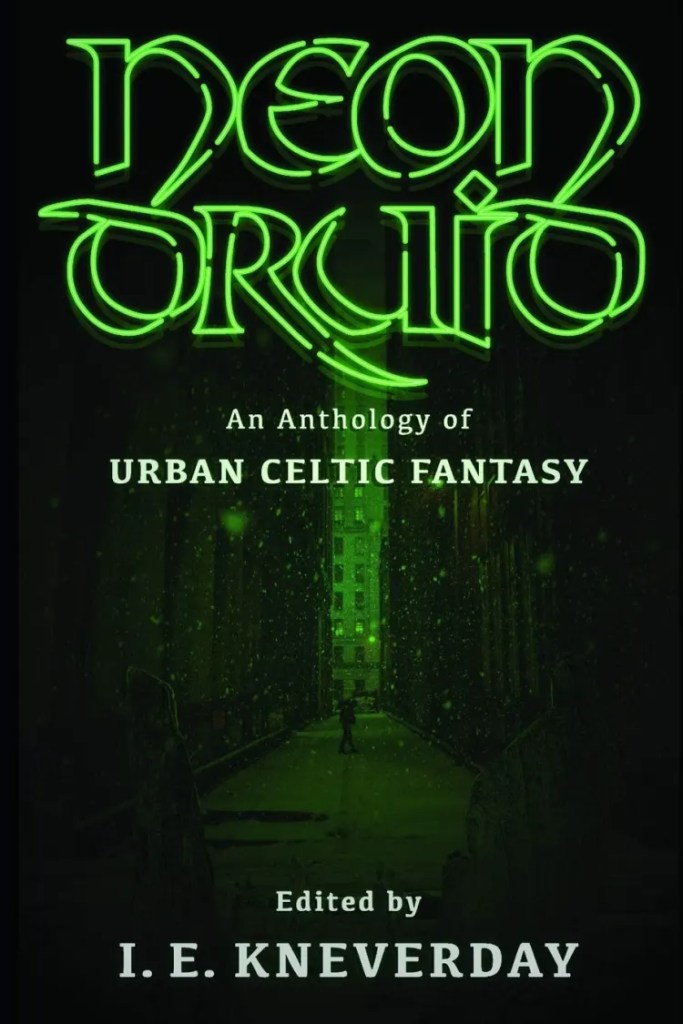
“A thrilling romp through pubs, mythology, and alleyways. NEON DRUID is such a fun, pulpy anthology of stories that embody Celtic fantasy and myth,” (Pyles of Books). Cross over into a world where the mischievous gods, goddesses, monsters, and heroes of Celtic mythology live among us, intermingling with unsuspecting mortals and stirring up mayhem in cities and towns on both sides of the Atlantic, from Limerick and Edinburgh to Montreal and Boston. Learn more…


Leave a Reply