
Folklore in Film is reader-supported. When you buy through links on our site, we may earn a small affiliate commission.
Did you know Steven Spielberg hired a screenwriter to “eviscerate” Peter Benchley’s original Jaws script?
That was Carl Gottlieb who, fittingly, played the editor of the Amity Gazette in the film in addition to serving as its script doctor.
Gottlieb famously removed the Hooper/Mrs. Brody affair.
And I think he had a good reason for doing so.
A reason that is rooted in folkloric archetypes.
(We’ll get into it.)
I’m I. E. Kneverday and at the end of this essay I will be grading 1975’s Jaws on its folklorical accuracy.
Along the way, we’ll learn about gods battling primordial sea monsters; the importance of striking said monsters in juuust the right spots; and, if we’re lucky, we’ll catch a couple of stripers and bring ‘em in for dinner.
Let’s take a look.
Pssst. You can watch a video adaptation of this essay right here. Text continues below.
The Carl Gottlieb School of Understanding Jaws
“The beauty [of Jaws as a story] is in the complex nature of the heroes.
“It’s this trio of Primal Man (Quint), Intellectual Man (Hooper) and Every Man (Brody).
One of them working alone couldn’t kill the shark but the three of them working together could.”
I didn’t write that.
That was Carl Gottlieb in a 2012 interview basically doing my job for me.
Thanks.
To recap: Gottlieb interprets Quint, the shark hunter; Hooper, the marine biologist; and Brody, the aquaphobic chief of police, as iterations of three archetypal figures.
The primal, intellectual, and every man, respectively.
Which in Freudian theory correspond to the id, superego, and ego.
The Heroic Trio in Jaws: Primal Man (Quint), Intellectual Man (Hooper), Every Man
Robert Shaw’s Quint is all id. He relies on instinct, first and foremost. He’s aggressive. Impulsive.
Whereas Richard Dreyfuss’s Hooper embodies the superego. He’s analytical. His actions dictated by his education; internalized rules.
That leaves Roy Scheider’s Brody, of course, as the ego.
Which results from the superego keeping the id in check.
It’s a melding of the brains and the brawn, if you will.
And if you think about Brody:
He doesn’t have a lot of brains or brawn.
Is Brody the Most (Below?) Average Everyman in Cinema History?
Not only is Brody less knowledgeable about their shared enemy than Hooper and less courageous in the face of that enemy than Quint, he’s also less knowledgeable than Quint and less courageous than Hooper.
Remember, Quint is a shark expert in his own right. Hooper willingly climbs into a cage.
“Cage goes in the water, you go in the water. Shark’s in the water. Our shark.”
In comparison to these two, Brody is painfully average.
Below average, even.
And that is his strength.
Brody has no preconceived notions of this great white shark being a “perfect engine,” or a “miracle of evolution.”
In his eyes, it is simply a monster that needs to be destroyed as quickly as possible.
Nor does he overthink the strategy or technology required to achieve this:
And I quote:
“Now. Now. Kill it, quick! Kill it! Now!”
At the same time, Brody wisely comes to realize that calling in reinforcements could expedite the extermination of the big, bad fish.
Thus, Brody is the one who urges Quint to radio in and get a bigger boat out there.
Which is a great idea!
And that’s what makes this film—and this archetypal structure—so great:
It is the everyman who solves the problem the smart guy can’t solve.
It is the everyman who delivers the final blow that the tough guy can’t deliver.
The Jaws / Star Wars Connection: Han is Quint, Obi-Wan is Hooper, Luke is Brody
Another example of this heroic/Freudian trifecta can be found in Star Wars, with Han Solo (primal), Obi-Wan Kenobi (intellectual), and Luke Skywalker (every man).
Han even has a big furry best friend, Chewbacca, as if to reiterate:
Yeah, I’m the wild one.
And like Quint, of course, Han is for hire.
He has a ship and a reputation and he refuses to help the intellectual and the every man unless they ante up.
Like Hooper, Old Ben Kenobi’s thinking is guided by internalized knowledge.
Granted, that knowledge pertains to a mystical force rather than oceanography and marine biology.
And Luke, don’t even get me started on that moisture farmboy.
It’s like George Lucas saw Jaws and thought:
What if Brody, the every man, was even more of a loser?
And lived on a desert planet with twin suns?
Space opera setting aside, A New Hope has the same third act climax as Jaws.
It’s the same.
The Every Man, who has been thrust into a different realm, be it outer space or out at sea, fires the perfect shot—some might say an impossible shot—thereby causing the big scary thing that had been killing everyone to explode.
Other Examples of the Heroic/Freudian Jaws Trio in Folklore & Film: LOTR, Arthurian Legend, Irish mythology, & Greco-Roman Mythology
You can find examples of this same archetypal trio across dozens if not hundreds of stories and storytelling traditions.
In The Lord of the Rings, Gimli, the cave-dwelling, axe-swinging dwarf, takes on the Primal Man mantle.
Legolas, the castle-dwelling archer Elf, represents the Intellectual Man.
While the wandering Aragorn a.k.a. Strider is the Every Man destined for greatness.
In the Matter of Britain, there’s the sinful warrior Lancelot as the Primal Man, the wizard/druid Merlin as the intellectual, and the young lad who pulls a sword out of a stone, Arthur, as the Every Man.
In Irish mythology (this one’s my favorite), there’s The Dagda, the father of the Tuatha Dé Danann, as the Primal Man.
He’s a big bearded dude with horsehide shoes who wields a wooden club the size of a tree.
The good of medicine, Dian Cecht, is the Intellectual Man.
He restores Nuada of the Silver Arm’s kingship by turning him into a cyborg.
Then there’s Lugh, the Irish god of many talents, whose skills range from combat to blacksmithing to music.
He combines the brains and brawn, thus he is our Every Man.
And like Luuuke Skywalker, Luuugh of the Long Arm delivers the final blow to his planet-incinerating enemy by way of a perfectly aimed projectile.
In Lugh’s case, this enemy is his grandfather, the monstrous Fomorian warlord, Balor of the Evil Eye.
Okay, but can we find an example of this archetypal trio in, say, Greek mythology?
Of course we can.
Poseidon is the wild one, stirring up storms on a whim. (The id.)
Hades is obsessed with rules. (The superego.)
Leaving Zeus, the ego, to hurl lightning bolts at their dad, the Titan Cronos.
Did I mention the Irish god Lugh possesses an enchanted spear known as the lightning spear?
It’s all connected.
But seriously though, it’s probably all connected, as a result of a shared Proto-Indo-European mythology that accompanied the Proto-Indo-European language.
But I digress.
Why Jaws Script Doctor Carl Gottlieb Removed the Hooper/Ellen Brody Affair
So as for why Gottlieb removed the Hooper/Mrs. Brody affair from the Jaws script…
…it was unnecessary.
These well-established archetypes are already in strong opposition to one another.
The hubris of Hooper and the naivete of Brody create a persistent tension between the two characters.
Deepening that conflict with an extramarital affair would have been, dare I say, going a bit overboard.
The Historical Inspiration Behind 1975’s Jaws
And look, before the Jaws superfans get on me about this (I’m looking at you Dan Murrell), I am well aware that the setup to this particular story—a killer shark terrorizing a quaint summer vacation spot—is rooted not in folklore but in history.
The Jersey Shore Shark Attacks of 1916
The Jersey Shore shark attacks of 1916 saw four people killed and one critically injured during a summer heat wave between July 1st and July 12th.
The thing is though:
Benchley denies that these infamous attacks inspired his 1974 novel, Jaws.
Instead, he has consistently pointed to another, more recent event.
“[I]n 1964, I read an item in a newspaper about a fisherman who harpooned a 4,500-pound great white shark off Long Island. I remember thinking at the time, Lord! What would happen if one of those monsters came into a resort community and wouldn’t go away?”
That fisherman was Montauk’s own Frank Mundus, a local shark-hunting legend turned shark conservationist.
So like any good story, be it modern, medieval, or ancient, there is a kernel of historicity buried deep within.
And yet, Jaws is constructed like a myth.
Classifying Jaws by Folklore Motif: An Aquatic Monster Myth Made Movie
Going by Stith Thompson’s Motif-Index of Folk-Literature, Jaws feels like your classic Motif number A162.2.
“Combat between god of light and dragon of ocean.”
Examples of said ocean dragons include Tiamat from Mesopotamian mythology.
Apophis from Egyptian mythology.
The Midgard Serpent Jörmungandr, from Norse mythology.
The dragon in the Old English Beowulf saga.
And I’d be remiss not to mention that the aforementioned Irish eye-beam-monster Balor inhabits a small rocky island off Ireland’s coast and, as a Fomorian, is thought to have originated beneath the sea.
In Jaws, a great white shark has taken on the role of the “dragon of ocean.”
It’s an existential threat to Amity Island.
A killing machine.
Chief Brody, meanwhile, is the film’s god of light.
Think about it:
He is the one bestowed with the power and authority to restore order.
And ultimately, after many trials and tribulations, he does restore order.
The Vulnerable Spot (Achilles’ Heel) Folklore Motif in Norse mythology, The Hobbit, & Irish Mythology
Now, within this “god kills the water-dragon” folklore genre, there is a subgenre in which said water-dragon has a vulnerable spot.
It’s essentially the Achilles Heel or “invulnerability except in one spot” motif, Z311.
One of the most well-known examples of this motif can be found in Fafnir, the Germanic dwarf turned serpent who is nearly indestructible.
Nearly.
The hero Sigurd defeats the monster by digging and hiding in a trench, thereby giving him access to Fafnir’s one vulnerable spot.
His soft underbelly.
This myth would go on to inspire J. R. R. Tolkien’s dragon Smaug in The Hobbit, who notoriously has one little gap in his scales and gemstone crust where a projectile could (and does) fit.
In Irish mythology, Balor of the Evil Eye’s eye is its one vulnerable spot.
Which gives the motif an added layer of significance, as the eye is both the source of the monster’s power and the source of its demise.
Similarly, with the shark in Jaws, the shark’s mouth is its one vulnerable spot.
Thus, the very mechanism of its destructive force, its jaws, becomes the source of its destruction.
A Jaws/Hydra Connection? The Sequential Defeat Motif in the Twelve Labors of Heracles
I’m also tempted to draw a comparison here between the shark in Jaws and the aquatic multiheaded monster the Hydra of Greco-Roman mythology.
Does the Jaws shark have multiple heads?
No. Well, I mean behind-the-scenes…No, that’s cheating.
Can the Jaws shark exponentially regenerate its severed heads?
No, that’s not what I’m—
Do the heroes who defeat the Jaws shark use a sequential strategy to gradually weaken the monster, thus overcoming its seeming invincibility through logic and persistence?
That’s it.
For his second of twelve labors, Heracles a.k.a. Hercules famously defeats the Hydra by having his sidekick Iolaus cauterize the wounds made by each successive head-lopping strike.
Thus preventing the monster from sprouting two new heads in the place each one that Heracle’s removes.
In Jaws, we have the barrels.
Brody: “I don’t believe it! Two barrels, and he’s going down again!”
Quint: “I tell you he can’t with three barrels on him. Not with three, he can’t!”
The barrels, delivered sequentially, give us a visual scoreboard of sorts.
The more harpoons and barrels the crew of the Orca deploy, the more likely it becomes that they’ll succeed.
Similarly, the more Hydra heads and sauterized neck stumps that Heracles and Iolaus tally up, the more likely it becomes that they’ll succeed.
What’s more, both victories require technology.
And a reliance on scientific principles.
Positive buoyancy in Jaws.
Tissue cauterization in the Labors of Heracles.
Am I reaching?
Of course I’m reaching.
That’s what I do here.
A Jaws/Moby-Dick Connection? It’s more of a Captain Ahab/Quint Connection
Yes, Quint is, in part, a Captain Ahab-esque figure.
In Herman Melville’s 1851 novel Moby-Dick, an albino sperm whale disfigured Ahab on an earlier expedition thus the one-legged captain dedicates his life to hunting the white whale.
Similarly, Quint’s backstory, as revealed in his famed USS Indianapolis speech, involves the loss of friends and injury at the jaws of sharks.
Thus, he dedicates his life to hunting them.
Of course, as many of you likely already know, Moby-Dick in turn was based on a historical whale attack.
In 1820, the whaling ship Essex was attacked and sunk by a huge sperm whale in the Pacific. There’s a book about it. And a movie. Both titled: In the Heart of the Sea.
That ship had sailed out of Nantucket, which is the island next to Martha’s Vineyard, where Jaws was filmed.
Speaking of Martha’s Vineyard…
What’s the Origin of the Spanish Ladies Song Quint Sings in Jaws?
…when Quint sings the Spanish ladies song; he doesn’t sing that they’ve received orders for to sail back to Old England, as per the original, which is what Robert Shaw himself sang some 18 years earlier when he performed the song in the 1957 television series The Buccaneers.
No, in Jaws, he switches the lyrics to Boston.
Which implies he is singing a “Yankee Whalermen” variation of the sea shanty.
A variation that includes the chorus:
“We’ll rant and we’ll roar Like true Yankee Whalermen,
We’ll rant and we’ll roar on deck and below,
Until we sight Gayhead Off old Martha’s Vineyard.”
Thus, even this folk song in Jaws is accurate to the film’s fictional location and history. If that makes sense.
Folklorical Accuracy Grade for Jaws (1975)
For its folklorical accuracy grade, I’m giving Jaws…an A+.
Thanks for reading.
Fan of folk horror?
You might be interested in my short film Samhain, available over on the Irish Myths channel.
More the reading type?
Check out…
Neon Druid: An Anthology of Urban Celtic Fantasy
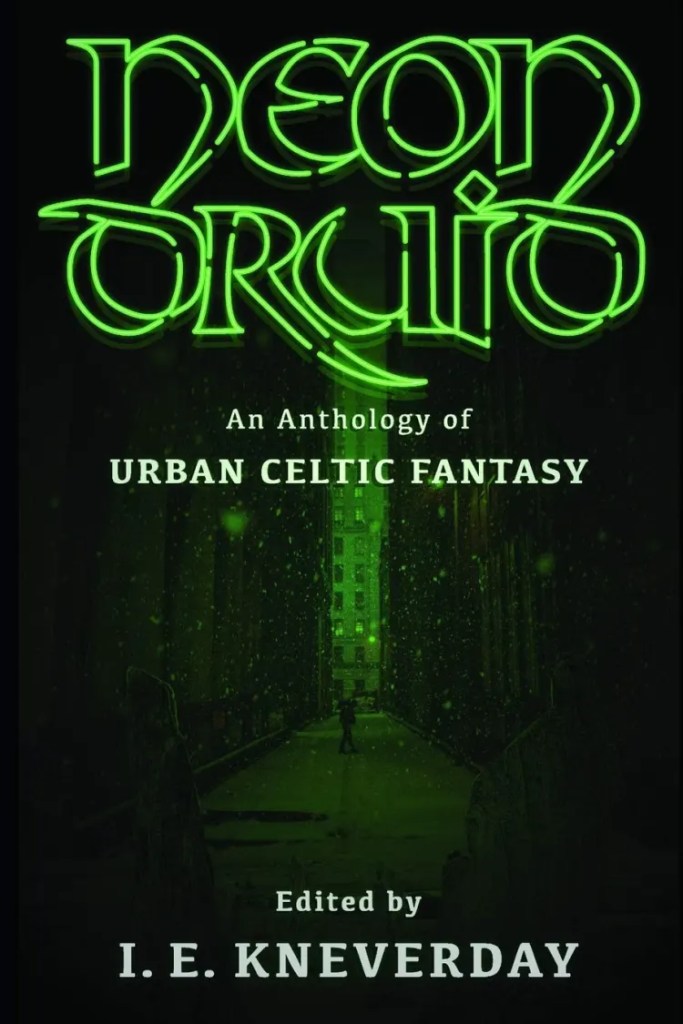
“A thrilling romp through pubs, mythology, and alleyways. NEON DRUID is such a fun, pulpy anthology of stories that embody Celtic fantasy and myth,” (Pyles of Books). Cross over into a world where the mischievous gods, goddesses, monsters, and heroes of Celtic mythology live among us, intermingling with unsuspecting mortals and stirring up mayhem in cities and towns on both sides of the Atlantic, from Limerick and Edinburgh to Montreal and Boston. Learn more…
Samhain in Your Pocket

Perhaps the most important holiday on the ancient Celtic calendar, Samhain marks the end of summer and the beginning of a new pastoral year. It is a liminal time—a time when the forces of light and darkness, warmth and cold, growth and blight, are in conflict. A time when the barrier between the land of the living and the land of the dead is at its thinnest. A time when all manner of spirits and demons are wont to cross over from the Celtic Otherworld. Learn more…
Irish Monsters in Your Pocket

In the Ireland of myth and legend, “spooky season” is every season. Spirits roam the countryside, hovering above the bogs. Werewolves lope through forests under full moons. Dragons lurk beneath the waves. Granted, there’s no denying that Samhain (Halloween’s Celtic predecessor) tends to bring out some of the island’s biggest, baddest monsters. Prepare yourself for (educational) encounters with Irish cryptids, demons, ghouls, goblins, and other supernatural beings. Learn more…
 Folklore in Film
Leave a comment