
Folklore in Film is reader-supported. When you buy through links on our site, we may earn a small affiliate commission.
The greatest trick Robert Eggers ever pulled was marketing Nosferatu as a vampire movie…
When it is so obviously a movie about a w****.
Yeah, another one.
I’m I. E. Kneverday and at the end of this video I will be grading 2024’s Nosferatu on its folklorical accuracy.
Along the way, we’ll learn about an Egyptian goddess, lilacs, sylphs, seven-pointed stars, demons, and, naturally (supernaturally?) cats.
Let’s take a look.
Pssst. You can watch a video adaptation of this essay right here. Text continues below.
My Theory: Every Robert Eggers Movie Features a Witch
Every Robert Eggers movie features a witch.
I won’t die on this hill but I will kneel on it and scream.
There 2015’s The VVitch.
That one’s obvious.
2019’s The Lighthouse?
Mermaid witch.
2022’s The Northman?
Bjork witch.
And Anya Taylor-Joy’s Olga is basically a white witch as well.
2024’s Nosferatu?
Here, at last, we find a modern witch.
Yes, the film is set in 1838.
But when we compare Lily-Rose Depp’s Ellen Hutter to the rest of Robert Eggers’ witches gallery, Ellen is the only one who lives in an urban center.
This was a big departure from Robert Eggers’ The VVitch and The Lighthouse especially, where isolation is an essential component both of those stories.
Here, we have a woman with demon-summoning abilities who isn’t piddling around with dark magic out in the woods somewhere.
She’s in London.
Sorry, Wisburg.
And her supernatural actions, or desires, I suppose, have dangerous repercussions not only for herself and for her husband, but for friends and perfect strangers as well.
Fortunately for humanity, as Willem Dafoe’s Professor Albin Eberhart von Franz explains, Ellen has the power to stop the vampiric plague spreading throughout the town.
And I quote:
“In heathen times, you might have been a great priestess of Isis. Yet, in this strange and modern world, your purpose is of greater worth. You are our salvation.”
Sooo the heathen times would have been better for Ellen? But her life is worth more now?
Says the dude coercing her into sacrificing herself to a bloodthirsty demon.
Worse things have been done to witches, of course, historically speaking.
(Says the guy from Massachusetts….me)
Does Ellen in Nosferatu Have a Connection to the Egyptian Goddess Isis?
Now, for those of you who disagree with my initial premise: that Ellen in Nosferatu is a witch…
Consider Professor von Franz’s reference to Ellen serving as a priestess in the cult of the Egyptian goddess Isis.
Isis is a goddess of magic, healing, marriage, and protection, who, in Egyptian mythology, uses her spells to germinate seeds and bring forth fruit.
She also happens to be the daughter of Geb, the earth god, and Nut, the sky goddess.
Remember the sky goddess thing for later.
And if English Egyptologist E. A. Wallis Budge’s 1885 book The Dwellers on the Nile is to be trusted, which, in general it shouldn’t be but in this case I’ve found some corroboration:
“The festivals and processions of Isis were everywhere most popular, and were enjoyed by learned and unlearned alike. In fact, the Isis-play…was acted annually in November.”
This play recreates Isis putting her dead and dismembered brother/husband Osiris back together again, resurrecting him and producing for him an heir: Horus.
The Eve of Szent András (St. Andrew’s Eve) in Nosferatu Explained
Speaking of November ceremonies that feature feminine figures wielding the power of life and death.
We see that in the movie.
With the woman on the white horse and the staking of the body.
In Eggers’ script (and in the movie’s extended cut), Bill Skarsgård’s Count Orlok actually explains what was going on here:
“Yesternight was but the eve of their Szent András. Our common people say it is the darkest witching night when Devil’s magic bids the wolf to speak with tongues of men, and every nightmare freely treads upon this earth, ascendent from the torturous grave.”
Nice.
And thanks to Orlok’s explanation, we know exactly when Nicholas Hoult’s Thomas Hutter arrives in Transylvania:
November 29th.
That is the Eve of Szent András, or, in English, St. Andrew’s Eve.
In Eastern Europe, St. Andrew’s Eve, as Orlok noted, has long been associated with witchcraft and divination.
So its inclusion here could perhaps be another hint toward our primary protagonist, Ellen, being a witch.
Or maybe it’s a hint toward a different character’s witchiness.
We’ll get into it.
Orlok’s Witchy Description of Ellen: Is It Accurate, Gaslighting, or Both?
Regardless, in Orlok’s description of Ellen, he directly accuses her of being a non-human enchantress.
And he packages this accusation in your classic DARVO—Deny, Attack, and Reverse Victim and Offender—manipulation tactic.
Just look at the way this bloodsucker, this literal vampire, flips the script on Ellen.
“It is not me. (Deny.) It is your nature. Love is inferior to you. I told you, you are not of human kind… (Attack) O’er centuries, a loathsome beast I lay within the darkest pit ‘til you did wake me, enchantress, and stirred me from my grave. You are my affliction.” (Reverse Victim and Offender)
Of course, if we presume Orlok is engaging in gaslighting here, it’s hard to trust what he’s saying about Ellen being “not of human kind,” and an “enchantress.”
Fortunately for us, those aren’t the only intriguing labels applied to Ellen.
Simon McBurney’s Herr Knock calls her:
“A nonpareil…Almost a sylph.”
Let me tackle those in order:
What Is a Nonpareil?
Calling Ellen a nonpareil makes for a fun double-entendre.
On the one hand, a nonpareil is a person who has no equal in…something.
In the script, Eggers specifies that Knock calls Ellen a “nonpareil of beauty.”
But by dropping that “of beauty” at the end, the character is able to conjure the second meaning of nonpareil, which is a chocolate disc covered in tiny little sprinkles. (The word can also refer to the sprinkles themselves.)
Get it?
Ellen is the candy. And Orlok wants to…
Nom nom nom.
What Is a Sylph?
The term sylph, meanwhile, has implications that are much more pertinent to our present topic.
A sylph is an elemental spirit, particularly one associated with the air.
This according to the Swiss alchemist and philosopher, Paracelsus.
In his posthumously published 1566 work, A Book on Nymphs, Sylphs, Pygmies, and Salamanders, and on the Other Spirits, Paracelsus groups sylphs with other air-dwelling spirits, including what he calls sylvestres, or forest people.
Meet the Iele: Romanian Sylphs?
Romanian folklore, incidentally, features a character who fits pretty snuggly into Paracelsus’s elemental air spirit box as well.
Meet the iele, seductive female spirits who are known to inhabit both the sky and forests.
The American anthropologist, Walter Evans-Wentz, described them thusly in 1909:
“Among the Romanian peoples [there is] widespread belief in the Iele…
“These Iele wait at cross-roads and near dwellings, or at village fountains or in fields and woods, where they can best cast on men and women various maladies.
“Sometimes they fall in love with beautiful young men and women, and have on such occasions even been controlled by their mortal lovers.
“They are extremely fond of music and dancing, and many a shepherd with his pipes has been favoured by them, though they have their own music and songs too.”
First off: Casting maladies on people? Classic witch behavior.
Second off: being “controlled by their mortal lovers.”
That is the cause of—and solution to—Ellen’s demon affliction.
While Ellen reaches out into the darkness seeking to cure her loneliness, the Nosferatu responds by seeking to control her.
By putting herself under Thomas’s control, through marriage, Ellen is able psychically/emotionally shield herself from the nosferatu’s influence.
After, she cites being with Thomas as what’s keeping her darker impulses at bay.
And as soon as he’s gone: she lets the wrong one in, again.
Ellen’s “Dancing” in Nosferatu: The Japanese Butoh (Dance of Darkness) Explained
And that leads to dancing.
Specifically, the Butoh or “dance of darkness.”
Did anyone have avante garde Japanese dance theater on their stuff-I’m-going-to-talk-about-in-this-video bingo guards?
Didn’t think so.
To clarify:
Actor Lily-Rose Depp studied this 1960s-era Japanese art form, known for its grotesque imagery, to inform certain aspects of her performance.
I’m not saying Ellen in-universe somehow traveled to the future and learned it, although, hey, witches be magic.
Ah, but now there’s a bustle in my lilac bush.
Which reminds me:
The Significance of Lilacs in Nosferatu (2024): Flex Your Floral Vocabulary
On rewatch, I really enjoyed how Eggers used lilacs in place of garlic.
Yes garlic makes a few appearances, but visually Eggers presents us with lilacs over and over.
He bookends the movie with them:
Thomas giving Ellen a bouquet of lilacs at the beginning; Professor von Franz placing them around Ellen’s bed at the end.
And then you got folks smellin’ ‘em and talking about smellin’ em’.
What’s the deal with the lilacs?
I cracked open the ole 1884 book Plant Lore, Legends, and Lyrics by Richard Folkard, which includes two interpretations of the flower.
According to The Dictionary of Flowers, lilacs represent the First Emotions of Love.
Fitting.
But according to the Ancient Floral Vocabulary, lilacs represent First Troubles of Love.
Very fitting indeed.
Granted, for a film set in 1838 Germany, I’m not sure Eggers would have relied on the so-called Victorian “Language of Flowers” for inspiration.
Instead, I think he went with an older view of lilacs, which is that, on account of their strong fragrance, they were a popular funerary flower across Europe.
Including Eastern Europe.
Those associations with funerary traditions would lead to expansion of lilac lore.
Thus, today, modern witches promote and sometimes sell lilac, citing that the flower is good for psychic awareness, letting go, and mourning.
The Seven-Pointed Star (Heptagram) in Nosferatu Explained
As for the seven-pointed star or heptagram we see in Nosferatu:
Back in 1898, theologian J. A. Regester wrote:
“The seven-pointed star has reference, it is said, to St. John’s words in the Revelation:
“I beheld, and, lo, in the midst of the throne and of the four beasts, and in the midst of the elders, stood a Lamb as it had been slain, having seven horns and seven eyes, which are the seven Spirits of God sent forth into all the earth.”
In 1912, the astrologist Sepharial called the seven-pointed star the “Star of the Universe.”
Defining it as “a star of seven points being drawn, the planetary bodies, the Sun and Moon, are placed round it in the Chaldean order, the Sun being at the highest point.”
Today, in neopagan circles, the seven-pointed star is most commonly referred to as an Elven Star or Fairy Star.
Some believe the symbol allows for access to or communication with the fairy realm or otherworld.
While others turn to the fairy star for protection or meditation.
In Nosferatu, Herr Knock and Orlok use it as a telephone.
The implication perhaps being that both parties are tapping into this hidden realm—a magic internet, if you will.
What Is a Solomonar? / What Are the Solomonari? Is Count Orlok a Solomonar? The Romanian Wizards Explained
And if you’re wondering how Orlok knows how to do all this.
How, as a vampire, is he able to get this psychic network set up?
Just listen to this little novice translate for the abbess as she describes Orlok’s whole deal:
“A black enchanter he was in life. Şolomanari. The Devil preserved his soul that his corpse may walk again in blaspheme.”
A Şolomanar s a wizard in Romanian mythology.
Specifically, a wizard who rides a dragon.
But the idea here is that Orlok is not just a vampire or nosferatu—he was a freaking witch before that.
And as punishment for his dark magic, the Devil is keeping him alive.
Who Is Count Orlok Based on? Dracula. Who Is Dracula Based On? The Irish Vampire Abhartach
This iteration of Orlok somehow hues closer not to Bram Stoker’s Dracula, whom the character was directly based on, but to Irish folklore’s Abhartach, whom Dracula was based on.
See, Abhartach is more than just a bloodthirsty dwarf tyrant chieftain. He is also a magician. Or wizard.
And the only way to stop him is to stab him in the heart with a wooden sword and bury him upside.
FYI: There’s an Irish movie about Abhartach called Boys from County Hell.
And in my video on Sinners, I theorized that the legendary Irish vampire helped inspire the villainous Remmick.
But I digress.
I have a hunch that Robert Eggers turned to a particular book when doing research for Nosferatu’s Abraham Van Helsing-esque character, the aforementioned Professor Albin Eberhart von Franz.
The character of Von Franz was largely an Eggers invention; he does not appear in the 1922 Nosferatu.
Although it should be noted that the German actor Hardy von Francois played an uncredited role as a hospital doctor in that earlier film.
And while we’re on the subject of the ole ‘22 Nosferatu cast and crew, I’d be remiss not to mention that the film’s production designer was a one Mr. Albin Grau.
How Robert Eggers Created Von Franz, the Swiss Demonologist/Van Helsing Doppleganger
Albin Grau was a German architect, artist, and—get this—practicing occultist who, according to Eggers, “probably did believe in the existence of vampires or psychic vampires.”
So when coming up with his Albin Eberhart von Franz character, Eggers tried to read and incorporate the same stuff Albin Grau had been reading.
The Demonology Book at the Heart of 2024’s Nosferatu
And I am 100% certain that included the 17th-century grimoire, or book of spells, The Lesser Key of Solomon, a.k.a. the Lemegeton.
The Lemegeton famously, or infamously, contains the Ars Goetia—instructions for summoning demons and evil spirits.
Remember when von Franz says:
“In the name of Jehovah and by the power and dignity of these three Names Tetragrammaton, Anexhexeton, Primematum, cast thee, O thou disobedient Spirit Nosferatu into the Lake of Fire, there to remain until the Day of Doom and not to be remembered before the face of God, who shall come to judge the quick and the dead and the world with fire.”
That’s a nearly verbatim excerpt from the Ars Goetia’s Greater Curse, with von Franz replacing the name placeholder, which coincidentally is the capital letter N., with Nosferatu.
Furthermore, when von Franz says:
“I command you, hearken to my voice. By the protection of Chamuel, Haniel, and Zadkiel, impart your speech unto me.”
Well, I mean, there he’s shouting out three archangels, who, according to angelology, represent love, joy, and kindness, respectively.
Still, it’s noteworthy that the names of all three of these archangels also appear in the Ars Goetia.
Who Are the Three Demons Invoked in Nosferatu? Eligos, Orabas, and Asmoday Explained
But of course, von Franz’s next three namedrops in the scene are the most intriguing of all.
“In the name of Eligos, Orabas, and Asmoday, impart your speech unto me!”
At this point, von Franz has gone full dark magic mode.
Because Eligos, Orabas, and Asmoday are demons.
Our dude is invoking demons, all three of whom are well-documented and defined in the Ars Goetia’s list of chief spirits.
And I quote:
“Eligos.—The Fifteenth Spirit in Order is Eligos, a Great Duke, and appeareth in the form of a goodly Knight, carrying a Lance, an Ensign, and a Serpent. He discovereth hidden things, and knoweth things to come; and of Wars, and how the Soldiers will or shall meet. He causeth the Love of Lords and Great Persons. He governeth 60 Legions of Spirits.”
“Orobas.—The Fifty-fifth Spirit is Orobas. He is a great and Mighty Prince, appearing at first like a Horse; but after the command of the Exorcist he putteth on the Image of a Man. His Office is to discover all things Past, Present, and to Come; also to give Dignities, and Prelacies, and the Favour of Friends and of Foes. He giveth True Answers of Divinity, and of the Creation of the World. He is very faithful unto the Exorcist, and will not suffer him to be tempted of any Spirit. He governeth 20 Legions of Spirits.”
“Asmoday.—The Thirty-second Spirit is Asmoday, or Asmodai. He is a Great King, Strong, and Powerful. He appeareth with Three Heads, whereof the first is like a Bull, the second like a Man, and the third like a Ram; he hath also the tail of a Serpent, and from his mouth issue Flames of Fire. His Feet are webbed like those of a Goose. He sitteth upon an Infernal Dragon, and beareth in his hand a Lance with a Banner. He giveth the Ring of Virtues; he teacheth the Arts of Arithmetic, Astronomy, Geometry, and all handicrafts absolutely. He giveth true and full answers unto thy demands. He maketh one Invincible. He showeth the place where Treasures lie, and guardeth it. He, amongst the Legions of Amaymon governeth 72 Legions of Spirits Inferior.
Okay, I know that’s a lot of demonology to digest.
But let’s back up to that part we just heard about the demon Asmoday sitting on a dragon.
Remember: one of the locals refers to Orlok as Şolomanari, which in Romanian mythology is a wizard who rides…a dragon.
I don’t think it makes sense that Orlok is this demon.
But maybe back when he was doing witchy stuff he summoned the dragon-riding demon Asmoday and hence became associated with dragons himself.
That would really give some extra folkloric significance to the name Dracula, which means “Son of the Dragon.”
Also, the notion that Asmoday can “maketh one Invincible,” is perhaps the very thing that caused the Devil to curse Orlok.
After taking notice of Orlok calling on a demon to make him invincible, the Devil maybe thought:
Oh yeah, you want to live forever? I’m gonna make you a walking corpse.
Am I reaching?
Honestly, not that much this time I don’t think.
Another little folkloric detail I enjoyed was Herr Knock’s Codex of Secrets.
Although Count Orlok was no doubt the book’s original owner.
The Codex is a likely nod to the aforementioned Ars Goetia and the broader Lemegeton.
The Conception of Merlin Connection in Herr Knock’s Codex of Secrets
Buuut that illustration of the Nosferatu on top of that woman?
That reminded me immediately of the “Conception of Merlin,” an illustration from a French 15th-century Lancelot-Grail Cycle manuscript.
It depicts Merlin’s mom and a demon, specifically an incubus, and…that’s all I have to say about that.
Speed round:
Bram Stoker used the term nosferatu in his 1897 novel Dracula precisely (1…2…) two times.
The Etymology of Nosferatu
Etymologically, this vampire synonym might have a Greek origin:
Nosophoros: “disease-bearing.”
That certainly fits.
Then again, Nosferatu might also stem from the Romanian word nesuferitul, meaning “the insufferable one.”
Which is *chef’s kiss.*
Regardless, at some point in 1922, director F. W. Murnau and screenwriter Henrik Galeen decided that they wouldn’t be acquiring the rights to Dracula from the Stoker estate for their silent film adaptation of the novel.
Thus, they set it six decades earlier and renamed the characters and the locations, gearing them toward a German audience.
Finally, the filmmakers dubbed their creation: Nosferatu: A Symphony of Horror.
The Making and Remaking of Nosferatu: Movie Folklore
And yes, there is another film, 2000’s Shadow of the Vampire, which fictionalizes and sensationalizes the events of the making of that 1922 film.
And notably in the Shadow of the Vampire, Willem Dafoe plays a heavily fictionalized version of actor Max Schreck who in turn played Count Orlock in the original Nosferatu.
The Significance of Ellen’s Cat Greta in Nosferatu
Speaking of callbacks to previous films, Ellen’s cat in the 2024 version of Nosferatu is named Greta.
A reference to Greta Schröder, who played Ellen in the 1922 film.
And it probably goes without saying that in popular culture, cats have become the favorite pet companions of witches.
But the inclusion of Greta the cat goes even deeper than that.
Because the nosferatu is a plague.
Literally he shows up in town with a bunch of rats.
And it’s widely believed that the Bubonic plague, which devastated Europe in the 14th-century, was spread by fleas on rats.
Cats kill rats.
And thus, if you were a cat lady, or cat gentleman, in the Middle Ages, you were less likely to get infected.
Having an army of cats constantly prowling your home meant flea-ridden rats weren’t getting in.
But people at the time weren’t able to put all of these pieces together.
So when they saw, for example, an old cat lady doing perfectly fine while everyone around her was dying of plague—they assumed some dark magic must have been afoot and labeled her a witch.
Hence, the association between cats and witches.
Folklorical Accuracy Grade for Nosferatu (2024)
As for Nosferatu’s folklorical accuracy score…
I don’t see any way around it.
I have to give this one an A+.
Thanks for reading.
Fan of folk horror?
You might be interested in my short film Samhain, available over on the Irish Myths channel.
More the reading type?
Check out…
Neon Druid: An Anthology of Urban Celtic Fantasy
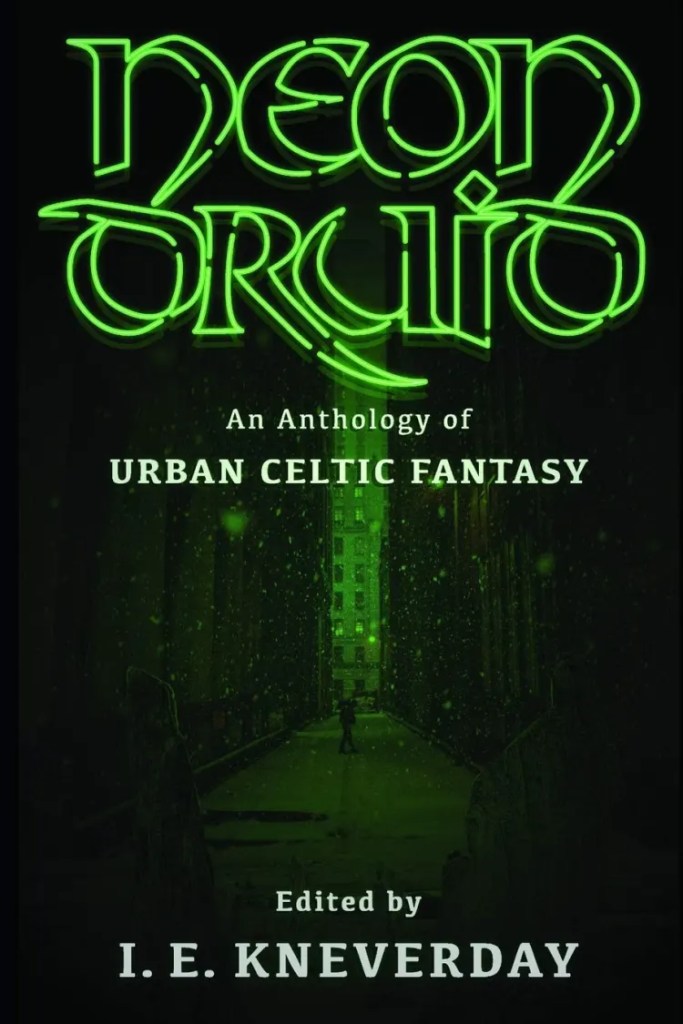
“A thrilling romp through pubs, mythology, and alleyways. NEON DRUID is such a fun, pulpy anthology of stories that embody Celtic fantasy and myth,” (Pyles of Books). Cross over into a world where the mischievous gods, goddesses, monsters, and heroes of Celtic mythology live among us, intermingling with unsuspecting mortals and stirring up mayhem in cities and towns on both sides of the Atlantic, from Limerick and Edinburgh to Montreal and Boston. Learn more…


Leave a Reply