
Folklore in Film is reader-supported. When you buy through links on our site, we may earn a small affiliate commission.
Did Damian McCarthy stick to the source material when writing and directing his latest folk horror masterpiece?
Or are the supernatural elements we see onscreen just a bunch of Hokum?
I’m I. E. Kneverday.
And at the end of this essay, I will be grading 2026’s Hokum on its folklorical accuracy.
I’m going deep.
Real deep.
Into a supposedly haunted Irish castle/hotel that may have inspired the film’s fictional Bilberry Woods Hotel.
And deep into the lore behind the cailleach, or “witch.”
Although, that word doesn’t actually mean “witch.”
We’ll get into it.
And along the way, we’ll learn about the significance of certain furry animals, about the Celtic wild man of the woods folklore motif, and I’ll do my best to decipher some Ogham script.
Let’s take a look.
Pssst. You can watch a video adaptation of this essay right here. Text continues below.
Another Adam Scott Creature Feature? The Hokum—Krampus Connection
Fado, fado. Long, long ago.
Adam Scott was in a much worse horror movie called Krampus, which I covered on this channel.
But weirdly, Hokum and Krampus have a lot in common.
Folkloric figures with evil intent crossing over into our reality on holidays to capture and shackle people and drag them to the underworld?
Yeah that happens in both movies.
Damian McCarthy’s Signature: Humans Are the Real Villains, Not Ghosts, Witches, or Wooden People
But to be fair to Irish writer/director Damian McCarthy, Hokum unfolds like a mystery, and the drama at the center of the story is human drama.
Yes, the supernatural stuff is there, too.
But even without it, the characters would be dealing with some serious issues. To say the least.
And I love this aspect of McCarthy’s filmmaking.
We see it in 2024’s Oddity as well. (Yeah, that’s the same bell FYI.)
The real villains of McCarthy’s films are always revealed to be flesh-and-blood humans, not ghosts or witches or big ole wooden dudes.
That being said, the witch in Hokum who haunts the hotel’s honeymoon suite, certainly isn’t very nice.
The Witch in Hokum Explained: What Is a Cailleach in Irish Folklore?
The hotel’s owner refers to her as an old cailleach.
Which is a bit redundant because in Irish, cailleach literally means “old woman” or “hag.”
Although if you want to get technical, its original meaning was something like “the veiled one.”
Now, an important distinction is in order, because in Irish folklore, or Gaelic folklore I should say, because this applies to Scotland and the Isle of Man as well:
There’s a difference between THE capital “C” Cailleach, and a lowercase “c” cailleach.
THE Cailleach is a divine crone and goddess of winter.
And depending on the specific folktale you’re looking at, she can appear as an old woman fighting back spring, freezing the ground with a tap of her staff.
Or she can appear as an old woman gathering firewood to last her through the rest of winter.
So if you see her carrying a lot of wood, that’s a sign that there’s still a lot more winter weather ahead,
Or the Cailleach can appear as an old washerwoman stirring up whirlpools and winter tempests as she cleans her giant, snow-white kilt in the sea.
Do any of these Cailleach depictions resemble the cailleach who appears in Hokum?
Apart from the old woman part, no not really.
And that makes sense.
Because this is a lowercase “c” cailleach.
And colloquially, a lowercase “c” cailleach doesn’t refer to the goddess, but to a witch.
Any old witch. Literally.
Of course, in this case we’re dealing with a local witch who moved from the deep woods into the basement of a hotel, the ground-level entrance to which was conveniently lost.
But thanks to a dumbwaiter, the witch is able to travel from the hotel’s basement up to the honeymoon suite.
And right off the miniature brass golf club (or is that a hurley?), let me just say that while this setup might sound convoluted, it works.
Not just narratively but folklorically as well.
Was the Witch/Cailleach in Hokum Part of the Tuatha Dé Danann?
Because according to Irish folklore, Ireland’s most powerful supernatural beings, the Tuatha Dé Danann, commonly thought of as the Irish gods, are driven underground by the invading Milesians.
The Milesians represent the arrival of Gaelic a.k.a. Goidelic Celtic culture in Ireland, the ancestors of the island’s modern human population.
And the gods they supplant inevitably shrink both literally and figuratively in the popular imagination until they turn into the people of the hills, or aes sidhe, otherwise known as fairies.
The Truth About Irish Fairies (The Aes Sídhe, the Banshee)
And look I know what you’re thinking: this is a witch, not a fairy.
To which I would say:
Irish fairies, as depicted in folklore, aren’t cute little winged pixies.
They trick, capture, kill, and otherwise scare the peat out people all the time.
Case in point:
The banshee, that shrieking she-devil who announces impending death, is technically a fairy.
Her name, bean sidhe, means woman of the hills.
So it’s possible Hokum’s horrifying hag has a similar backstory.
The fact that Adam Scott’s character, best-selling author Ohm Bauman, scatters his parents’ ashes at the foot of a Redwood tree hints at the idea that this land has been desecrated or despoiled.
Because what heck is that giant Coast Redwood, which is native to California and Oregon, doing in the middle of an Irish forest?
Redwood Trees in Ireland? The Significance of Hokum’s Redwood Explained
Turns out there are multiple pockets of Redwoods in Ireland, courtesy of Irish immigrants who brought seeds or seedlings back with them in the 1800s after going to the States to dig ditches, pull switches, and dodge hitches. You know, working on the railway.
But the implication is that when this American tree is planted and the plot nearby is cleared for the hotel, the forest’s original inhabitant, the local cailleach, is forced out of her woods and driven underground.
And maybe that’s why she hates American tourists so much!
I can’t think of any other reasons why that would be the case.
Why Does the Witch in Hokum Have Chains? (Chains in Irish Folklore: the Dullahan, the Púca)
As for the cailleach’s chains…
Those are a popular accessory in Irish folklore.
Behold, exhibit A:
The Irish headless horseman, the Dullahan, transporter of the recently deceased who can be found following close behind the banshee as she makes her rounds.
The Dullahan is sometimes wrapped in a chain or has one dragging behind his horse, making spoooooky noises.
Meanwhile, the hill-dwelling, shapeshifting púca, when in his horse form, is depicted with chains hanging off him.
And notably the púca is famous for abducting drunk people.
In one folk tale, a púca abducts a (lousy) piper and takes him inside a mountain to a banshee feast and he’s forced to confront the ghost of someone he killed.
Granted, that someone is a goose that he ate.
Still.
Hokum’s Samhain Setting (And Why It Isn’t Emphasized)
Oh, and did I mention that the púca famously comes out on Samhain, which is the Gaelic harvest festival that helped pave the way for Halloween?
Granted, Hokum’s whole Halloween connection sort of gets swept under the rug.
Probably because McCarthy realized the Samhain thing has been done to death in movies including Halloween II, Halloween III and Halloween (1, 2, 3, 4, 5…) 6, and more recently in the shows Bodkin and Chilling Adventures of Sabrina.
And don’t even get me started on those Yank YouTubers and their art films.
And building off of this point, I’d argue Hokum is more than an Irish folk horror movie, because McCarthy isn’t just pulling from Irish folklore.
Icelandic Folklore in Hokum? The Witch in the Stone Boat
Indeed, I am convinced the writer/director must have been familiar with the Icelandic folktale, The Witch in the Stone Boat.
The folktale features a shapeshifting troll-wife/witch snatching a human queen, sending her to the underworld, and taking over her life. Her husband, the king. Their child.
But then one night in the palace nursery the floorboards fly up in the air and the real queen appears to her child as a ghost with “an iron belt round her waist, to which was fastened an iron chain that went down into the ground.”
The ghost-queen puts on this show three nights in a row, but on that third night:
“The King saw at once that it was his own Queen, and immediately hewed asunder the iron chain that was fastened to the belt. This was followed by such noises and crashings down in the earth that all the King’s Palace shook, so that no one expected anything else than to see every bit of it shaken to pieces.”
It’s then revealed that the entrance to the underworld, where the queen had been imprisoned, was directly beneath the palace!
And the shaking was a giant on the other end of the chain falling when it was cut.
No, it’s not a perfect parallel.
But there’s enough there to make one wonder.
And I’d be remiss not to mention that starting around the 8th century there was a significant cultural exchange going on between Iceland and Ireland.
Mostly in the form of Vikings kidnapping Gaelic women and bringing them to Iceland.
The late great Manchán Magan wrote a book about it.
All that being said, we could also chalk up the cailleach’s chains to McCarthy just having an affinity for chains.
Watch his first feature film Caveat and you’ll know what I mean.
And you’ll likely notice something else too:
Bunny/rabbit/hare imagery.
Nooow I understand why McCarthy set Hokum on Halloween:
He needed to get someone into a rabbit costume.
Hokum = The Irish Shining? Bilberry Woods Hotel = The Irish Overlook?
And this seems like a great time to state the obvious: yes, there are lots of nods to Stanley Kubrick’s The Shining packed into Hokum as well.
Psychologically unstable writer in a remote hotel. Don’t go in that room! (237) He’s in the room. What’s behind that curtain? He looks. And later, oh hey, there’s someone in a furry animal costume.
Having the Bilberry Woods Hotel catch on fire might even be a nod the ending Stephen King wrote in The Shining novel.
But I digress.
Hokum’s Furry Friends Explained: Rabbits/Hares, Goats, Jackasses/Donkeys
Rabbits and hare represent fertility, birth, and rebirth.
So putting the pregnant Fiona in that costume is especially poignant.
Of course, rabbits and hares are also commonly associated with witches.
We see it in medieval European folklore and later in New England folklore.
And yes the association can also be found in Irish folklore, where the hare is the more symbolically significant creature because it’s native to Ireland, whereas rabbits were introduced later.
For example, in one folktale, the famed poet Oisín, son of the famed hero Fionn mac Cumhaill, is out on a hunt when he (pwew!) hit a female hare with a throwing dart.
He follows the injured hare as it scurries underground beneath a sidhe, i.e., fairy mound.
And Oisín soon finds himself inside a huge subterranean hall.
And there, on a throne, sits a fairy woman with a dart in her leg.
As for the parking lot goats and that creepy kids’ TV show host Jack, who is not a rabbit but a literal jackass, or male donkey, those animals also act as the servants or familiars of witches in European folklore.
Making them solid choices for the small parts they play.
Even Jerry’s bottle full of special milk has a connection to witch lore and Irish witch lore in particular.
See, in ancient Ireland and much of Western Europe for that matter, dairy work was essential to survival.
Thus, spoiled milk or cheese was seen as a bad omen.
And if animals stopped producing milk, witches were often blamed.
Witches who, while taking the form of hares, would suckle the animals dry.
The Celtic Wild Man of the Woods Folklore Motif in Hokum
In addition to slugging back tainted milk, Jerry serves a very particular literary role in the film.
He is the Celtic Wild Man of the Woods.
That’s a folklore motif typified by a dude having a bit of a freak out and deciding to abandon civilization for the tranquility of the wilderness. Where he then has prophetic visions.
And while Merlin, that long-bearded wizard from Arthurian legend, may is the most popular example of a Celtic Wild Man, folklore offers many other examples, including the Welsh Myrrdin, the Scottish Lailoken, and the Irish Suibne Geilt, or Mad Sweeney.
But enough about silver-haired sylvan seers.
Because there’s one character I’ve hardly spoken about at all yet.
And I don’t mean Ohm Bauman, we’ll get to him.
I’m talking about the hotel.
Did This “Haunted” Irish Castle/Hotel Inspire Hokum’s Bilberry Woods Hotel?
To be clear, Hokum’s haunted rural Irish inn, the Bilberry Woods Hotel, doesn’t actually exist.
Interior scenes were mostly filmed at West Cork Film Studios on elaborately designed sets.
While some of the exterior shots we see are from the Liss Ard Estate in the town of Skibbereen in West Cork.
That’s where a lot of the actors were put up during filming.
None of them reported seeing any ghosts or witches or donkey people.
For my money, McCarthy’s primary inspiration for the Bilberry Woods Hotel and its haunted history was a castle in County Antrim, Northern Ireland.
Ballygally Castle.
Although now it’s the Ballygally Castle Hotel.
I’m trying to convince my family to go there for the winter holiday, but apparently they don’t want to have a Ballygally Christmas.
I’ll tell the story now.
So this Scotsman, Lord James Shaw, builds the castle in 1625.
But when his wife, Lady Isabella Shaw, has a daughter instead of a son, Lord Shaw imprisons his Lady in a small chamber at the top of the castle.
No food is given.
The cries of her baby echo in the turret above her.
Sooo she climbs out a window and tries to escape, accidentally falls to her death, becomes a spooky ghost, and now she spends her days wandering Ballygally Castle, knocking on doors searching for her daughter.
Or so the story goes.
It’s possible McCarthy was riffing on this ghost story when he came up with the idea of a hotel manager, Mal, locking up a lover in the hotel’s highest room after a dispute concerning an unwanted (from his perspective) addition to the family.
The Celtic Wild Woman of Ballygally Castle: Janet/Jean/Jane Park
But what makes this connection even more likely is that Ballygally Castle had its own wild man of the woods.
Only he was a she. A wild woman of the woods.
Also, she was more of a beach person.
To quote the Ballygally Castle’s official website:
“This elderly lady had spent all her life in the area and lived in a stone cabin with a seaweed roof next to the ocean. She survived on selling dulce (edible seaweed) during the summer months and Poor Law Relief in the winter and whatever she could scavenge from the beach. A tenuous and perilous existence but one she refused to give up.”
She sounds like a figure straight out of Irish folklore.
Only in this case, we know she existed because an Irish photographer, Robert Welch, snapped her picture before her death in 1894.
Dubbed Janet in the photo’s caption, the Ballgally Castle site identifies her as Jean Park. I’ve also seen it written as Jane Park.
Regardless, that’s her. (See photo in video!)
So technically, all of these Ballgally characters are historical.
And should therefore be discounted when I evaluate the film’s folklorical accuracy.
Then again, stories rooted in history often evolve into folklore.
I would argue, for example, that the reimagining or resurrection, if you will, of Lady Isabella Shaw as a ghost who haunts the castle in the present day has dragged that entire narrative into the realm of folklore.
What Hokum Got Wrong: Irish Folklore Book and Chalk Circles (The Hokum in Hokum)
And lest you think I’m bending over backwards in order to defend the folklorical integrity of this film because I’m such a huge fan, there are a couple things that I do consider… what’s the word…
Hokum.
Is the Irish Folklore Book in Hokum Real?
The book. The Irish folklore book.
That’s not a real book.
I understand its purpose in the narrative. But the prop itself is A) too new and clean looking and B) too full of stuff that has nothing to do with Irish folklore.
Like chalk.
Do the Chalk Circles in Hokum Exist in Irish Mythology?
Again, I get it. The chalk looks cool on screen. It has a connection to witchcraft.
But nowhere in Irish folklore is there a story or even an offhand remark about someone using chalk circles to ward off evil.
Granted, there is the Catholic practice of chalking one’s door on the Epiphany.
Are there many Catholics in Ireland?
And fairy rings certainly are a thing. Folklorically speaking.
Well, I mean, the rings are there.
And there are stone circles, of course.
And stone pillars, into which speakers of Old Irish would occasionally carve Ogham script.
What Does the Ogham in Hokum Say? I Translated the Film’s Chalk Doorway Inscriptions
Ogham, sometimes called the Celtic Tree Alphabet, is a hashmark-like writing system that originated in Pre-Christian Ireland, around the 4th century, maybe earlier.
And what do we see in the basement of the Bilberry Woods Hotel, inscribed around the frame of a chalk doorway?
Ogham script.
Damian McCarthy you monkey-fudger.
You took the hokiest aspect of your film, in my opinion, the chalk, and used it to make the deepest cut.
What’s more, I translated some of Hokum’s Ogham (you read it bottom to up, FYI, like you’re looking up the trunk of a tree), and here’s what it says:
Be sure to drink your Oval—
Just kidding.
Honestly, it’s a bit of a mess.
By which I mean the hashmarks are hard to read. The spacing isn’t consistent. In some spots, it looks like the marks may have been wiped away.
And in the trailer, which is what I’m working with here, we only get the top half, making things even trickier.
The only word that seemed clear enough for me to talk about (at least in this video) is the English word “hang.”
Which is fitting.
Especially since the word itself is hanging down next to the door frame.
Why someone writing in an ancient Irish script would spell out words in English is beyond me. But whatever. I’m not grading Hokum on its linguistical accuracy.
Finally, we need to address:
The film’s beginning.
The Conquistador Scenes in Hokum (And the Folklore That Inspired Them): Hokum’s Prologue and Epilogue Explained
Yes, I can sense it, we’ve all been yearning to stick our toes into Hokum’s unexpectedly sandy prologue.
For me, the conquistador and his son wandering in the desert scene immediately had me wondering:
How the fado is this going to segue into a movie about a haunted Irish hotel?
Then it did.
Adam Scott’s character, the best-selling author Ohm Bauman, is on the cusp of completing his Conquistador trilogy.
And the way I interpret the scene now, of course, is that the conquistador wanting to sacrifice his son for his own salvation parallels the way Ohm Bauman’s dad blamed him for the accidental death of his mother…
…even though he was a child and it was the dad’s gun.
And only at the end of the film, when the scene is updated, do we find the conquistador offering to sacrifice himself for the salvation of his son, which seems better than the alternative.
But then it’s the son who realizes that neither of them need to be sacrificed.
Father and son can suffer together and hopefully still figure things out despite their perilous situation.
And of course that’s exactly what Bauman wanted, nay, needed from his father after that terrible childhood accident.
He didn’t need to be blamed and shamed, he needed someone with whom he could grieve and commiserate and yes, suffer. That’s the role his dad should have played.
So the conquistador epilogue is a happy(?) ending.
Given the circumstances…yes.
As for the idea that a conquistador would follow a map across the desert in pursuit of some paradise or golden city…
That’s not only a movie trope; it’s also history.
With a bit of folklore mixed in.
In 1540, the conquistador Francisco Vázquez de Coronado went galavanting into what is now the Southwestern United States in search of the seven golden cities of Cibola.
Which he did not find.
Not even one of ‘em…
Despite following the guidance of Marcos de Niza, who, after an alleged visit to Cibola, had written a geographical report detailing the location of the fabled city.
Alas, only in fiction do conquistadors actually find the golden cities they’re looking for.
Or at the very least, they leave behind a bit of treasure. Like in The Last Crusade.
Anyway, when Bauman pitches his original ending to Fiona, she’s not impressed, telling him:
“It’s so bleak.”
And this feels like a meta commentary from McCarthy.
A preemptive strike against critics and viewers who might be tempted to respond to some of his film’s big reveals with that same phrase:
“It’s so bleak.”
But hey, that’s life.
And that’s reality in the Hokum universe as well.
We only get the fairytale ending in Bauman’s novel.
Oh, and we’re getting one in this video too.
Hokum’s Folklorical Accuracy Grade
Hokum’s folklorical accuracy grade is an A.
Thanks for reading.
Fan of Irish folklore?
You might be interested in…
Neon Druid: An Anthology of Urban Celtic Fantasy
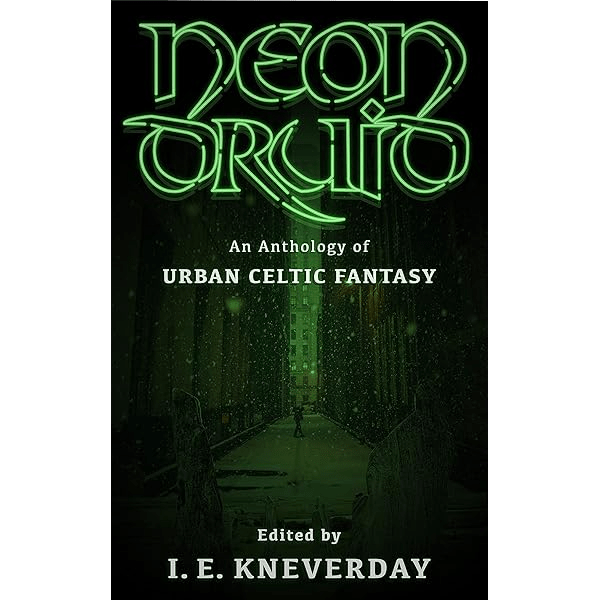
“A thrilling romp through pubs, mythology, and alleyways. NEON DRUID is such a fun, pulpy anthology of stories that embody Celtic fantasy and myth,” (Pyles of Books). Cross over into a world where the mischievous gods, goddesses, monsters, and heroes of Celtic mythology live among us, intermingling with unsuspecting mortals and stirring up mayhem in cities and towns on both sides of the Atlantic, from Limerick and Edinburgh to Montreal and Boston. Learn more…


Leave a Reply