
Folklore in Film is reader-supported. When you buy through links on our site, we may earn a small affiliate commission.
Steel yourself:
We’ve got some Conan the Barbarian-related riddles to solve.
And not just the Riddle of Steel, which we will get to.
I think the movie’s bigger riddle is this:
In what world does a barbarian pray to an Irish god, Crom…
…while seeking revenge against a devotee of an Egyptian god, Set…
…while exploring a landscape that’s “been here since the time of the Titans”—Titans being the Greek proto-gods who preceded the Olympians…
…all while awaiting a heavenly realm reserved for Norse warriors, Valhalla.
Turns out 1982’s Conan the Barbarian has a good answer for this.
Assuming you pay attention to the very first words spoken in the film.
Pssst. You can watch a video adaptation of this essay right here. Text continues below.
The Mythology of Conan the Barbarian
“Between the time when the oceans drank Atlantis…
… and the rise of the sons of Aryas…
… there was an age undreamed of.”
On first listen, this might sound like a fancy way of saying “a long, long time ago.”
But it actually refers to a specific period in prehistory.
The oceans drank Atlantis nearly 12,000 years ago, based on Plato’s account.
While the “sons of Aryas,” a reference to Proto-Indo-European speakers, descended from the Pontic–Caspian steppe some 6,000 years ago.
Some spread into the Indian subcontinent, where, for example, the Hindi language would evolve.
Others spread into Europe, giving rise to the Romance languages, Greek, the Germanic languages (including Norse) and the Celtic languages (including Irish).
So, Arnold Schwarzenegger’s Conan lives in a time when this spread hasn’t happened yet. Or it’s just getting started.
Meaning instead of having separate Celtic and Germanic and Greek cultures and languages, everything is still smooshed together.
Including the mythology.
Which is why you’ve got Irish Gods coexisting with Greek titans, a Norse afterlife, and…
Wait a minute:
Thulsa Doom’s Egyptian mythology-inspired snake cult doesn’t fit.
Because the Ancient Egyptian language didn’t branch off from Proto-Indo-European.
It was an Afro-Asiatic language.
How do we explain that?
Like this:
The ancient Egyptian language emerged about 5,000 years ago.
So if we interpret James Earl Jones’ Thulsa Doom as a proto-Egyptian figure, the timing lines up.
Now, did Proto-Indo-European speakers ever get into scuffles with Afro-Asiatic speakers in real life?
That would have been geographically unlikely.
But I’m not here to talk about geographical accuracy.
How Nietzsche Influenced Conan the Barbarian
I’m here to talk about…
…philosophy.
Just for a minute.
Because before the film’s opening narration even begins, we are treated to a title card featuring the following aphorism from famed philosopher Friedrich Nietzsche:
“That which does not kill us makes us stronger.”
While noted Nietzsche-head Oliver Stone wrote the first draft of the Conan the Barbarian script, it was writer/director John Milius who reworked it to put this Nietzschean ethos front and center.
Conan suffers and suffers and suffers throughout the film, and uses that suffering to fuel his revenge.
In the end, his success—and accumulation of power—isn’t the result of a penitent appeal to divine or demonic forces.
It’s the result of his own human drive for growth or “will to power” as Nietzsche styled it.
We know from a few mentions in his writings that Conan’s creator, the pulp writer Robert E. Howard, was familiar with Nietzsche’s work when he dreamed up Conan and the aforementioned era he lives in.
An era Howard referred to as the Hyborian Age—named for the mythical Greek “land of the North,” Hyperborea.
Which is interesting because Nietzsche used the term “Hyperborean” to refer to people, like himself, who eschewed social and moral conformity in pursuit of self-mastery.
It’s the step before becoming an Übermensch (i.e., an overman or superman), which Nietzsche saw as aspirational.
Obviously, in the movie, Conan fits that Hyperborean/Übermensch archetype to a T, because that’s the way Milius wrote him.
And many of the folklorical and mythical references in the film serve to bolster this identity.
Let’s explore some of those examples.
And at the end of this video, I will be grading Conan the Barbarian on its folklorical accuracy.
(FYI I just gave The Lion, the Witch and the Wardrobe the lowest folklorical accuracy grade ever on this channel.)
Hopefully, Conan is made of stronger stuff.
Which leads us to:
Steel.
Who Gave the Cimmerians the Secret of Steel? Greek Mythology in Conan the Barbarian
It’s established at the beginning of the film that Conan’s people, the Cimmerians, have learned the secret of steelmaking.
Or rather, a race of giants stole it from the gods, so the gods killed the giants, but…
“[I]n their rage, the gods forgot the secret of steel and left it on the battlefield.
And we who found it are just men. Not gods, not giants. Just men.”
This sounds like a riff on Greek mythology.
Specifically the story of Prometheus, a Titan who steals fire from the gods and gives it to us humans.
As punishment, Zeus chains Prometheus to a rock and an eagle eats Prometheus’s liver. Everyday.
Which immediately brings to mind the Tree of Woe scene, during which a vulture starts eating the crucified Conan and Conan… bites back.
And yes, that’s a very real (but also very dead) vulture that Arnold bites into in the scene.
Of course, Conan’s early years are spent spinning the ole Wheel of Pain.
It’s an endless, monotonous task, some might say Sisyphean task.
Sisyphus being the king whom Zeus sentences to eternally pushing a boulder up a hill only for it to roll back down again and again and again.
Of course, Conan does eventually leave the wheel—after two decades. Because the movie needs to happen.
But the Wheel of Pain segment highlights how this punishment allows Conan to grow physically and presumably mentally as well.
So it was a good thing?
That’s Nietzsche for you.
And there is a case to be made that similarly, Sisyphus, at the end of the day, or every day for all eternity as it were, has it pretty good.
He has a clear purpose. He has a clear expectation of the future. A full schedule. There isn’t an eagle eating his liver.
I do think the film could have better clarified some of the lore as it pertains to Titans in particular.
Like when Mako’s Wizard of the Mounds (a.k.a. the narrator) says…
“Once, great men lived here. Giants, gods.
Once, but long ago….
Mounds have been here since the time of the Titans.”
Now, are the giants he mentioned the same as the Titans?
Because remember at the beginning of the film he also says that giants who lived in the earth stole the secret of steel, leading me to believe that these giants are synonymous with the Titans (because Prometheus was a Titan).
Who is Conan’s God? The Irish Crom Cruach Idol Explained
There’s also the question of who exactly the giants/Titans stole the secret of steel from.
At first we’re told Crom, who also lives in the earth, is the keeper of the secret and when the giants fool Crom, he is angered and he shakes the earth, and fire and wind strike down the giants who then throw themselves into the ocean.
But then suddenly, it’s not Crom who’s responsible, but several gods.
“[i]n their rage, the gods forgot the secret of steel.”
What’s going on here?
For starters, let’s take a look at Crom.
Who takes his name from Crom Cruach, a figure the 9th-century hagiography The Tripartite Life of Saint Patrick describes as the chief idol—and demon—of pagan Ireland.
Which Saint Patrick himself ultimately destroys.
And bearing this Saint Patrick connection in mind, isn’t curious that that witch in the cave tells Conan:
“They said you would come…A man who would someday be king by his own hand. One who would crush the snakes of the earth—”
Granted, the snakes here actually refer to Thulsa Doom and his Set cult, not Crom, but still.
The 11th-century Dindshenchas, or Lore of Places, expands on the Irish Crom Cruach mythos.
And just the language used in the text makes me of how Crom is described in the film:
“He was their god, the wizened Cromm, hidden by many mists: as for the folk that believed in him, the eternal Kingdom beyond every haven shall not be theirs.
“For him ingloriously they slew their hapless firstborn with much wailing and peril, to pour their blood round Cromn Cruaich.
“Milk and corn they asked of him speedily in return for a third part of all their progeny: great was the horror and outcry about him.”
Yikes.
If anything, Crom is less cruel as described in the film. He’s cold and indifferent, sure. But there’s no talk of gruesome offerings.
To quote Conan.
“Crom…I seldom pray to him. He doesn’t listen…He is strong. If I die, I have to go before him. And he will ask me, “What is the riddle of steel?” If I don’t know it, he will cast me out of Valhalla and laugh at me. That’s Crom, strong on his mountain.”
To which Gerry Lopez’s Subotai responds:
“My god is stronger. He is the everlasting sky. Your god lives underneath him. Civilization, ancient and wicked.”
Oh that’s very Crom.
What’s more, in Irish folklore, a later iteration of Crom Cruach, Crom Dubh, is indirectly associated with a mountain.
See, Crom Dubh actually had his own holiday for a time, an agricultural festival known as Crom Dubh Sunday.
Which over the centuries evolved into Reek Sunday: a day in late July when thousands of pilgrims famously climb Croagh Patrick in Ireland’s County Mayo.
The Origin of the Name Conan
And if you’re still not convinced that Irish mythology influenced the world of Conan the Barbarian, consider, if you will, our protagonist’s first name.
It’s Irish.
I’ve always assumed that Robert E. Howard borrowed the name from Conán mac Morna a.k.a. Conán Maol (Conan the Bald), a member of Fionn mac Cumhaill’s warrior band the Fianna, as depicted in Irish mythology’s Fenian Cycle.
But the Conan of myth, who is depicted as foolish and out of shape, bears little resemblance to the movie’s Conan.
There’s also a Conand mac Febair in the chronologically earlier Mythological cycle.
But as a Fomorian warlord who rules from a tower on an island and demands tribute from Ireland’s early inhabitants, the Nemedians, this Conan also bears little resemblance to movie-Conan.
Actually, based on what Max von Sydow’s King Osric has to say, he sounds a lot more like Thulsa Doom.
And, he mentions the Nemedians. Or, their land, anyway.
“Thulsa Doom. I’ve chafed for years at this demigod. Snakes in my beautiful city. To the west, Nemedia, Aquilonia. To the south, Koth, Stygia. Snakes. Everywhere, these evil towers.”
The Egyptian Mythology Behind Thulsa Doom’s Snake Cult
Speaking of snakes, Doom’s snake cult emblem, with the two serpents attached at the butt, is clearly a riff on the Egyptian uraeus—a symbol I learned about while making my Raiders of the Lost Ark video.
And isn’t it funny that just one year after 1981’s Raiders would give us the Headpiece to the Staff of Ra, which has a red crystal in its center capable of harnessing the sun and creating a beam of fire, 1982’s Conan would give us a giant ruby, the Eye of the Serpent, and James Earl Jones would deliver these lines:
“In your hand you hold my light. A gleam in the eye of Set. This flame will burn away the darkness. Burn you away to paradise!”
Is the Eye of Set a thing in Egyptian mythology?
Nah, there’s the Eye of Horus (left eye) and the Eye of Ra (right eye).
But this feels like a deliberate choice rather than an error.
What’s more, going by the movie’s timeline, Egyptian mythology doesn’t exist yet.
This is a theoretical proto-Set, part of some proto-Egyptian pantheon that would later inspire the Egyptian Set we know today.
Does that make sense?
Just like Crom in the movie isn’t the Crom of the Gaelic Celtic speakers because they don’t exist yet. He’s a theoretical proto-Crom, a proto-Celtic god.
Same goes for Valhalla, which in Norse mythology is presided over by the all-father Odin.
In the film, Conan is thus referring to a proto-Valhalla.
You could also think of it as a proto-Celtic Otherworld.
Because this is all taking place before the Celtic and Norse languages branched off from Proto-Indo-European.
Speaking of branches…
Norse Mythology in Conan the Barbarian? Snake Arrows, Tree of Woe, Broken Sword
I think those magical snake arrows we see in the film, which don’t have an obvious parallel in Egyptian mythology, were based on Norse mythology.
There’s a famous story in which Loki tricks the blind Höðr into shooting his brother Baldr with an arrow made of mistletoe.
Mistletoe being Baldr’s one weakness.
No, it’s not a perfect comparison.
But the idea is you’re taking something you usually wouldn’t make an arrow out of, something that carries with it a lot of symbolism (both snakes and mistletoe were widely venerated in the ancient world).
And the end result is a magic projectile.
Side note: Irish mythology has a projectile that follows this pattern as well, only it’s not an arrow, it’s a slingshot ball made from a combination of sea sand and the blood of bears, toads, and—get this—vipers. (The Tathlum.)
Let me slither back to Norse mythology:
The Norse poem Hávamál, which dates back to at least the 9th century, describes a scene that is undeniably reminiscent of one we see in the film.
And I quote:
“I know that I hung on a windy tree / nine long nights, / wounded with a spear, dedicated to Odin, / myself to myself, / on that tree of which no man knows / from where its roots run.
“No bread did they give me nor a drink from a horn, / downwards I peered; / I took up the runes, / screaming I took them, / then I fell back from there.”
Yeah, that’s the Tree of Woe scene.
It describes Odin’s sacrifice of himself to himself, which he achieved via crucifixion on the tree Yggdrasil, which some interpret as the World Tree.
As for the shattering of Conan’s father’s sword, which happens during Conan’s final battle with Ben Davidson’s Rexor:
That could be a nod to Odin shattering Sigmund’s sword, Gram (meaning Wrath), as depicted in the 13th-century Völsunga saga.
That sword is later reforged, allowing Sigmund’s son Sigurd to avenge his father.
Conan also uses his father’s sword—or what’s left of it—to avenge his father.
Was Conan’s Backstory Borrowed From Finnish Folklore?
But, and this is potentially a pretty big but, the daddy’s broken blade storyline is also central to another myth:
But it isn’t a Norse myth. Or an Egyptian myth. Or an Irish myth. Or a Greek myth.
It’s a Finnish and Estonian myth.
Meaning we’ve now introduced a third linguistic group here, Baltic Finnic, which is entirely separate from the Proto-Indo-European and Afroasiatic groups.
Isn’t that cool.
Isn’t it?
Anyway, in the epic Finnish poem the Kalevala, the young Kullervo is nearly killed on three separate occasions as a child (What doesn’t kill you makes you—) .
Then his uncle, who had already killed everyone in Kullervo’s clan, sells Kullervo into slavery.
The one family heirloom Kullervo has left is a knife that belonged to his father, buuut he breaks it when cutting into bread because some a-hole put rocks in his bread.
Kullervo then escapes slavery and seeks revenge against his uncle.
It’s a tale as old as time.
And one the movie seems to borrow from for Conan’s origin story.
What Is the Answer to the Riddle of Steel?
Finally, with all this talk of swords, I think it’s only fitting that we explain the Riddle of Steel.
Riddles, of course, are frequently used to challenge heroes in myths and legends.
The riddle of the sphinx, which is posed to Oedipus in Greek mythology, being one of the most famous:
“Which creature has one voice and yet becomes four-footed and two-footed and three-footed?”
Hmmm.
There’s also the 10th-century poem Vafþrúðnismál from the Poetic Edda, in which the Norse god Odin wins a riddle-battle by asking his opponent what he, Odin, had whispered in the ear of his dead son Baldr as he lay on the funeral pyre.
See, to me that’s cheating.
Tolkien pays homage to this myth in The Hobbit, of course, when in chapter 5 (Riddles in the Dark), Bilbo asks Gollum:
“What have I got in my pocket?”
In both cases, only the asker of the question could possibly know the answer.
The answer to the Riddle of Steel takes us right back to where we started:
Nietzsche.
Think about it: Thulsa Doom’s explanation of the Riddle of Steel is really just an endorsement of Nietzsche’s concept of will to power.
And I quote:
“Steel isn’t strong, boy. Flesh is stronger…
“What is steel compared to the hand that wields it?
“Look at the strength of your body, the desire in your heart.”
At first I thought Thulsa Doom himself was on his way to achieving Übermensch status—that he was being set up as an Afroasiatic Übermensch that the Proto-Indo-European Übermensch, Conan, could conquer.
Which felt kinda icky.
But I don’t think that’s what writer/director John Milius was going for.
Thulsa Doom, with his orgies and brainwashed lackeys and snake magic, is the dark reflection of an Übermensch—a so-called last man.
He has no more ambition.
When Conan accuses him of taking his father’s sword, Doom replies:
“It must have been when I was younger.”
The implication being: he’s retired.
He’s done striving.
And he now prioritizes safety and comfort and pleasure above all else.
Including snake stuff.
Conan’s Mongolian Connection: Genghis Khan and a Sky God
I think I’ll conclude with one of the film’s most memorable lines.
When Conan is asked: What is best in life?
He replies:
“To crush your enemies, see them driven before you and to hear the lamentation of their women.”
Ooookay.
Turns out this is a twist on a quotation attributed to Genghis Khan, the historical Mongol leader whose life, nonetheless, has been mythologized over the centuries.
“The Greatest Happiness is to vanquish your enemy and drive him before you. To see his cities reduced to ashes. To see those who love him shrouded and in tears. And to gather to your bosom his wives and daughters.”
And I’d be remiss not to mention that Subotai, Conan’s companion and philosophical confidant, is named for Genghis Khan’s primary general and military strategist.
So naturally when the movie’s Subotai is talking about his superior sky god, that’s a reference to an actual deity in Mongolic mythology, Tengri, a.k.a. Tenger Etseg.
Which means we now have a mythical reference from another distinct language family, Serbi–Mongolic.
Bringing our total up to four.
And look, that settles it.
Conan the Barbarian was a tricky movie to navigate in terms of folklorical accuracy, but I think it deserves…
…an A.
What do you think?
Leave your folklorical accuracy grade for Conan the Barbarian in the comments below.
Thanks for reading.
Fan of folk horror?
You might be interested in my short film Samhain, available over on the Irish Myths channel.
More the reading type?
Check out…
Neon Druid: An Anthology of Urban Celtic Fantasy
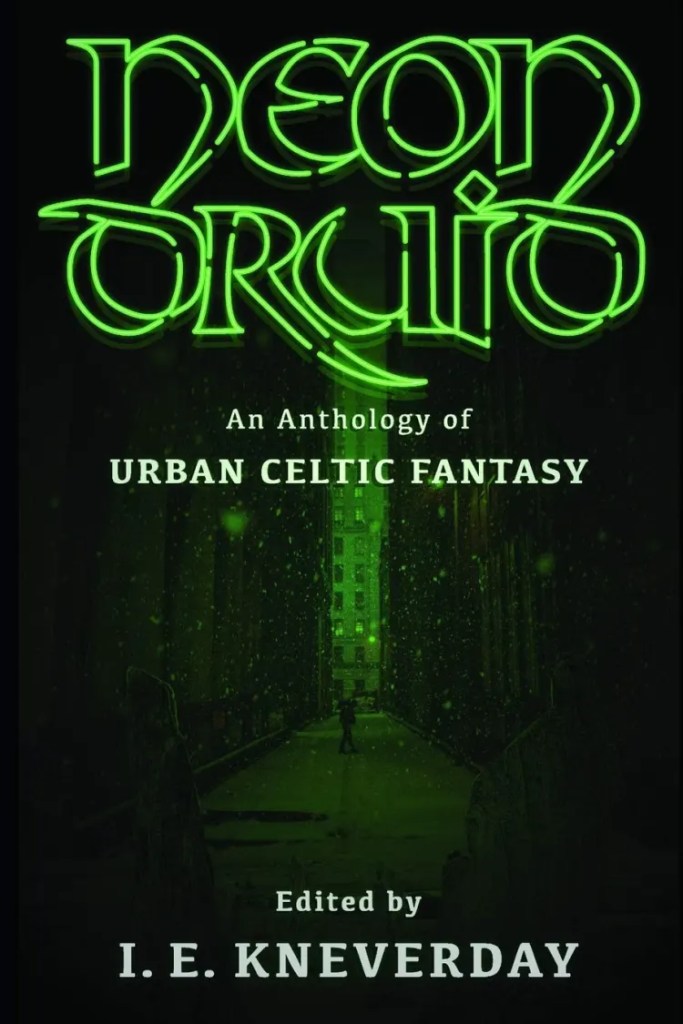
“A thrilling romp through pubs, mythology, and alleyways. NEON DRUID is such a fun, pulpy anthology of stories that embody Celtic fantasy and myth,” (Pyles of Books). Cross over into a world where the mischievous gods, goddesses, monsters, and heroes of Celtic mythology live among us, intermingling with unsuspecting mortals and stirring up mayhem in cities and towns on both sides of the Atlantic, from Limerick and Edinburgh to Montreal and Boston. Learn more…
Samhain in Your Pocket

Perhaps the most important holiday on the ancient Celtic calendar, Samhain marks the end of summer and the beginning of a new pastoral year. It is a liminal time—a time when the forces of light and darkness, warmth and cold, growth and blight, are in conflict. A time when the barrier between the land of the living and the land of the dead is at its thinnest. A time when all manner of spirits and demons are wont to cross over from the Celtic Otherworld. Learn more…
Irish Monsters in Your Pocket

In the Ireland of myth and legend, “spooky season” is every season. Spirits roam the countryside, hovering above the bogs. Werewolves lope through forests under full moons. Dragons lurk beneath the waves. Granted, there’s no denying that Samhain (Halloween’s Celtic predecessor) tends to bring out some of the island’s biggest, baddest monsters. Prepare yourself for (educational) encounters with Irish cryptids, demons, ghouls, goblins, and other supernatural beings. Learn more…
 Folklore in Film
Leave a comment