
Folklore in Film is reader-supported. When you buy through links on our site, we may earn a small affiliate commission.
Is this 2005 fantasy film a whimsical hodgepodge of folklores and mythologies?
Or is it a Christian lion dressed in a pagan faun’s clothing?
Yeah, we’re getting into it.
And along the way, we’ll learn about otherworldly portals, perpetual winters, resurrections, white witches, Father Christmas, dryads, centaurs, minotaurs, cyclopes, talking animals—Jesus Christ?
Yeah, him too.
Because as some critics have argued, The Chronicles of Narnia: The Lion, the Witch and the Wardrobe can be a bit hamfisted with its biblical references.
Meanwhile, other critics have called the movie blasphemous on account of those same references.
Switching out Jesus for an anthropomorphic lion in a reimagining of the Passion narrative was a particular pet peeve for some.
But what I am interested in, is this:
Does this movie accurately reflect what we find in those stories of old?
FYI: I just gave The Princess Bride an A+ in folklorical accuracy. It’s the highest grade I’ve ever given out.
How will The Lion, the Witch and the Wardrobe perform?
Let’s take a look.
Pssst. You can watch a video adaptation of this essay right here. Text continues below.
Celtic Mythology in the Chronicles of Narnia? (Celtic Otherworld, The Cailleach, Conn of a Hundred Battles)
During my research for this essay/video, I came across the idea that the film’s titular wardrobe was inspired by Celtic mythology—specifically Irish mythology.
And by extension, that Narnia is akin to a Celtic Otherworld, a place hidden in the mist, a place inhabited by gods and/or fairies, a place that is only accessible to certain people at certain times.
The parallels are obvious.
But I had always assumed that C.S. Lewis, the author of the 1950 book the 2005 movie is based on, had been riffing on Lewis Carroll’s Alice’s Adventures in Wonderland, published in 1865.
Both writers were British.
Both had a thing for talking animals.
And both wrote in what we now call the portal fantasy genre.
But here’s the thing:
C.S. Lewis was Irish by birth.
He was born in and spent most of his childhood in East Belfast in County Down.
And most pertinently to our task at hand, the real-word wardrobe that inspired his story’s magical wardrobe, originated in Ireland.
His grandfather made it.
What’s more, reflecting on his Irish upbringing, Lewis once wrote to his brother:
“That part of Rostrevor which overlooks Carlingford Lough is my idea of Narnia.”
And here we hit on something interesting:
The name Carlingford comes from the Irish Cairlinn, meaning the pool of the hag or the pool of the old woman.
And in Irish mythology—but really, Gaelic mythology, because this figure was popular in Scotland too—The Cailleach is a divine hag.
Possessing many qualities some might consider witch-like.
She is the one responsible for stirring up tempests and coating hills and mountains in snow.
And in some iterations, The Cailleach carries a staff that she uses to freeze the ground.
She’s also associated with glacial erratics and other boulders, including the Hag of Beara in County Clare, which legend says is the fossilized remains of the winter goddess.
I think there’s a case to be made here that the Cailleach was Lewis’ real inspiration for the White Witch and her cryokinetic abilities—not Medusa from Greek mythology or Hans Christian Andersen’s Snow Queen.
I also have a hunch that Lewis was familiar with the Irish myth Baile in Scáil, or The Phantom’s Frenzy, in which the High King of Ireland Conn of the Hundred Battles and his three druids (so four people total—hmm) get caught up in a magical mist that transports them to a plain with a golden tree and a big old house.
Conn meets a woman wearing a golden crown who’s carrying a silver vat full of ale.
And she serves Conn a boar rib and an ox rib, the latter of which is twenty-four-feet long.
No, it’s not exactly Turkish delight, but the vibe feels similar.
It’s a demonstration of power.
I can provide you with the food you dream about.
And get this, in the myth, the titular phantom, who denies being a phantom, introduces himself by saying:
“I am of the race of Adam.”
Son of Adam.
Daughter of Eve.
We hear this in the film.
In addition to it being a biblical/poetic way to refer to humans, maybe it’s a clue that Lewis was familiar with the aforementioned Irish myth.
All this being said, I have a quick message for the people of Ireland:
Before you rush to claim C.S. Lewis as one of your own, you should probably read his take on Northern Ireland, which he shared with a friend in a letter:
“The country is very beautiful and if only I could deport the Ulstermen and fill their land with a populace of my own choosing, I should ask for no better place to live in.”
Ummm… that’s not great.
And yet, that’s essentially what Lewis did with The Lion, the Witch and the Wardrobe:
He copied the landscape, then populated it with talking animals and mythical beings.
Including a faun, Mr. Tumnus.
Mr. Tumnus: Faux Faun or Folklorically Fit?
This half-goat, half-human comes off as shy and nervous in the film.
Which has rubbed many in the faun community the wrong way.
Because as I explored in my video on Pan’s Labyrinth, Ovid described fauns as “wanton” back in the first century.
But by the end of the 15th century, fauns had essentially shed this label, with the similar-but-different satyrs being singled out for their lasciviousness in the Hypnerotomachia Poliphili.
Whereas the fauns were described as simply having horns.
Still, depicting a faun as being as weak and as timid and as neurotic as Mr. Tumnus doesn’t have a parallel in Classical literature.
Is it a subversion of expectations?
Or a suggestion that these horned nature spirits, who are linked to pre-Christian paganism, don’t possess the power necessary to combat Narnia’s greatest evil?
You’re reading too much into it.
No, you’re not reading enough into it.
The Liar, Lunatic, Lord Trilemma (Made Famous by C. S. Lewis)
C. S. Lewis was a Christian apologist, and one of his favorite arguments shows up almost verbatim in the film.
Remember that scene when Lucy is upset because Edmund lies about having been to Narnia?
Then Susan tells the professor that hearing about the forest in the wardrobe from Lucy was:
“Like talking to a lunatic.”
The professor, however, encourages Susan and Peter to accept a different conclusion.
“[I]f your sister isn’t lying and isn’t mad (i.e., insane) then logically we must assume that she is telling the truth.”
In Christian apologetics, this is known as the liar, lunatic, Lord trilemma.
It posits that by proclaiming himself Lord and savior, Jesus was either:
A) knowingly lying
B) unintentionally lying because he was delusional, or
C) telling the truth.
Lewis preferred the third option.
But Lewis’ critics would invent a fourth option, arguing Jesus was neither a liar, nor a lunatic, nor the Lord, but a legend.
A historical person whose biography was retroactively given a divine glow-up.
Another common criticism of the trilemma is that it presupposes Jesus claimed to be God.
Whereas if we look at the actual source material, i.e., the Bible, he never explicitly says that.
Dan McClellan can back me up on this.
Yes, in the Gospel of John in particular, Jesus claims to bear God’s name and to manifest His power and presence and authority, but so does the Angel of the Lord in the Hebrew bible/the Old Testament, like in Exodus chapter 3.
These are divine images, not God himself.
I know not everyone interprets it that way—and that’s fine.
But to keep some kind of consistency with my grading system, I do have to knock off points here.
Because by shoving that trilemma into The Lion, the Witch and the Wardrobe, Lewis—and the filmmakers—were alluding to a religious dogma, not a religious or mythical text.
And to be clear, we haven’t even scratched the surface of all the religious stuff interwoven into this story.
Although interwoven might be too generous of a term.
The Father Christmas, Odin, Fimbulwinter Connection
At one point Father Christmas just appears on a sleigh and gives the kids weapons.
It’s not even Christmas.
And to clarify, Father Christmas did not start out as a gift-giving Santa Claus clone.
He evolved from a figure in English folklore famed for his feasting, think of the Ghost of Christmas Present in A Christmas Carol.
And this figure, in turn, may have been rooted in depictions of Odin, the Norse all-father, a.k.a. Jólnir (the Yule One).
Which perhaps explains why in the book/movie it is Father Christmas who, in what I’m calling a reverse Game of Thrones, declares “winter is almost over.”
In Norse mythology, the Fimbulwinter or “mighty winter” is a three-year period of intense snowfall that immediately precedes Ragnarok, the end of the world.
And notably, two humans, a man and a woman, are able to survive these events by hiding out in a forest.
Having it be “always winter and never Christmas” in Narnia certainly seems to be a nod to this Norse myth.
And kudos where kudos are due, this myth does give added significance to those “Son of Adam” and “Daughter of Eve” references.
Sure, he’s using the biblical names, not the Norse Líf and Lífþrasir, but he’s alluding to both creation/destruction stories.
Aslan’s Resurrection (And How it Differed From Jesus’s)
Moving on.
To Aslan.
The talking lion who tells the White Witch:
“Do not cite the Deep Magic to me, Witch. I was there when it was made.”
Fast forward a few scenes and the witch kills the lion on a stone table, which he’d agreed to earlier, swapping places with the Judas-like Edmund who had betrayed him.
Fast forward a few more scenes and…it’s alive!
The stone table cracks.
And the resurrected Aslan declares:
“If the Witch knew the true meaning of sacrifice, she might have interpreted the Deep Magic a little differently. For she would know that if a willing victim who had committed no treachery died in a traitor’s stead, the Stone Table would crack and death itself would begin to unwind.”
This “Deep Magic” is a not-so-subtle reference to the so-called “old laws” or Mosaic law, with the cracking of the stone table representing the destruction of the stone tablets God gave to Moses and the establishment of a new covenant.
In both stories, the idea is that the old ways needed to be changed, and that the willing sacrifice of a pure soul, or someone who had committed no treachery, could facilitate that change.
The only problem is that in the Bible, Jesus doesn’t want to do that. At least, not all of it.
Yes, he wants a new covenant.
To quote Jesus speaking at the Last Supper in Luke 22:20:
“This cup is the new covenant in my blood, which is poured out for you.”
Buuut during the Sermon on the Mount, as recorded in Matthew 5:17-18, Jesus also tells his followers:
“Do not think that I have come to abolish the Law or the Prophets; I have not come to abolish them but to fulfill them. For truly I tell you, until heaven and earth disappear, not the smallest letter, not the least stroke of a pen, will by any means disappear from the Law until everything is accomplished.”
Now, embedded in Aslan’s depiction of the sacrificial figure is his willingness to make that sacrifice.
Whereas in Jesus’ case—it’s more complicated.
If you believe Jesus knew he was gonna get crucified because he’s God and he knows everything, then why when he was on the cross did he cry out, as recorded in Mark 15 (and Matthew 27): “My God, my God, why have you forsaken me?”
I mean, part of the answer is that the author of the Gospel of Mark wanted to connect the Passion story to Psalm 22, which opens with that exact same phrase before going on to make a prophecy about the Messiah and how his hands and feet will be pierced and his bones put on display.
The other argument is that because Jesus is both fully human and fully divine, the human part of him was understandably in a lot of pain during the crucifixion, so him shouting ”My God, my God, why have you forsaken me?” can be interpreted as the anguished screams of a dying man.
If anything, the Aslan sacrifice is cleaner.
There’s no complaining about being forsaken when he’s dying (and thus no need to explain it) because in his Passion story, Aslan very clearly and deliberately chooses his fate.
And I think that’s one of The Lion, the Witch and the Wardrobe’s greatest folkloric offenses:
It glosses over the gray areas of the Bible; those things we love to argue about in the comments.
Dryads and Centaurs and Minotaurs and Cyclopes (Oh, My)
Of course, the film’s other big folkloric offense is that it crams in too many creatures.
Look, I like the Dryads, the tree spirits.
Is that how they look in Greek mythology?
No, they’re more corporeal, less ephemeral.
Still, it’s a visually interesting interpretation.
Meanwhile, the centaurs look…okay, but behave nothing like their mythical counterparts, trading their uncivilized ways for the lives of wise and noble warriors in the service of Aslan.
The movie also infamously adds minotaurs to the White Witch’s army, which is silly.
Greek mythology boasts precisely one minotaur, who is fated to remain in a labyrinth until Theseus dispatches him.
The movie also adds cyclopes (plural of cyclops) to the witch’s army and even makes them her throne-bearers.
Which, again, has no parallel in the Greek myths, where the cyclopes are depicted both as isolated cave-dwellers and as giant smiths who make special weapons.
Wait, so why not have a cyclops give those weapons to the children instead of Father Christmas?
It’s too late for that now.
The Chronicles of Narnia: The Lion, the Witch and the Wardrobe Folklorical Accuracy Grade
I am ready to grade The Chronicles of Narnia: The Lion, the Witch and the Wardrobe on its folklorical accuracy.
And that grade shall be: a D.
Honestly, without those Irish and Norse connections, it would have been an F.
But what do you think? Am I being too harsh?
Leave the grade you think it deserves in the comments below.
Thanks for reading.
Fan of folk horror?
You might be interested in my short film Samhain, available over on the Irish Myths channel.
More the reading type?
Check out…
Neon Druid: An Anthology of Urban Celtic Fantasy
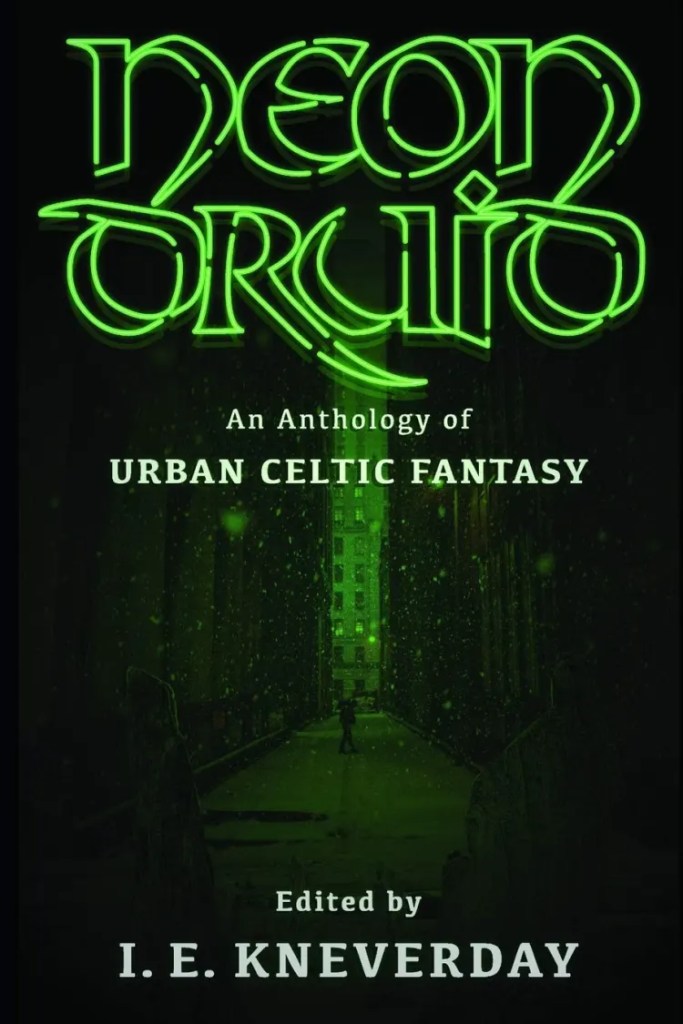
“A thrilling romp through pubs, mythology, and alleyways. NEON DRUID is such a fun, pulpy anthology of stories that embody Celtic fantasy and myth,” (Pyles of Books). Cross over into a world where the mischievous gods, goddesses, monsters, and heroes of Celtic mythology live among us, intermingling with unsuspecting mortals and stirring up mayhem in cities and towns on both sides of the Atlantic, from Limerick and Edinburgh to Montreal and Boston. Learn more…
Samhain in Your Pocket

Perhaps the most important holiday on the ancient Celtic calendar, Samhain marks the end of summer and the beginning of a new pastoral year. It is a liminal time—a time when the forces of light and darkness, warmth and cold, growth and blight, are in conflict. A time when the barrier between the land of the living and the land of the dead is at its thinnest. A time when all manner of spirits and demons are wont to cross over from the Celtic Otherworld. Learn more…
Irish Monsters in Your Pocket

In the Ireland of myth and legend, “spooky season” is every season. Spirits roam the countryside, hovering above the bogs. Werewolves lope through forests under full moons. Dragons lurk beneath the waves. Granted, there’s no denying that Samhain (Halloween’s Celtic predecessor) tends to bring out some of the island’s biggest, baddest monsters. Prepare yourself for (educational) encounters with Irish cryptids, demons, ghouls, goblins, and other supernatural beings. Learn more…
 Folklore in Film
Leave a comment