
Folklore in Film is reader-supported. When you buy through links on our site, we may earn a small affiliate commission.
At the heart of 1999’s The Mummy is a book.
But it might not be the one you’re thinking of.
Sure, the Book of the Dead is central to the film’s plot.
Ditto the Golden Book of Amun-Ra, which, while fictional, is likely based on the Book of Thoth.
But the book I’m thinking of references both of those other books.
And it features a story about forbidden love that results in resurrection via heart magic.
And it talks about how mummified priests were adorned with scarabs and little prayer boxes.
All of these references and stories and details (and many more) can be found in a single source:
The book Rachel Weisz’s Evelyn is reading at the beginning of the film:
The Dwellers on the Nile by the British Egyptologist, occultist, and—checks notes—self-proclaimed conduit to the spirit world, E. A. Wallis Budge.
Pssst. You can watch a video adaptation of this essay right here. Text continues below.
Who Wrote the Mummy? (And What Did They Read for Research?)
Ten years after the release of The Last Crusade, Indiana Jones passed the torch—and the khaki—to Brendan Fraser’s Rick O’Connell.
But as evidenced by the film’s prologue, and title, this is not Rick’s story.
The mummy, Arnold Vosloo’s Imhotep, is at the heart of the narrative. Which makes sense, given the 1999 film is a loose remake of Universal’s 1932 classic monster movie, The Mummy.
The remake was first envisioned in the late 1980s as a low-budget horror flick, with George A. Romero and Clive Barker submitting story treatments.
Then in 1997, writer/director Stephen Sommers successfully pitched Universal on the Indiana Jones-esque action/adventure we got two years later.
And while he inherited some ideas, like the flesh-eating scarabs, from writers previously attached to the project (Kevin Jarre and Lloyd Fonvielle both have story by credits on the film), it’s clear Sommers did a lot of research to bring his visions of both 1926 Egypt and ancient Egypt to life.
Which brings us to…
The Dwellers on the Nile by E. A. Wallis Budge:
The Dwellers on the Nile by E. A. Wallis Budge:
The book Evelyn is reading on the riverboat ride from Giza to the fictional Egyptian City of the Dead, Hamunaptra.
Published in 1885, and subtitled: Chapters on the Life, Literature, History and Customs of the Ancient Egyptians, Dwellers has a complicated legacy.
While it helped popularize the growing field of Egyptology, it also perpetuated misconceptions about ancient Egyptians, like that they were death-obsessed magic-wielders who could use incantations to influence their gods and achieve supernatural outcomes.
But to independent researcher Matt Szafran’s point, that sort of made it the perfect book to feature in The Mummy.
To quote a guest post Szafran wrote for Egypt at the Manchester Museum:
“Even though his works are not well regarded today, it would be wholly appropriate for Egyptology scholars of the 1920s to be reading Budge. The art department could have used any book but chose to use something historically accurate which the character would likely have been reading, even though only a tiny handful of people would ever realise the significance.”
To be clear, historical accuracy isn’t really my focus.
I will be grading The Mummy on its folklorical accuracy at the end of this video.
FYI: I gave Raiders an A, Temple of Doom a C+, and The Last Crusade a B.
But really, the main argument I want to make here is that the book Dwellers on the Nile was more than just a clever prop or piece of set dressing in The Mummy—it was a resource Sommers used when writing his script.
And the first place we see that in action is in the film’s prologue.
How the Egyptian Tale of Two Brothers Inspired The Mummy’s Prologue
Imhotep, the high priest of Osiris, and Anck-su-namun, the concubine and bodyguard of Pharaoh Seti I, have been knocking sandals in secret.
This romance is, of course, forbidden, and when pharaoh finds out and confronts his betrothed, things escalate quickly.
Imhotep and Anck-su-namun assassinate the pharaoh.
Imhotep flees (although the Pharaoh’s guards will later track him down).
Anck-su-namun takes her own life, knowing she can be resurrected by way of a ritual that involves the removal of her heart (which is typically the one organ left inside of Egyptian mummies).
Now, compare all of that to the ancient Egyptian story The Tale of Two Brothers, which Budge recounts in full in The Dwellers on the Nile.
The story kicks off with a forbidden romance, or the suggestion of one, anyway.
A woman tries to seduce her husband’s brother.
When he rejects her, she goes to her husband and says the brother actually tried to seduce her and that she will take her own life if he doesn’t go seek revenge.
The brother flees. But the husband tracks him down.
They have a heart-to-heart, by which I mean the brother professes his innocence and removes his own heart and puts it atop a cedar tree.
He explains that if he should die, he can be resurrected by having someone put his heart in a bowl of cold water.
No, it’s not exactly the same.
But there are enough parallels to make you wonder.
And knowing the Tale of Two Brothers dates back to Egypt’s 19th Dynasty, which is when the film’s ancient scenes are set, is icing on the cake.
Or the scarab on the mummy’s head, if you will.
Did Ancient Egyptians Really Cut Out Mummy Tongues? Mythology vs. Archaeology
Because yes, there is a mythological explanation for those hungry, hungry beetles, despite them not really existing (we’ll get into it).
But remember, in the film, before the scarabs go to the 24-hour Imhotep buffet, the Pharaoh’s guards, the Medjai (although they’re the Mumia in the script) give Imhotep a tongue trim.
According to Budge, adultery in ancient Egypt was “punished by cutting off the nose of the offender,”—not the tongue.
However, archaeological finds confirm tongues were sometimes removed as part of Egyptian mummification rituals, only for them to be replaced with tongues made of gold foil, which were believed to allow for communication with the god Osiris.
Meanwhile, the movie’s explanation for Imhotep’s forced glossectomy is that it prevents him from saying incantations that could potentially free him from the Hom-Dai curse.
Is The Hom-Dai Curse in The Mummy Actually a Thing in Egyptian Mythology?
No.
Curses? Sure.
Those have even transcended the realm of Egyptian mythology and entered popular superstition.
The most infamous example being the Curse of the Pharaohs a.k.a. The Curse of King Tut, which was allegedly inflicted upon George Herbert, 5th Earl of Carnarvon who died in 1923 following the excavation of Tutankhamun’s tomb in the Valley of the Kings—an excavation he had helped fund.
Side note: the fictional City of the Dead, Hamunaptra, is essentially the film’s version of the Valley of the Kings.
As for the so-called Curse of King Tut, I think it’s worth acknowledging that there were no curses found amongst the many inscriptions in Tutankhamun’s tomb.
Whereas other tombs, such as the Egyptian official Khentika Ikhekhi’s tomb, feature the actual language of a curse written out for all to see.
To quote the facade of Khentika Ikhekhi’s tomb:
“[A]ll men who will enter into this my tomb they shall not be pure [as] they [should be pure]…I shall seize his neck like a bird; further, I shall seize…the land; further, I shall cast the fear of myself into him [in order that] the living who are upon earth may see (it) and may fear the excellent [spirits] who will pass to the West.”
Cool.
Budge, for his part, writing decades before Tutankhamun’s tomb would be discovered, does not use the word “curse” at all in Dwellers on the Nile.
That being said, the idea that the spoken word, or rather the right spoken words, could somehow influence outcomes, is in line with Budge’s interpretation of ancient Egyptian religious thinking.
And I quote:
“Following close upon these religious hymns come the magical texts, the knowledge of which enabled its possessor to drive away a disease or devil. If medicine was taken to cure the disease, then an incantation or formula was said at the time of taking it, that the drug might do its work swiftly and well ; and if a man was under the power of one devil, the unfortunate prayed to another and mightier devil, or a god, to protect him from his power of injury.”
The Scarab/Mummy Relationship: It’s Complicated (and Carnivorous)
Of course, the most horrific part of casting the Hom-Dai Curse isn’t the mummy’s tongue trim, but what comes after it.
Namely, getting sealed in a sarcophagus with a bunch of flesh-eating scarabs that you have to consume for sustenance while they consume you for sustenance.
It’s the ciiircle of li—
Which begs the question:
Are those flesh-eating scarabs real?
To which I’d say:
Sort of.
Dermestid beetles, which are native to Egypt, are famous for their skeleton-cleaning abilities, and have even been found on mummies.
But, and this is a big but, they are not biologically scarabs.
A scarab is a dung beetle, famed not for its desire for human flesh but for eating sh*t.
And rolling it into balls, which the ancient Egyptians interpreted as representations of the sun rolling across the sky.
Specifically, the ancient Egyptians held the Scarabaeus sacer species of dung beetle as sacred, even referring to it as “the sacred scarab.”
Budge doesn’t mention any of this in Dwellers on the Nile, but that’s not to say the Scarabaeus doesn’t get a shout-out.
In fact, Budge brings up scarabs multiple times—always in relation to mummies.
To quote chapter eight of Dwellers on the Nile, which Budge appropriately titled The Mummy:
“When the body had been mummified, and wrapped up in linen bandages, it was a common thing, if the deceased was a person of rank or a priest, to enclose it in what is called a cartonnage…On the top of the head a scarabaeus or beetle was painted holding the sun between its antennae…
Budge goes on to note a few paragraphs later:
“On some mummies scarabaei, necklaces, rows of beads, breastplates, and figures are found…
“The scarabaei which were deposited with the mummy were made of various substances, and were usually inscribed with the thirtieth chapter of the Book of the Dead, which has for its vignette the deceased adoring a scarabaeus, and whose rubric directs that this chapter should be ‘ said over a scarabaeus of hard stone. Cause it to be washed with gold, and placed within the heart of a person. Make a phylactery anointed with oil, say over it with magic : My heart is my mother, my heart is my transformations.’”
Just so we’re all on the same page here, A) a “phylactery” is small leather box containing a prayer or religious text (more on those later) and B) the scarabs being discussed here obviously aren’t real, living, creeping, crawling beetles; they’re images and sculptures.
Still, that imagery of depositing the scarabs with the mummy is there.
What’s more, Budge makes a connection between the scarabs and the Book of the Dead.
And the incantation he cites is all about the human heart.
Speaking of which…
Servants in the Afterlife? How Imhotep Resurrects His Priests
The very next paragraph after the line “My heart is my mother, my heart is my transformation” is as follows:
“The figures placed with the dead were called ushabtiu, and were inscribed with the name of the deceased and the sixth chapter of the Book of the Dead. They were supposed to do for the deceased in Hades all the work that would otherwise fall to his lot, such as the ploughing of fields and drawing water.”
So in other words, the mummy brings servants with him to the afterlife.
That’s not exactly what happens with Imhotep’s priests in the movie, who get mummified alive and trapped in the walls precisely so they can’t experience the afterlife.
But Imhotep uses a dusty heart and an incantation to free these entombed followers, thus raising an army of mummy servants.
How did Imhotep himself get free of his own curse?
For that, he needed a MacGuffin.
The Puzzle Box/Key to Your Heart: The Mummy MacGuffin Explained
Although is this thing actually a MacGuffin?
Regardless, I went into this part of the video thinking: this is where The Mummy is gonna lose major points.
Because there are certainly no puzzle boxes that transform into keys for unlocking magic books and sarcophagi in Egyptian mythology or folklore.
And technically that’s correct and I am deducting some points.
Because it is gratuitous, especially when you realize that the artifact underlying the key/box (that’s literally what they call it in the script by the way, the “key/box”) does have a basis in religious tradition—at least according to Budge.
The phylactery.
It’s that little box that was part of the mummification ritual.
Budge, as was his tendency, used a term that specifically referenced Jewish tradition.
A phylactery originated as a square leather box that held Hebrew scripture written on vellum.
And based just on looks alone, it doesn’t take too much imagination to get from one of these to the octagonal key/box we see in The Mummy.
But wait, there’s more:
Because in the script, the key/box wasn’t octagonal—it was square.
And I quote:
“[U]sing a strange four-sided KEY, the Head Mumia locks the coffin lid tight.”
And later:
“Jonathan spots a series of SOLID GOLD, FOUR-SIDED LOCKS along the binder.”
Not eight-sided, four-sided.
Number of sides aside, there’s also the fact that the two objects basically serve the same function.
True, in the movie there’s a papyrus map contained within the key/box, not a religious text, which is what you’d typically find in a phylactery.
However, one could argue, like I am doing, right now, that the ultimate purpose of the key/box is to unlock religious texts, namely the Black Book of the Dead and the Golden Book of Amun-Ra.
The Book of the Dead: Movie Mythology vs. Egyptian Tradition
The Black Book of the Dead is that other book Evelyn reads in The Mummy—out loud this time, so the plot can happen.
Which isn’t a criticism; plot needs to happen.
While depicted in the movie as a soul-summoning tome for rehabilitating the cursed and the dead, the real ancient Egyptian Book of the Dead was a little different.
First of all, it wasn’t one, single book made of obsidian; this thing was in heavy circulation.
To quote Budge, who dedicated an entire chapter to the Book of the Dead:
“This is the name usually given by Egyptologists to a book or collection of chapters which the Egyptians called ‘coming forth by day.’ There are a very large number of copies of this book in the various museums of Europe, and parts of it are inscribed upon papyrus, tombs, coffins, mummies, ushabti figures, scarabaei, and other objects.”
“The friends of the dead of all classes endeavoured to bury a copy of the whole or part of the Book of the Dead with their beloved, for it was considered of the greatest importance that the deceased in his journey and wanderings through the nether world should possess the mystic power imparted by the magic words, formulae, and prayers of the book, which was supposed to be of divine origin, having been written by no less a deity than Thoth, the recorder of the destinies of mankind.”
So yeah, the Book of the Dead wasn’t used to bring the dead back, it was used to help the dead move on and flourish in the afterlife.
Still, I can see why, given its name, the writers would want to tweak the lore the way they did.
Especially since they were setting up this dichotomy between the Book of the Dead and the Golden Book of Amun-Ra, which, in the script, is only referred to as the Book of the Living.
Golden Book of Amun-Ra = The Book of the Living = The Book of Thoth?
And I would like to make the case that this book is actually a reimagining of the Book of Thoth. Which, like the Book of the Dead, is not a single book but a collection of passages believed to be authored by the god Thoth.
When Budge refers to Thoth as “the recorder of the destinies of mankind”—that record is the Book of Thoth. Or as he explains:
“[Thoth] was scribe in the infernal regions, and was supposed to keep a record of the actions of the dead. In one hand he holds a palette, and with the other he traces with a reed the destiny of the deceased.”
Remember, in the film, the Book of Amun-Ra is what the protagonists use to return the dead and cursed to the afterlife.
So this one sort of lines up: the Book of Thoth contains the destinies of the dead.
It makes sense you’d use this one to help undead mummies get back on track with their afterlives.
As for the name change, from the Book of the Living to the Book of Amun-Ra, I’m guessing one of the writers read Budge’s chapter on The Egyptian Religion, which features these two paragraphs, back to back—the transition is rather abrupt.
“Amen-Ra…in one hand he holds the symbol of life…He was a solar deity, and was styled ‘lord of the thrones of the earth;’ and in him the attribute of every other deity was believed to be found.
“The Egyptian was a firm believer in immortality, and it is not an uncommon thing to find the title ‘living’ given to the deceased, indicating that his relatives considered him to be enjoying everlasting life.”
Okay, so we’ve got a book about the dead…living? Let’s name it after that Amun-Ra guy. I’ve got him in my head for some reason.
Folklorical Accuracy Score for The Mummy (1999)
Overall, this research has left me with a new appreciation for The Mummy.
It stuck to the source material, even if that source material isn’t necessarily the best, and is more a folklorical reflection of the times than a rigorous, academic reckoning of ancient Egypt.
But hey, that’s why this is Folklore in Film.
And bearing that in mind, I’m giving The Mummy…an A- in folklorical accuracy.
Honestly, if not for those silly key mechanics, it would have been an A.
But what do you think?
Drop your grade in the comments below.
Thanks for reading.
Fan of folk horror?
You might be interested in my short film Samhain, available over on the Irish Myths channel.
More the reading type?
Check out…
Neon Druid: An Anthology of Urban Celtic Fantasy
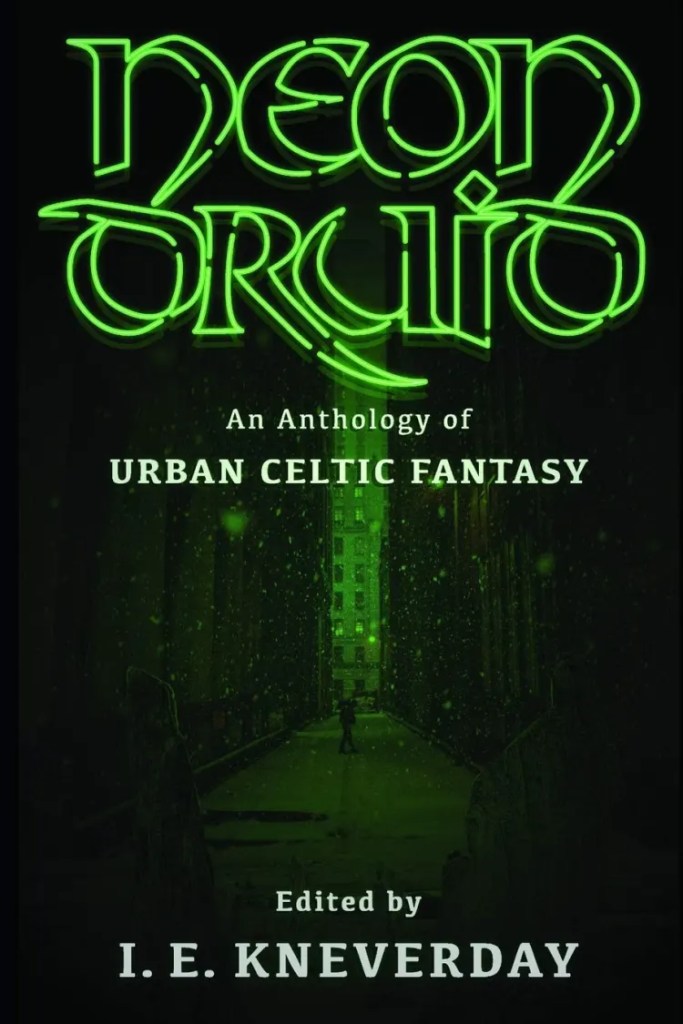
“A thrilling romp through pubs, mythology, and alleyways. NEON DRUID is such a fun, pulpy anthology of stories that embody Celtic fantasy and myth,” (Pyles of Books). Cross over into a world where the mischievous gods, goddesses, monsters, and heroes of Celtic mythology live among us, intermingling with unsuspecting mortals and stirring up mayhem in cities and towns on both sides of the Atlantic, from Limerick and Edinburgh to Montreal and Boston. Learn more…
Samhain in Your Pocket

Perhaps the most important holiday on the ancient Celtic calendar, Samhain marks the end of summer and the beginning of a new pastoral year. It is a liminal time—a time when the forces of light and darkness, warmth and cold, growth and blight, are in conflict. A time when the barrier between the land of the living and the land of the dead is at its thinnest. A time when all manner of spirits and demons are wont to cross over from the Celtic Otherworld. Learn more…
Irish Monsters in Your Pocket

In the Ireland of myth and legend, “spooky season” is every season. Spirits roam the countryside, hovering above the bogs. Werewolves lope through forests under full moons. Dragons lurk beneath the waves. Granted, there’s no denying that Samhain (Halloween’s Celtic predecessor) tends to bring out some of the island’s biggest, baddest monsters. Prepare yourself for (educational) encounters with Irish cryptids, demons, ghouls, goblins, and other supernatural beings. Learn more…
 Folklore in Film
Leave a comment